Saturday, 28 April 2018

Avengers: Infinity War


Me and my partner had an interesting chat before seeing Marvel's latest film, Avengers: Infinity War, about what constitutes a spoiler. As almost part of the marketing of the film, Infinity War has emphasised on social media not to spoil the film for those who haven't seen it yet. But what is a spoiler? I define it as revealing a milestone that fundamentally changes the dynamic of the narrative. Rosebud from Citizen Kane, for example, changes the dynamic of that film and spoiling it for someone who hasn't seen it can diminish some of the effect (though I think most people know about that one now ...). And I also don't think general plot stuff really counts as a spoiler. With that in mind, I will be discussing a very vague outline to the new Avengers film in my review so if you want to go in completely blind yet still know my opinion I'll summarise here: it's very good. I enjoyed the heck out of it. Thanos is great. The pay offs are wonderful. It's a bit of a mess. Leaves you wanting Part II now. For everyone else, let's continue.

So the time has come. After 10 years, 18 films, several TV series and a whole lot of box-office dollar, the Marvel Cinematic Universe reaches what can only be described as the culmination of its current form with the hotly anticipated Avengers: Infinity War. In a way, you have to hand it to the studio. With more clout than some small countries, the company, in partnership with Disney, have perfected their formula of audience-pleasing action-adventure-comedy films with enough tid-bits and Easter Eggs to keep the hardcore fans happy. However, many in the film press and industry have been gunning for the wheels to fall off the Marvel machine (including vocal directors such as James Cameron who is responding to the glut of Marvel films but making a glut of Avatar sequels) and Infinity War has gained a bit of flak for potentially being that film. So now that Thanos has finally arrived, does Avengers: Infinity War live up to the now decade worth of hype?

Honestly, as someone who largely enjoys these films for what they are, yes. Oh, yes.

Infinity War brings together a dazzling amount of heroes

The ultimate literal Big Bad of the Marvel Universe has arrived: Thanos (Josh Brolin), the Destroyer of Worlds. With a group of loyal zealots, Thanos bombards the universe in an attempt to search for all six Infinity Stones, the items that have been teased throughout the whole of the MCU since Day 1. With all the stones in his possession, Thanos plans on inflicting his own sick and twisted will on reality. All of our heroes must band together to take down their most powerful adversary yet as the fate of the whole universe hangs in balance. And they actually mean it this time.

This is definitely Marvel's biggest, messiest and most sprawling film yet with five different narratives intercutting with each other, almost like The Lord of the Rings or an episode of Game of Thrones. And I hope you've been keeping up. I do think a flaw of the film, to a degree, is that if you haven't watched all 18 prior films or have at least have a good working knowledge of what happened in them, Infinity War really doesn't spend a lot of time catching you up. For those who are invested in the films, however, this is the ultimate pay off. Can it be really be judged as an individual stand-alone film? Not really and, if we were, it doesn't really succeed on any of kind of narrative level. That said, Infinity War is unique in a way that it almost functions is as series finale to a long-running TV series, which nearly always assumes you've been watching since episode one.

Captain America leads the charges in the Battle of Wakanda

Infinity War has fun and fairly unexpected character interactions and team make-ups

I have heard some criticism that not all heroes have enough time in the light, there's certainly one character from the original Avengers that I wish had a little extra screen time, but overall I think it's all fairly well balanced. Which is insane considering all the characters who are in this film. If you have a particular favourite (I love the Guardians of the Galaxy and Spider-Man, for example) then they will have at least one moment to please you. It's also the unexpected team ups that surprised me. Five different narratives equals five different teams which leads to some surprising character dynamics which are honestly really fun if you've been keeping up with these films.

It's hard to pick out any stand outs from the cast, as the ensemble are all giving it their 100%, but I would like to highlight the constantly charming Tom Holland as Peter Parker and Dave Bautisa as Drax the Destroyer, who both provide some much needed (yet completely character appropriate) comic relief. Zoe Saldana's Gamora also gets a good chunk of screen-time, being Thano's adoptive daughter and all, and her arc is very tragic, continuing the "abusive father" strand from Guardians of the Galaxy, Vol. 2 in a very emotionally effective way, that actually helps to ground our Big Bad. The old guard are all great, as usual - Robert Downey Jr. is just effortless as Tony Stark, Chris Hemsworth is having a blast as Thor, Chris Evans (while not in it enough) is effective as a hardened Captain America, Scarlett Johannson has perfected her intelligent and powerful take on Black Widow and Mark Ruffalo is just wonderful as Bruce Banner, as always. All the Guardians gang are excellent, a particular treat being teenage Groot revealed in the post-credits of their last film, and new favourites, such as Doctor Strange (Benedict Cumberbatch) and the cast of Black Panther (a huge set-piece takes place in Wakanda, as per the trailers) are given ample time to shine.

The biggest surprise of the film is the big purple guy himself Thanos. Everyone knows Marvel has a villain problem and Thanos had the added pressure of living up to almost a decade worth of hype and build-up. The thrilling news is that he has been 100% worth the wait and, in a twisted kind of way, serves as the heart of the film. Josh Brolin plays the character not as a loud, hulking beast but as softly-spoken, intelligent yet highly zealous figure. His quest to find all the Infinity Stones, and the way he goes about collecting them, almost has a tragic Shakespearian quality akin to Macbeth's descent into madness after killing Duncan. Anytime he was on screen, I was completely glued. He is an all round quite terrifying figure and a highly believable candidate for the biggest threat our heroes have ever faced. The motion capture effect for the character is all-round flawless as well.

Josh Brolin as Thanos has been 100% worth the wait

Of course, this is only the first of a two part narrative that will conclude the current form of the MCU. The film makes sure to pack in as many audience pleasing moments as possible with some of the biggest set-pieces yet in the series. Quite how the directors, brothers Anthony and Joe Russo, hold it all together is quite incredible yet it does threaten on collapsing in on itself at times, in particular round the middle. However, throughout the film, there is the added layer of actual stakes, which the Marvel films have often suffered from a lack of. This does feel like the biggest, most harrowing and challenging threat our heroes have ever faced. The third act is an absolute emotional gut punch, as you'd expect, that ties together all the strands throughout the film. There was no one leaving their seats when the film ended. I won't reveal anything (part of me is tempted to post a spoiler-filled discussion of these elements) but it's probably one of the most audacious endings to a blockbuster I've seen in a long time. Hats off to you Marvel.

While I wouldn't put Infinity War quite as an all-time great in the series, there's still plenty to adore if you're a fan of these films. With several thrilling action scenes, an unexpectedly great villain, a dizzying amount of plot strands, wonderful character interactions and a super solid third act, Infinity War will no doubt please fans of the MCU and leave them gasping for more. On the other hand, if you're only lightly, or not at all, invested in these films, then I don't think Infinity War will be winning you over to the Marvel train. It is a bit of a mess and the wheels do almost fall off a couple of times but I would call it a glorious mess. It's overstuffed, ambitious to a fault but somehow sticks the landing. Bring on next year.


And for those interested, here is my ranking of the Marvel films:

Guardians of the Galaxy, Vol. 2>Captain America: The Winter Solider>The Avengers>Guardians of the Galaxy>Spider-Man: Homecoming>Avengers: Infinity War>Thor: Ragnarok>Captain America: Civil War>Doctor Strange>Black Panther>Iron Man>Ant Man>Captain America: The First Avenger>Iron Man 3>Avengers: Age of Ultron>Thor>Iron Man 2>Thor: The Dark World>The Incredible Hulk

Saturday, 21 April 2018

A Quiet Place


Silence is golden. This is the mantra held by the main characters of the thrilling new horror film A Quiet Place. While it's not quite the levels of brilliance as modern genre classics such as The Vvitch, The Babadook or It Follows, A Quiet Place more than makes up for it with constant dread, genuinely great scares, immaculate production values and some great performances. I'm shocked that this was associated with Michael Bay's Platinum Dunes production company.

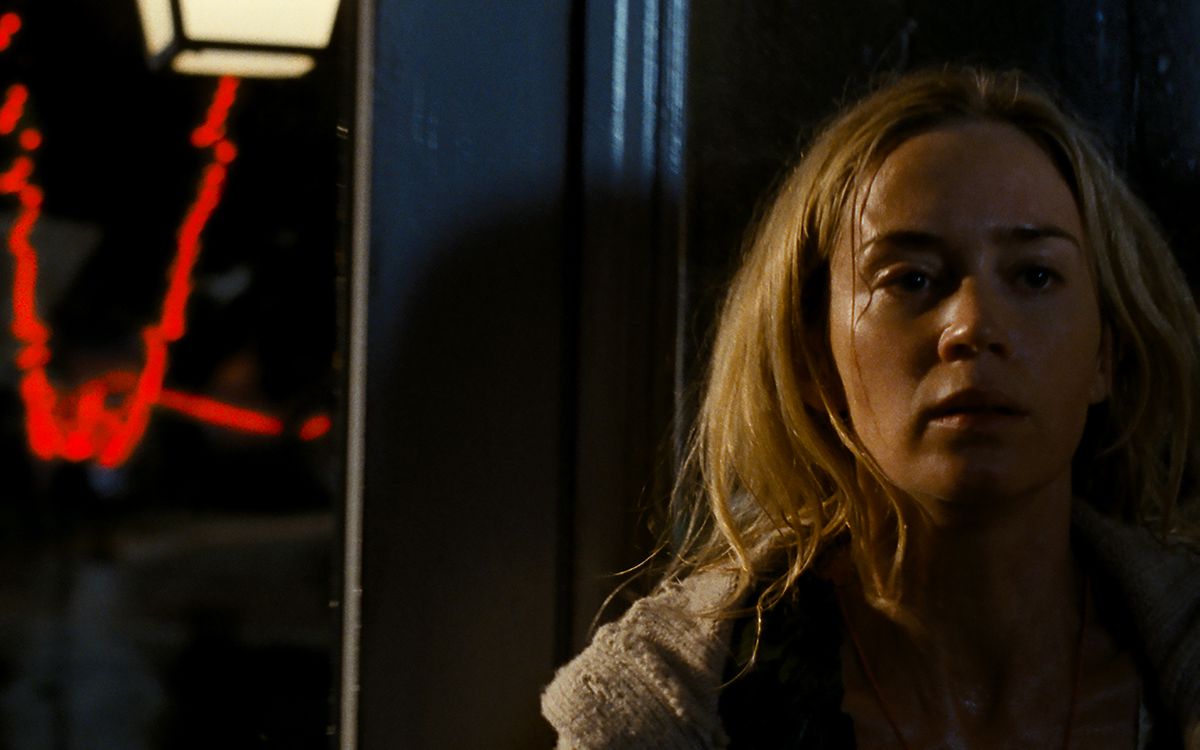
It's the post-Apocalypse and the world has been seemingly invaded by large reptilian-like creatures who roam the wastelands preying on the dregs of humanity. You see, the creatures are blind but have super-sensitive hearing. The slightest sound can set them off on a murderous rampage. So as long as you stay quiet 24/7, you'll avoid them no problem! We follow a family trying to get by in this terrifying new world - mother Evelyn (Emily Blunt), father Lee (John Krasinski, also director) and their children Regan (who also happens to be deaf, so the whole of the family knows how to use sign language - giving them a massive advantage) and Marcus (Noah Jupe). Having recently lost a younger son to one of the creatures, the family settle on an abandoned farm to anticipate the arrival of a new member of the family, as Evelyn is heavily pregnant. And in a world where monsters prey on loud noise, they're going to have to do everything they can to survive...

A Quiet Place revels in its audience pleasing scares, subtle world building and characters that we care about

I think one of the film's best attributes is how it visually explains the story and world-building. Indeed, the script doesn't feel the need to hold the audience's hand. I appreciate that it doesn't explain in great detail how the family knows how to use sign language, for example. It simply lets you infer this information through their interactions with their deaf daughter. Trust me, this is something a lesser film would spend time explaining, lest the (assumed) dumb audience doesn't get it. And the film is littered with great subtle moments such as these - the kids playing with soft tokens on their Monopoly board, laying out sand on their regular paths around their adopted homestead, crisps (chips to Americans) being the only food left in the supermarket etc. It's just little visual punctuation marks like that that elevate the film. For the most part this is, for all intent and purpose, a silent film and director John Krasinski knows how to use the visual language of cinema to explain this and how this family has survived as long as they have.

In general, A Quiet Place has a lot more heart than similar horror films. After an unforgettable opening, the film spends ample time getting to know the characters. I'm used to not caring about characters in mainstream horror films but A Quiet Place sets out time for this, making the gut-wrenching third act even more thrilling and actually quite heart-felt. The teenage frustration of Regan. The desire Evelyn feels to give her children a relatively normal upbringing in the horrific circumstances. The constant paranoia of Lee. You feel for these characters and fear for them in a way that is quite rare for the genre. Needless to say all the performances are top-notch though Emily Blunt might take the trophy for an unforgettable sequence as she goes into labour as one the creatures invades their home. Yikes.

A Quiet Place, despite your better judgement, requires to be watched with a good audience - the tension can be felt throughout the theatre

But it's in the simplicity (not as a detriment) of the framing and set pieces of A Quiet Place that sets it apart. The aforementioned labour sequence is just one of unbearably tense scenes the film has on offer and it just keeps piling it on. Krasinski knows how to employ classic Hitchcockian techniques for maximum effect on screen. The most inconsequential sounds have the effect of being noise-bombs that can signal the downward spiral into dread as we anticipate the arrival of the creatures. The fact that we never get a clear glimpse of the creatures is a work of genius and plays in a key role in the film's simple back-to-basics mantra. The most potent sequence finds the kids trapped in a grain silo - honestly, I think I watched that bit through my fingers. No joke.

The film's effectiveness can simply be felt in the theatre. I never thought I'd say this but the film must be seen with an audience (I was almost dreading seeing this with a noisy crowd). We saw the film on a week night at a surprisingly busy screening at our local multiplex. The usual rustling and slurping could be detected as the film began. Oh no, I thought, I'm going to get annoyed. However, 10-15 mins in all this stopped. This collective sense of dread remained until the end of the film when there was an audible sigh of relief as the audience could finally breath again. A Quiet Place is a frighteningly good time with plenty of well-constructred scares and subtle world building building to an incredibly tense finale. I don't think I've curled my toes as much in anticipation during a film in a long time. It's a nerve shredding assault on the senses and also wickedly good fun.

Sunday, 8 April 2018

Isle of Dogs


I don't think cinema advertiser quite knew what they had on their hands with Wes Anderson's latest film Isle of Dogs. Our screening proceeded with trailers for kiddie drivel such as Sherlock Gnomes and Show Dogs (a trailer so bad I couldn't stop giggling) to a cinema packed with older people and film hipsters. Because no director gets the hipster vote quite like Wes Anderson. Some find his work a bit irritating. A bit too twee, too quaint, too fanciful. Me personally? I (mostly) love his films. The Royal Tenebaums is in my top 20 favourite films and his other works show a wonderful eye to detail in lovingly created worlds that mask a hidden sadness. And Isle of Dogs is probably Wes Anderson at his most ... Wes Andersony. So, if you're a convert you should have a rough idea of what you're in for. And if you're not ... then this is probably not going to convince you on why people view Anderson as one of modern cinema's most exciting talents. 

Isle of Dogs is a wonderfully inventive film packed with heart and character

The film opens in dystopian Japan where, by the order of the maniacal Mayor Kobayashi of Megasaki  City, all dogs have been exiled to an offshore trash island due to an outbreak of canine flu. Thus our dog friends live out their grim lives with no real future prospects. The film focuses on a small group - misunderstood stray Chief (Bryan Cranston), democratic Rex (Edward Norton), gossipy Duke (Jeff Goldblum), dog-food mascot King (Bob Balaban) and the sporty Boss (Bill Murray). However, things change when a boy-pilot, Atari Kobayashi (Koyu Rankin) (the dog hating mayor's nephew), crash lands on the island in search of his beloved doggie partner Spots (Liev Schreiber). So the surrogate group of friends set out on a quest to find Spots but incite a bigger wave of social change. 

Anderson returns to the scratchy stop-motion style of Fantastic Mr. Fox to create his most lovingly hand-crafted film yet. I always love how Anderson frames his worlds as mini doll houses (just look at the way The Grand Budapest HotelThe Royal Tenebaums and Steve Zissou are filmed for proof of this) which is arguably drawn from how the great Japanese director Yasujiro Ozu framed his intimate family dramas. There is little camera trickery in Anderson and Ozu films - just straight on and simply shot. And Isle of Dogs is no exception, though every still of the film is filled with visual delight for us to take in. The whole thing feels like a diorama come to life. 

The stop-motion itself is absolutely gorgeous and the character models are ingeniously designed. All canine mannerisms are re-created in striking detail right down to those big-puppy dog eye. In particular, I loved the fight scenes, recreated in the style of Looney Tunes cartoons complete with cotton wool for the kicked-up dust clouds. I also loved the little detail that all the images on TVs are rendered in 2D animation. Anderson reunited with the London based animation company 3 Mills Studios for this and their sketchy animation style contrasts beautifully with Anderson's immaculate framing. The influence of the other great Japanese filmmaker, Akira Kurosawa, can be felt with the inclusion of the theme from classic Seven Samurai, and over all Alexandre Desplat's wonderful score gets the imaginative and kind of sad world the film has created. 

The cinematography of Isle of Dogs is immaculate but works even better when contrasted against with the clearly hand-crafted animation style

And what a staggeringly good cast he has brought on. The decision to have the dogs speak in a calm, dead pan kind of way is truly inspired. "I don't think I can stomach anymore of this garbage" exclaims Edward Norton's Rex in a cool voice at the start of the film, perfectly setting the tone. No one gets this more than Bryan Cranston as Chief. He is the heart and soul of the film and Cranston just nails it 100%. Chief is a battle scarred stray who sees himself as the leader of the pack and becomes the film's central focus. He struggles to relate to anyone until he meets Scarlett Johansson's suitably dead-pan show dog Nutmeg (though their burgeoning relationship is note the focus of the film) and the boy pilot Atari. And, honestly, the relationship that is built up between Chief and Atari over the course of the film is genuinely quite moving. This is the emotional core of the movie and works to anchor all the crazy plot twists and zippy narrative stylings. For the action is not just centred on Trash Island. Megasaki City is a wonderful futurist creation that places Greta Gerwig's plucky foreign exchange student Tracey as the head of a Pro-Dog rally against the evil mayor. There are also fantastic turns from Frances McDormand, Tilda Swinton (as a frankly adorable 'fortune telling' pug), F. Murray Abraham, Ken Watanabe, Anjelica Huston, Harvey Keitel and, bizarrely, Yoko Ono. That last one is the only vaguely distracting one - the rest all fit into the narrative fairly seamlessly. 

Honestly, I had a blast with Isle of Dogs. And there is a real soul to the film. Like all of Anderson's films, the characters feel real and sad in a sincere kind of way, only heightened by the hand-crafted style and stunning cinematography. The attention to detail and animation style is phenomenal, the cast are excellent and the script has a dry wit that only Anderson could write. The pace is breakneck, packing in wonderful visual cues, slightly melancholy tone, witty one-liners and new revelations to the story. It's an odd little film that contains troves of something I've started to miss in mainstream film - creativity and sincerity. 


So let's briefly talk about this chestnut; some reporters have accused Isle of Dogs of culture appropriation. The thing is, as a wise YouTube video essayist once said, "culture appropriation is a neutral term". I think there are both good examples and bad examples of appropriation in mass media. Are we going to deny film fans a quality and beautifully made film because it was directed by a White American based in a Japanese setting? Should storytellers be limited to just their own experiences? They're big questions that I don't have the answers to but I think as long as the story is respectful to the culture it is based on, I personally see no issue. It all just depends on how well it is executed and context in which it's made. And honestly, I can't really see any malicious intent in Isle of Dogs. There is a real reverence to Japanese art, music and film throughout the piece. Does one of the characters draw upon the "white saviour" trope? To a degree, yes. Is it a bit "touristy Japan"? Sure, but I think for the film to work you almost need the human characters to not speak English...as this contrasts quite nicely with the deadpan delivery of the dogs. You might as well set it in a vibrant and stylistically interesting country. Indeed, I find it fascinating that this debate has cropped up now, considering that Anderson had done arch takes on other cultures in the past - Central Europe in The Grand Budapest Hotel and Britain in Fantastic Mr Fox

Seriously though, I can't recommend YouTuber Lindsay Ellis' video essay about Disney's Pocahontas enough. She assesses what company learned in regards to cultural appropriation for its future films. She masterfully uses the film as an example of poorly executed cultural appropriation. However, she contrasts this against later Disney films such as Lilo & Stitch (which uses a key part of Hawaiian culture as the subtext of an emotional scene between Lilo and her older sister) and the recent Moana. Ellis is eloquent in her argument on this, so just watch the video...link below.

https://www.youtube.com/watch?v=2ARX0-AylFI&t=1700s

Saturday, 7 April 2018

Ready Player One


Geek culture has reached a mass breaking point. With superheroes taking over the screen, new video games often out-grossing films on opening weekend, the unfunny losers of The Big Bang Theory being one of TV's biggest "comedy" sensations and the ubiquity of nerdy ephemera in stores everywhere is proof of this. What was once considered niche and nerdy is now mainstream and bankable. And with more methods than ever of taking in all this mass media, the blurring of lines between formats has truly begun. Riding on this wave was Ernest Cline's best-selling 2012 novel Ready Player One. I have only discovered in recent weeks though that Ready Player One is possibly one of the most divisive best-selling novels of recent years. Some have declared it as the Holy Grail of Geekdom. Others have decried it for its racism, sexism, homophobia, unlikable main character, poorly defined world-building, terrible prose and fundamentally not getting why people obsess, engage with and love popular culture. And from what I've read ... it's hard to see past all that. I mean I thought the early trailers for the film adaptation looked bad anyway but reading the book has made me slightly dread this one. Steven Spielberg clearly has his work cut out ...

Wade Watts is our lead "character" in Ready Player One

The year is 2045 and the world is on the brink of societal collapse. However, the denizens of the future have found solace in an online world named the OASIS, a boundless universe where, via VR headsets, people can become video game avatars to live out their greatest fantasies against the backdrop of every piece of pop culture imaginable. The world was created by eccentric James Halliday (Mark Rylance), who has recently passed away. Halliday left behind a vast fortune to those who can find an 'Easter Egg' hidden in the game, which is locked behind three keys scattered around for players to find. Enter ... Wade Watts (Tye Sheridan), aka Parzival (his in-game avatar name) who has become something of a Halliday expert, seeing the OASIS creator's obsession with 80s popular culture, and his own personal history, as the key to finding the Easter Egg...However an evil corporation named IOI, headed up Nolan Sorrento (Rogue One survivor Ben Mendelsohn) seeks to obtain the Egg for themselves in order to gain complete domain over the OASIS...

While Spielberg tries his best (he is, even at his worst, a consummate professional), many of the book's biggest problems I outlined in the opening paragraph are still here. The main character, played by Tye Sheridan, is about as bland as he is in the novel and, ultimately, has little driving his motivation outside of winning the contest. We know and understand little of what makes Wade tick. His motivation is just shallow and he faces no real consequences for his actions throughout the story. I mean the film tries, I suppose. His life seems pretty crappy, living in a huge stack of trailers with his rubbish aunt and abusive boyfriend, his only solace being the digital world and decades of geeky media, with an emphasis on the 1980s (the decade Halliday grew up in and idolised). Yet Wade never really engages with the world or pop culture as a fan - these are merely objects and clues to unlocking the fortune hidden in the OASIS. He is just a walking talking Hallidaypedia with no real love of the material, along no sense of personality or charisma. I can think of several classic 80s genre films that got the "down-on-his-luck-protagonist" right ... maybe Ready Player One should have taken some more notes on that... Ultimately, his drive is a bit of mystery with no real stakes involved and the film doesn't spend adequate time establishing what is at risk of being lost. Well, they do a couple of things. Spoilers - his horrible aunt dies but this is swiftly forgotten. The evil corporation tries to extert itself over our hero, yet they are so comically inept as to render any threat meaningless. Wade becomes the hero, gets the girl, and wins control over the OASIS. And that, coupled with the lack of threat, doesn't make for a satisfying character arc.

The film has some nifty visuals and good sequences but the whole is just a giant mis-judged mess

Wade is synonymous with a wider problem with the film - how tensionless the whole thing is. Problem with me is that I don't tend to like stories set in virtual reality - my biggest issue being that there is often little consequence to actions taken in the virtual world having little to no fallout in the real world. Only The Matrix, in my opinion, got this right. I mean sure, as mentioned, the evil corporation moves against Wade and his friends but the ease at which they avoid their would be captors makes them almost feel almost invincible - which harms the film's narrative as a whole. And the worst thing that can happen to our heroes in the OASIS is that they lose all their loot ... big deal. Ready Player One is the ultimate consequenceless free geek power fantasy which invariably taps into some fairly toxic parts of the internet (i.e. the Gamergate community) with little to no repercussions in the real world. So all the action scenes are rendered in breath-taking detail, with more recognisable characters than you can shake a stick at it but the central core is so tensionless and shallow it's hard to get invested.

The rest of the characters are served a little better, such as Olivia Cook's Artemis who gets something resembling a character arc, even if they are essentially cardboard cutouts. I did enjoy Rylance's suitably awakard performance as Halliday and the film reaches something of a satisfying coda to this character. There are several nifty scenes. The adaptation, wisely to some degree, makes the challenges a bit more cinematic than they are in the book (they basically bare no resemblance to the challenges as written). The opening car chase scene is phenomenally executed and one sequence, in which a classic Stanley Kubrick film is recreated wholesale, is a treat on a technical level even if it is borderline sacrilegious. The problem is when you get past the whole "hey, look a reference to something you know" the film offers very little as a substitute. So you get loads of wonderful 80s pop songs, plenty of appearances from video game characters and a plot twist based around an obscure Atari 2600 game...and that's about it. The final battle scene descends into a blurry CGI mess of iconic childhood heroes, yet I just felt ... nothing. I am a firm believer in the positive effects of consuming media yet Ready Player One doesn't seem interested in engaging with this at all. It just reminded me of better films, songs and games

Look, I'm a geek. Self proclaimed and no shame. And while it masks itself as being a celebration of the liberating effects of the internet on individuals and a love letter to "geek" culture, I'm not convinced that Ready Player One really gets any of this. It's flashy and hits several audience pleasing moments, largely in part due to Spielberg's own personal touch of magic, but the core is as fake as the OASIS itself. There's little at stake and no sense of why the OASIS is worth defending. At the end of the day, I can't get behind a film like this especially with the cold, almost cynical edge to the material. I know a lot of people are enjoying this film on a visceral level, and that's fine, but for me I was just left bitter and wishing I'd loaded up my character in the MMO Final Fantasy XIV instead. And no amount of Buckaroo Banzai references is going to make me change my mind about that ...

It almost seems like a film primed for them terrible click bait videos on YouTube - "31 Easter Eggs You Missed In Ready Player One: #17 Will Shock You"


And don't even get me started on how they used The Iron Giant. Just ... don't ...

Thursday, 22 March 2018

I, Tonya


With the Academy Award season now but a distant memory (still ecstatic that del Toro and The Shape of Water won what they did) it's time to play catch up. While I was pretty happy with having seen most of the heavy hitters from this year's picks, there are still several films floating around that I couldn't quite fit in before the Big Night and also didn't get the wider recognition that they quite deserved. One of them is I, Tonya. Which is a bit a shame because it's well worth your time.

The film covers what is potentially one of the oddest incidents in the history of professional sport. Tonya Harding (Margot Robbie) was a controversial figure skater who became the first American woman to complete the incredibly tricky Triple Axel manoeuvre during a competition. After overcoming various obstacles, Harding made it through to America's Winter Olympic Team in 1994. However, her world came crashing down when, through a bizarre series of circumstances, Harding's husband, Jeff Gillooy (Stan Sebastian) ended up becoming the instigator of a successful attack on fellow US figure skating competitor Nancy Kerrigan. This all but dashed any chance of Harding had of continuing professionally in the sport. Harding instantly become one of the most reviled figures in sport ... and I, Tonya seeks to explore who this woman actually was and where she came from.

I, Tonya is a great little film that give plenty of opportunities for its great cast to shine

One thing that does really work in the film's favour is the heightened sense of unreality. This is clearly a glossy, ficitonalised take on the proceedings and the film doesn't shy away from this. In true Martin Scorsese-style fashion, we are treated to fake interviews after the fact, characters directly breaking the fourth wall to explain things to the audience, quick pan cinematography, even quicker edits and the ever so slightly cartoonish speed of the figure skating action, sprinkled with dashes of delicious black comedy. For a story with plenty of contradicting elements and heresay, going for a style and narrative that is borderline unreliable is probably the smartest move director Craig Gillespie could make. And for the most part, the whole thing works really well. The narrative rockets along at a satisfying pace, hitting all the key moments of Harding's life. The ice skating routines themselves are thrilling and expertly handled. You will believe that Margot Robbie can ice skate like a champion! Speaking of which, and it goes without saying, Margot Robbie is just excellent as Tonya. She successfully rides the line of making Tonya a very flawed, but still very rootable, human being. No easy feat to pull off. She has a lot to deal with - abusive husband and mother, her own hang-ups with anger issues, judgement from the wider figure skating world for her "white trash upbringing"; all this though doesn't stop her drive to be a champion. 

Alison Janney plays Tonya's mother LaVona, in a well-deserved Oscar winning turn that is just terrific. Being somewhat at the centre of many of Tonya's hang up and neurosis, LaVona is a very complicated and an often cruel woman but argues that this is what made her daughter into a champion pushing her into the sport at the very early age after understanding her natural talent. Vicious and abusive, Janney is just engrossing in her performance. And it's the relationship between Robbie and Janney that serves as the crux of the film. I guess this and Lady Bird marks 2018 as the year of destructive mother / daughter relationships! 

Rounding off the main cast is Sebstain Stan as Jeff Gillooy, the man who, through some levels of stupidity, ended up orchestrating the attack on Kerrigan. The warning signs are there pretty early on with him levelling some fairly brutal forms of abuse lat Tonya. Stan, probably most famous at the moment for playing Bucky Barnes i.e. the Winter Solider in the Marvel films, displays varying degrees of sophistication in his performance as Gillooly and is almost unrecognisable in the retrospective interviews. He is somewhat of a walking contradiction, and Stan just gets lost in the character. 

Alison Janney gives an Oscar winning performance as Tonya's cruel mother, LaVona

With a great cast in tow, the film just glides from excellent scene to excellent scene at a breakneck pace, quickly covering the complete arc of Tonya's early life, leading up to the "incident", as the film dubs it. I do think the film loses a bit of steam around this middle point, ironically when it starts to show the machinations about how the "incident" came into play. The scenes are fine, it just loses some of the drive and central focus. When we shift back to Tonya and how it starts to affect her career, it becomes all engrossing again. It's not that it's bad or anything, I just didn't find Paul Walter Hauser's Shawn, who has self-appointed himself as Tonya's largely useless body guard, all that funny and wished the focus would shift back to the titular character.

Overall though, I, Tonya is a terrific blast of energy that trips up only a couple of times towards its big finish finale. Robbie and Janney give some all time great performances that highlight the complexities of trying to succeed in a world out to get you.  The film's zippy pace and black comedy make it an entertaining ride but it also doesn't shy away from the more tragic elements. The credits treat you to authentic footage of the real Tonya Harding ice skating, along with interviews from the real people involved, and it all becomes abundantly clear. Yes, this strange and kind of sad tale was real. This actually happened. So if you're in need of an underappreciated little gem from this year's Oscar season, I, Tonya will more than scratch that itch. And maybe get you interested in figure skating. Maybe.

Saturday, 17 March 2018

Studio Ghibli: A Retrospective, Part Eleven - Whisper of the Heart


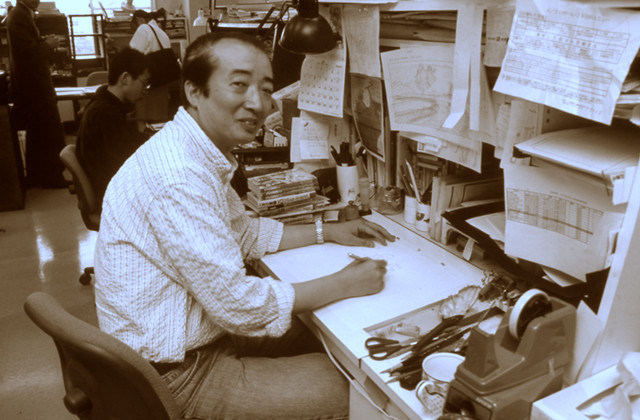
The meta-narrative of Whisper of the Heart is the story of the film's director, Yoshifumi Kondo. Kondo served as much a key part of the Studio Ghibli narrative as Miyazaki, Takahata or Suzuki. Born in 1950, Kondo became associated with Miyazaki and Takahata early on, working on TV projects such as Future Boy Conan and Anne of Green Gables. He was eventually promoted to character designer on the TV series Sherlock Hound in 1980. Following a spate of inactivity in the mid-1980s, due to recovering from pneumonia, Kondo re-joined his former animation comrades at Studio Ghibli in 1987 where he was quickly promoted to animation director on Kiki's Delivery Service, Only Yesterday and, eventually, Princess Mononoke. While a huge chunk of the gorgeous animation can be attributed to the visions of Miyazaki and Takahata, Kondo had to actually execute this vision. A hugely important role. The studio's faith was so strong in Kondo, that they gave him a project of his own to direct, Whisper of the Heart, released in 1995. The 1990s was period when Ghibli really began to consider their legacy for the first time. Kondo was expected to become one of the top directors at Studio Ghibli and, eventually, Miyazaki and Takahata's successor. However, following the conclusion of production on Princess Mononoke in 1997, Kondo died the following year of aortic dissection. His death is said to have been caused by excessive work and contributed in part to Miyazaki deciding to retire from filmmaking in the late 90s. While he would eventually return to the studio for Spirited Away, Kondo's death was the catalyst to work at a more relaxed pace at Ghibli. This leaves Whisper of the Heart as the only film in Kondo's filmography, a bittersweet epitaph to a clear animation genius. 

Yoshifumi Kondo 1950-1998
So how does Kondo's only film hold? Pretty well actually. While it's a bit slight in places and takes a while to get going, Whisper of the Heart slowly builds into a lovely film about the teenage experience, yearning, learning to take responsibility, overcoming depression and, ultimately, working towards attaining one's aspirations. Based on the manga series Mimi o Sumaseba, by noted shojo author Aoi Hiiragi, it is a great encapsulation of  where Studio Ghibli were in the 1990s, telling a subtle story placed very much in the real world, with only hints of the fantasy elements that distinguish their previous works, along with a very mature art design and approach to the animation.

Shizuku is a sullen 14 year old struggling with many of the usual teenage problems - family life is a bore, with both parents busy pursuing a career in education and a sister away at college, the pressures of school life and exams encroaching with her every step, hanging out with her friends and trying to avoid that one really obnoxious boy she can't stand. Hormones have hit Shizuku hard and her only solace is her books. She also seems to enjoy writing. Her school friends take great delight in her translated version of the John Denver classic Take Me Home, Country Roads, which is reinterpreted to be about her feelings being, basically, depressed (she has, however, done a more comical version called Concrete Roads, poking fun at the urban diaspora of Tokyo). But there's something ... missing in her life. She admits that even reading doesn't make as happy as it once did. Hrm. 

Honestly, what saves the slow moving first act of Whisper of the Heart is the characterisation of Shizuku. She might be the most nuanced of all the Ghibli heroines. She's a bit lazy, unambitious and is battling with her hormones but she is kind, understanding and sweet. She can be somewhat selfish at times but she is ultimately more intelligent than she realises. Shizuku eventually uses her daydreaming to her advantage, when she starts to draw this into her writing. It does soon become apparent that Shizuku has some form of depression that comes from a yearning to complete ... something. 

Whisper of the Heart is a great addition to the Ghibli canon. Whilst not a personal favourite, it has so much going for it  that it definitely warrants multiple watches

Things start to change when Shizuku notices that every book she borrows from the library has the same name on the check-out card - Seiji Omasawa. Getting swept up in one of her fantasies, she almost imagines this idealised young man in her head. Her yearning for adventure leads her to following a cat across town she seemingly seems to be egging her on (almost lie Alice following the White Rabbit). The trail eventually finishes at an old antique shop. She meets the shop proprietor, an old man, who owns a variety of trinkets including a statue of a cat character named the Baron. She eventually realises that the old man's grandson, the obnoxious boy she keeps running into who I mentioned earlier, is in fact Seiji Omasawa. To be brutally honest, I do find the opening 45 mins or so painfully slow. There doesn't seem to be any clear goal, at least not until our lock in with the story. When it's revealed who Seiji Omasawa is, the film peaks up in interest. Seiji, as it turns out, has a rather unconventional hobby - he builds violins and dreams of studying with the greats in Italy. The revitalised narrative begins with Seiji showing off his violin playing skills by playing Country Roads. She fumbles along, trying to sing the lyrics and they are soon joined by Seiji's grandfather and friends, which turns into a musical extravaganza. Honestly, this might be one of my all-time favourite Ghibli scenes. 

The famous Country Roads scene - easily in my top 10 favourite Ghibli scenes

However, things take a sad turn. Just as Shizuku and Seiji begin to defrost their previously icy relationship and become very close, the violin maker announces that he is moving to Italy for a year to study with the masters of the craft. After finally finding the One, Shizuku faces the prospect of being alone once again. Shizuku decides to funnel her depression and loneliness into writing a novel. Seiji and his grandfather provided her with the inspiration to write a story, now she just has to complete it. This is where the wonderful fantasy sequences come into play. Shizuku imagines herself as the heroine in a wind-swept realm, accompanying the Baron on a grand adventure, as a visualisation of her laying about the narrative framework for her novel. Shizuku decides to turn the statue of the Baron into the main hero of her story, much to the delight of Seiji's grandfather, who actually has something of a sad backstory of how it fell into his posession. These fantasy sequences are just stunning, especially in the sophisticated world building and how they reflect what is happening in Shizuku's life. Invariably, her new focus takes her away from her studies and her grades at school begin to slip. Her parents offer an ultimatum - get on with your studies or finish the book. 

The brilliant fantasy sequences help to visual Shizuku laying out the track for the narrative of her novel and experience her emotions

The conclusion is sweet. On a foggy Tokyo morning, after finishing the first draft of her book, Seiji, out of the blue, returns to Japan and goes to see Shizuku. The two rush up to the top of a nearby hill to watch the dawn break. The realism of the animation here is truly breath-taking. Shizuku admits that she is not a perfect person and that there's a lot she needs to do to make her into the best version of her. The two ultimately make an unbreakable bond to support each in all their future endevours. Thus caps off Whisper of the Heart. It's not a perfect film and I certainly wouldn't recommend it for those just getting acquainted with Ghibli. However, there is a profound sense of maturity to the story-telling and animation. It's stripped back, for sure, and the first act is very slow moving but Whisper of the Heart manages to pull it back with a very emotionally gripping narrative arc. I think it's the honest sentimentality of the teenage experience that really holds it all together. Shizuku is a great addition to the pantheon of Ghibli heroes and her struggles navigating teenage life are all too relatable. At the end of the day, the film is subtle and quietly moving. As usual, every aspect of the art design and animation is perfect, with the animators clearly pouring their real life experiences of living in Tokyo and similar urban diaspora into every frame. Basically, this is the film that Ocean Waves should have been. The underrated score by Yuji Nomi is also fairly wonderfully, lending a fairy tale like sense of wonder to the proceedings. And as a debut film, it is incredibly assured. It just makes me a bit sad that Kondo was never able to follow up on this film. He was certainly a great talent and had the spark of an animation genius. 


Some quick notes on the dub and it's just a-ok. Brittany Snow is spot on as Shizuku adding a vulnerability whilst retaining her slightly more brattish but ultimately sweet tendencies. David Gallagher voices Seiji in his trademark Riku voice (yes, that's Riku of Kingdom Hearts fame, making this something of a mini reunion for the voice actors of this video game series, as Snow voiced Namine in the second instalment). Cary Elwes voices the Baron in the fantasy sequences and the rest of the cast is rounded off by established and respected TV actors, such as Jean Smart; plus Ashley Tisdale as Shizuku's best friend - because this was a dub produced by Disney in the mid-2000s!  

After four years away, Miyazaki finally unleashes her magnum opus - next time we talk about what is probably my all-time favourite film - Princess Mononoke.

Sunday, 4 March 2018

Oscars 2018 - What I Want To Win and What Will Win


The 90th Academy awards show is happening...well, tonight! While the whole thing is a phoney industry-trade award show, designed to pat itself on the back, the Oscars in 2018 have certainly produced one of the most varied line-ups in years. And how the Academy is going to vote following one of the most tumultuous years in Hollywood history has been the source of debate, controversy and internal politics.

So just for a bit of fun (well, until I get to Best Picture), I'm going to go through the major awards and talk about what I think will win and what I want to win.

But first, a few things:

Not going to go through the technical awards. I want Blade Runner 2049 to win as much of them as possible, but if I was to pick just one award I hope it gets Best Cinematography. The Best Animated Film section is a joke this year. Coco will win, of course. But The Boss Baby as a nominee? Really?? No nod for The Handmaiden for Best Foreign Language Film. What the hell. I want my lad Jonny Greenwood from Radiohead to win Best Score for Phantom Thread. Original Song, I would be happy with Remember Me from Coco, since it's catchy and an integral part of the film. Adapted Screenplay, I really want The Disaster Artist to win. Not because it's the best in that category (I do kinda want Logan to win...comic book/genre fanboy here) but more for the chance of Tommy Wiseau storming the stage...

Here's a picture of Tommy. Why not?
Anyway, let's get on and see how right I am!

Best Supporting Actress

Who I Want To Win: Laurie Metcalf - Lady Bird


This is a just a brilliant, soulful and genuine performance. A key cornerstone of making Lady Bird work as a film.

Paddy Power Bet: 4/1

Who Will Win: Alison Janney - I, Tonya


Haven't seen I, Tonya yet but the press are widely praising Janney's performance and this is one everyone seems to agree on is a dead cert to win.

Paddy Power Bet: 1/8

Best Supporting Actor

Who I Want To Win: Willem Dafoe - The Florida Project


I haven't seen The Florida Project yet so this is more because I've loved the weird, quirky and over-the-top performances of Willem Dafoe for years, so it's about time he got some recognition. He's like Christopher Walken. Is he a good actor? Not too sure. Is he memorable in all of his roles? Hell yes. I have heard though that his turn in The Florida Project is quite brilliant, so it seems deserved.

Paddy Power Bet: 5/1

Who Will Win: Sam Rockwell - Three Billboards Outside Ebbing, Missouri


Rockwell has always been an unappreciated character actor and Three Billboards has finally given him a platform to be recognised. It's a problematic role, one that will no doubt cause a wave of controversy on social media, but most of the press are in agreements that Rockwell has the strongest shot of winning.

Paddy Power Bet: 1/10

Best Actress

Who I Want To Win: Saoirse Ronan - Lady Bird


Really hard one to choose. I loved Sally Hawkins in The Shape of Water and I found both performances charming and brilliant in their own ways. However, Saoirse Ronan was something of a revelation to me for Lady Bird. I always knew Sally Hawkins was brilliant but Ronan was a genuine surprise.

Paddy Power Bet: 12/1

Who Will Win: Frances McDormand - Three Billboards Outside Ebbing, Missouri


Tricky one to call, but I just having a feeling. The character herself is quite problematic but channels the rage of the #MeToo movement and the voice for silenced women. Plus, she gets all the big speeches and scenery chewing the Academy tends to like.

Paddy Power Bet: 1/20

Best Actor

Who I Want To Win: Daniel Kaluuya - Get Out


Has the image of Daniel Kaluuya crying already become one of the iconic images of horror? Like up there with the twin girls in The Shining? Reagan spewing vomit in The Exorcist? Carrie covered in pig's blood? I'm pretty sure it is and this powerful image was used as a key part of the film's marketing. And Kaluuya is excellent in the film. I was tempted to put Daniel Day Lewis for his brilliant turn in Phantom Thread but so rarely is a performance like Kaluuya's nominated you simply have to give with him in an instantly iconic performance.

Paddy Power Bet: 16/1

Who Will Win: Gary Oldman - Darkest Hour


No question - he has this in the bag. Darkest Hour is one of the few films I have not seen from the line-up this year but the accolades speak for themselves and are around expected. Ok film, brilliant central Gary Oldman performance. He's been working for decades and has not had his Oscar yet. Now is the time.

Paddy Power Bet: 1/25

Best Director

Who I Want To Win: Guillermo del Toro


I've talked at length before how del Toro's projects just never seem to take off making any that do come out a mini-miracle. He's been working in the industry for years, is a brilliant, creative and smart individual and I think it's about time he gets some mainstream recognition for his years of work in the fantasy/horror genre. Plus, I would a fellow genre geek to take the award home. My mind says Paul Thomas Anderson but my heart says Guillermo.

Paddy Power Bet: 1/14

Who Will Win: Guillermo del Toro


Yeah, for the reasons I have outlined above, I think del Toro will win this year. I don't think The Shape of Water will win Best Picture though (it's a bit too weird for the Academy, even though it evokes tropes from classic Hollywood romance and horror films - i.e. the kind of thing the Academy loves). Might be wrong but I have a feeling. But as a runner-up prize, and because audiences and critics loved that film, they will recognise del Toro for his years of service to the film industry by awarding him best director. Then again, I used the same logic for George Miller when he was nominated for Mad Max: Fury Road and was supremely disappointed when he didn't win. Still the biggest crime in Oscar history.

Paddy Power Bet: As Above

Best Film

What I Want To Win: Get Out


OK, Get Out is not my favourite film from the line up - that goes to either Lady Bird or The Shape of Water. But Get Out is the film of the now. There's a reason this film connected the way it did and I would love for a genre film to take home the award. The fact that some Academy voters have refused to see the film is quite baffling and a sign of who ultimately has a say in what takes home - old, white men. It won't win for precisely that reason. A big part of that film is a holding a mirror up the elite white men in the story and how they silence the experiences of ethnic minority groups. Maybe a bit too close to home for the Academy?

Paddy Power Bet: 11/2

What I Think Will Win: Three Billboards Outside Ebbing, Missouri


Quick run through why I think the other nominees won't win (ignoring Darkest Hour and Call Me By Your Name, since I've haven't seen them yet). Phantom Thread is too weird. The Shape of Water is also a little too weird - plus it's a sci-fi film (though it has a higher chance than the other films listed here). The Post is the obvious "Oscar" choice but they don't want to seem out of touch so they won't vote for it. Dunkirk was a technical marvel but that's about it. Get Out is a little too politically charged for the reasons I outlined above - plus it's a horror film. Remember this isn't a comment on the quality of the film - far from it. The Academy just likes certain kinds of films. And they traditionally don't vote for genre films.

I think it will be Three Billboards or Lady Bird. I have argued before that in the year of #MeToo, the Academy will give this ultimate award for Best Picture to a female centric film. Remember, these awards are often backed by political reasons and trying to make Hollywood look like a great place (side note - it isn't). And after the fallout from Harvey Weinstein, it makes sense to sweep all the issues Hollywood have with women (unequal pay, casting coaches etc.) under the carpet by giving the award to a film like Lady Bird. But then I got to thinking that Three Billboards may just swing it.

Consider this. The film centres on a wronged woman raging against the system in place to try and get justice for a horrible event that has traumatised her and her family, that informs all of her actions and ultimately taps in the furious divide in modern America in the era of populism and Donald Trump. Think of that from an Academy perspective. They want to make themselves look good and relevant but they have that nagging Weinstein issue...The Academy has a history of co-opting films to suit their current political agenda. Are we in any doubt that the Academy picked Moonlight not because it was the best film of that year (though, it probably was) but because, after the #OscarSoWhite controversy of the previous year, they wanted to give the gong to a film with a predominantly African-American cast? So, Three Billboards seems to tick the necessary boxes of this year - it does deal with a wronged woman, tapping into the #MeToo controversy, but ultimately diverts attention away from Hollywood's inherent problems by blaming the system in place. After all, everyone can get behind hating Donald Trump. Let's just sweep the rape, sexism and misogyny under the carpet by kind of acknowledging it but not really dealing with it... Sad? Hell yes. Cynical? Definitely. Tactical? Most certainly. And it would be even more sickening considering the decades of emotional and physical abuse that has happened.

I want to be wrong. I want a genuinely wonderful film like Lady Bird to win or even Three Billboards just for being a great film but the Academy winners nearly always follow a line of thinking that tries to make them look good. I might be seeking a conspiracy theory but this is just the way the Academy works...always remember. Old, white men vote for these things....

Paddy Power Bet: 11/10

Anyway this was fun to write, though this article will only be relevant for a few more hours...