Showing posts with label Video Games. Show all posts

Wednesday, 13 June 2018

Dark Souls Remastered


It’s almost hard to believe that its been 7 years since From Software’s cult classic Dark Souls first appeared on the video game scene to insight both rage and pure adoration from its legions of fans. The game was a key cornerstone of my uni years, with me and my friends pouring hours into its painstakingly designed gothic world which required us to adapt to its higher level of difficulty than the average RPG action-adventure game. While it occasionally inspired rage (I do have one friend who caused a lovely PS3 controller sized hole in his wall due to the game), Dark Souls is a front-to-back classic of the era. And it has returned once again, like a long-slumbering Lovecraftian monster creeping out of the Void, with a new remastered edition for the current gen of consoles. Can replaying it in 2018 live up to my nostalgic memories? Has From Software done anything to improve the game in light of the subsquent sequels and spin-offs (not to mention the studio's grandiose masterpiece Bloodborne)? Is the £25 price tag enough to lure players back to Lordran?

So, I think most players know the score with Dark Souls now. It's a ruthless and beautifully designed game that drops you in with little-to-no hand-holding, moving from one challenging area to the next. It's hard as nails, obtuse as hell (if you're into lore, Dark Souls should be a definite look in) and is very addictive. With every death, you want another go. Another go to get deeper into the mysterious world of Lordran. To discover more secrets. Encounter horrific new enemies. Challenge the mighty bosses. And soak in the spawling locales. All this while you slowly level your character in an infinitely complex system that allows for fun variations on the starting classes (I always seem to favour a Miracle-based tank). There's plenty of replay value with New Game+ that ups the difficulty, meaning it's always enticing to come back for more.

Dark Souls Remastered is a welcome return to a classic game


Right off the bat, Dark Souls Remastered looks gorgeous. The remastering team have done a great job of really drawing those colours out in greater clarity. Compared to the dull colour scheme of Dark Souls III, the original game is a more vibrant yet somehow moodier experience then what came after. You don't need to have everything rendered in grey-scale to be terrifying (Dark Souls III). The team have also upscaled the game to run at a higher frame rate, so infamously laggy areas such as Blightown can now be enjoyed with smoother clarity (though enjoy is not a term one uses in Blightown).

The best addition though is the password system, a new feature in the later games. The original Dark Souls allowed you to summon other players in to help you out on tricky areas or tackle challenging bosses together. By return, the summoned player would received EXP as you run round someone else's world. It's a great way of helping each other and gaining EXP. Winner, winner. However, you could only summon in players who were in a certain range of your current level (10% each way I believe). This meant that me and my friend group had to remain fairly sync with our levels in order to help each other. Another risk this system presented was the possibility that other players could summom you before your friend could and also face potentially long waiting times for each other's summon signs to appear in the respective player's world (this could be mere seconds or up to an hour). The password system introduced later in the series meant that friends could set a phrase that would match to each other's game and allowed for an easier time summoning. Private match-making basically. So the choice to add this feature into Dark Souls Remastered is a God send.

Get ready to re-fight the plethora of classic bosses, including the might Gargoyles


Outside of the technicalities of remastering the game and tinkering with minor mechanics, the thing I was most interested in was how the game held up, considering all the developments the series and From Software have made since the original release. And honestly, it still does the job though not without a couple of niggles. The first half of the game is flawless. The mood is heavy and each new area is challenging and interesting, starting from the medieval style Undead Burg down to the pits of Blightown to the highest peaks of the Italian Gothic inspired architecture of Anor Londo. The pace just continues to build and build as the player vanquishes increasingly difficult foes culminating in the legendary Smough and Orenstein fight. Then the player gets the ability to fast travel around the world and some of the magic is diminished. Part of Dark Souls' immense "charm" was that sense of dread around every corner as you went further and further away from your place of comfort in the beginning of the game to increasingly darker depths. I can't think of any other way From Software could have handled the second half of the game better, as physically back-tracking to the scattered four locations that make up the game's final act would have been a real chore, but I think it's fair to say that you lose that sense of dread and the joy of discovering how the whole world is interconnected. That and I find the final four locations not quite as inspiring as those in the first half (Demon Ruins and its infamously bad ending boss fight, the Bed of Chaos, springing to mind). Part of this was due to a rushed schedule to get the game finished on time and unfortunatey it shows now. One does wonder if From Software could have used this chance to improve upon these sections but that's a whole other debate (check out Jim Sterling's video on this for a levelled discussion - link at the bottom of the page). However, these levels do offer interesting challenges and some excellent and unforgettable boss fights (even if we're just looking at them purely based on an art design level). And if you get bored of that, you can unlock the hidden areas of the game or fight your way through the very tough DLC.

As it stands, Dark Souls Remastered is about what I wanted from this re-release; a shiny new version of the game that clears up the visuals, up-scales the frame-rate and offers improved online match-making so me and my friends have an easier time finding each other when we’re in dire need of help. I suppose an argument could be made that From Software essentially coasted it on this release and Dark Souls Remastered only serves to remind consumers what a solid game that original one was. Some slight niggles aside, I was delighted to find that Dark Souls lived up to my memory. I still find the annoying parts annoying (Bed of Chaos) but when it gets cooking, it's one of the richest and most appetizing meals on the menu. If you haven't played the game, now is the perfect opportunity. You'll never play an action-adventure game in the same way again.


So if you're interested, I thought I'd list my thoughts on the other games in the series, along with Bloodborne.

I find with the Souls series it's a case of diminishing returns. That said, I really like Dark Souls II a lot. When it first came out I was crushingly disappointed but decided to re-visit it when the Scholar of The First Sin edition came out, that added the DLC and tweaked aspects of the original game. I would advise getting this version as I had a blast playing it. It's probably more unforgiving than Dark Souls, in that it's not as fair a game, and some of the locations are a bit unremarkable but I don't know, I just enjoyed the heck out of it.

PS4 exclusive Bloodborne came next and it's bloody excellent. It's probably From Software's best game, the ultimate culmination of everything they learned making Demons Souls (which I've never finished and would love a remaster of) and the Souls series. It's a masterpiece of art design, level design and gameplay. It's slightly more accessible than the Souls series but still hard as nails. An essential modern-classic.

Ok I call Bloodborne the best From Software game but the original Dark Souls will always be my favourite.

Dark Souls III on the other hand is by far the worst game in the series. The levels are utterly forgettable with a drab art design. It's a Frankenstein's monster of a game trying to combine the gameplay styles of Dark Souls and Bloodborne. The enemies are quick and reactive like in Bloodborne but they forgot to make the gameplay quick and reactive in order to combat said enemies (a la Bloodborne). This means the whole game is just a huge chore. I don't know who dropped the ball here but it's a disappointing way for the series to end.
 

Saturday, 9 June 2018

Celeste


I have a slight admission to make: I was a little underwhelmed by Nintendo’s latest platforming masterpiece, Super Mario Odyssey. Don’t get me wrong - the game is a master class in game design, with some gorgeously colourful art design, but I couldn’t shake the feeling of been there, done that before. I decided to pick up Celeste, one of the many inventive indie games filling up the Nintendo Switch’s online store, and this has seemingly scratched my itch for a new and innovative platformer.

Celeste takes the best elements of games such as The Binding of Isaac and Super Meat Boy (the-trial-and-error-approach) with the branching level design of the very best of Nintendo (Super Metroid in particular springing to mind), along with its Mario sensibilities, to form a surprisingly thoughtful and highly addictive addition to the blooming indie market. You play as the red-haired protagonist Madeline, who is trying to reach the summit of the infamous Celeste Mountain. To overcome this, the player must guide Madeline through hundreds of different platform-filled rooms, containing various hazards such as spikes, sheer drops and the terrifying forces of nature. Madeline can jump, do a mid-air dash and can scale horizontal walls, though only for a limited amount of time before her stamina runs out. With no attacks in your arsenal, Celeste requires you to get to grips with its platforming shenanigans - fast.

Celeste is a breath of fresh air in the platforming genre

You are going to die a lot in Celeste. It took me a while to get used to its form of fast, zippy platforming, relying on a split second decisions, precise analog stick movement and some nifty understanding of the game mechanics. All this comes with practice and the more you play Celeste the more it begins to feel like a fighting or DDR game, just without the fighting or the dancing, as it relies on getting into the flow of the controls. The best thing the game does is let the player make errors. If you die in a room, you are simply teleported back to its beginning. Soon, you begin to learn and adapt to the environment of the game. Eventually, when you enter a new room, you start to strategise in your head the best course of action to take to tackle this new platforming-puzzle. The whole thing becomes second nature and fairly involving, with my body literally seizing up at some moments whilst I pulled off a tricky jump. It all really fell into place for me when I reached the end of Level 2, when I was tasked with running away from the embodiment of the dark reflection of Madeline. This was incredibly tough but oh-so satisfying when I managed to navigate the increasingly complex environment and perfectly dodging the attacks of my terrifying enemy. Each room and overall level presents new challenges and platforming-riddles to solve but always comes down to finding different ways of pushing your jumping skills to the test.

For those players who really want to push themselves, Celeste has plenty of branching paths in the level design, hidden rooms and illusive strawberries which offer extra points but require some serious skill to obtain. At first, these seem almost impossible to reach but as your skills refine over the course of the game, the strawberries present a tantalising reward for players who want to put their chops to the test. The game, to its credit, doesn’t judge players who want to take a step back from this extra bit of challenge though.

Celeste, unlike most platformers, has a rich tale to tell

The most surprising element to me was the increasingly tender and passionate story it tells, in particular for a genre not normally renowned for its story-telling. Protagonist Madeline is incredibly relatable as her journey up the mountain clearly has a deeper meaning for the often down trodden character. Madeline is riddled with depression, anxiety, unsure on what her future holds and suffers from panic attacks. Perhaps climbing the mountain, itself a gruelling feat, will provide her with some kind of recourse on how she should live her life. Along the way you meet some great characters, some just being funny asides while others reveal some surprisingly tragic backstories, my absolute favourite being the ghostly proprietor of an abandoned hotel. These character encounters are often as thrilling as the fast-paced platforming.

The overall design of the world is simply wonderful. While the sprite animations are simple and blocky, there is a fluidity to their movement that makes it feel like a retro-inspired game for the HD generation. Backgrounds and weather effects are beautifully realised and the colour design has a bright yet slightly melancholic feel. Dialogue with residents of the mountain are complete with charming and very expressive anime-inspired character art. I would be remiss without mentioning the incredible soundtrack as well. Going from the sweeping 16-bit inspired uplifting tracks in the early part of the game to the more subdued, piano-led score in the second half, composer Lena Raine has crafted a new classic video-game score. Even in the most downbeat of levels, the soundtrack keeps a constant sense of rhythm going to keep the player thinking about executing the perfectly timed jumps to reach the other end of the screen. It’s a gorgeously presented game and a testament to the designers.

So if you’re in the mood for an all together different kind of platformer, I can’t recommend Celeste enough. It took me a while to get used to its style of platforming but when the pieces fell into place, it was one of the most rewarding and endlessly fun platformer I’ve played in years. I can’t wait to see what this creative team have in store for us next. With its snowy-topped peaks, intense gameplay, rich story and the oh-so hummable soundtrack, Celeste is a game I will cherish for a long time to come.

Thursday, 7 September 2017

Persona 5


I'll admit it - when it comes to JRPGs, I am overly critical. With their epic lengths and intense, character based stories, I feel it requires a lot of investment to see them through to the end. And it has to meet my stupidly high standards. To be honest, I have played very few JRPGs from the 2010s that have made it through this funnel. Without naming series and specific games, I feel that overall the genre is somewhat stagnant, relying on past glories, generic plots and either taking their gameplay too far in one direction and not enough in the other. That and I simply don't have as much time anymore to get invested in JRPGs like I used to, especially console ones. So thank god for the Persona series. When I first played Persona 4 on the Vita, it was the perfect balance of innovative and classic gameplay, an excellently judged story and well-fleshed out characters. Better yet, I could play it on go, making it easier to explore the dungeons, get invested in side-quests and pour more hours in then I ever could on a console, fitting it around my daily commute to and from work. This has led me to Persona 5, the latest entry in the series. I knew Atlus would not disappoint with the game but the biggest hurdle for me was it being exclusive to home consoles. Fortunately, it was 100% worth it. Four months worth of Sunday afternoons (110 hours game time) have led me to finally finish Persona 5. And my review, at last! 

Atlus have simply knocked it out of the park again. 

Introducing the new cast who will be taking over your life (l:r) Makoto, Ann, Yusuke, the player character, Haru, Ryuji, Morgana and Futaba

Tonally, 5 plays like a mix of 3 and 4. Taking the darker elements from 3 (dealing with some all too real teen issues) and the lighter, more comedic tone of 4, 5 is actually a perfect Persona game to get started on. Not that is compromises enjoyment for long-term fans. As with all Persona games, the basic structure is the same - the silent protagonist is uprooted from his family home and forced into an extreme situation to which he awakens to extraordinary powers and embarks on the meta-narrative of completing atask set by the mysterious Igor of the Velvet Room. From here, comparisons to the previous Persona games end, as the story deals with the hero embarking a mission to reform society. The Hero and his new group of friends discover the Metaverse, manifestations of people's subconscious. Guided by the game's mascot Morgana, he imparts that if you embark into someone's 'Palace', a manifestation of an extremely negative subconscious, and steal the user's 'Treasure' you can fundamentally change them and have them confess to their crimes. Starting out with an abusive teacher, the gang discover this does in fact work and decide to set out and reform society at large as the Phantom Thieves, seeking to take down powerful and evil adults. 

If the plot sounds a bit .. esoteric, that's because it is. It takes a bit of time to get round all the inner-workings of the story's mechanics. However, the emotional arc of the characters and story is clear. While Persona 5 doesn't quite hit the same levels of 4, the new cast of characters are fun and offer enough variety in their personalities to make for a varied party. You'll eventually pick your favourites and, if my experience seeing all the cosplayers at Manchester Comic-Con is anything to go by, the cast have really struck a chord with players. By-the-by, I favour the nerdy and awkward Futaba, the brilliant detective Akechi, and the loveable Morgana. I've heard some negative feedback to Morgana (mostly because he makes you go to bed against your will) but I like him a lot - he has a fun character arc and a neat design. I also really love your cranky new guardian, Sojiro, who owns the oddest specialised restaurant I can think of - one that serves exclusively in curry and coffee. I can see the appeal. 

Major tip: take time to get to know your confidants - it will reward you massively

While it's not my favourite game in the series, Persona 5 is above and away the best one from a gameplay perspective. Persona 4 surprised me with its central tenant of "getting to know the characters will also help to improve your stats and Personas". 5 takes this concept to the next level by offering additional perks to each level you reach with your 'confidants'. Some are so invaluable for when you are exploring the Palaces, it's almost mandatory to invest in your party and the side-characters and get to understand them and their small stories. The palaces themselves, massive labyrinths of exploration, are a huge step-up from 4. It's going to take you a lot longer to work through the dungeons in 5 and overall there is more variety. The jump up in technology to PS4 might not be utilised as well as it could do but it does allow for bigger, more complex dungeons that do genuinely challenge the player. 

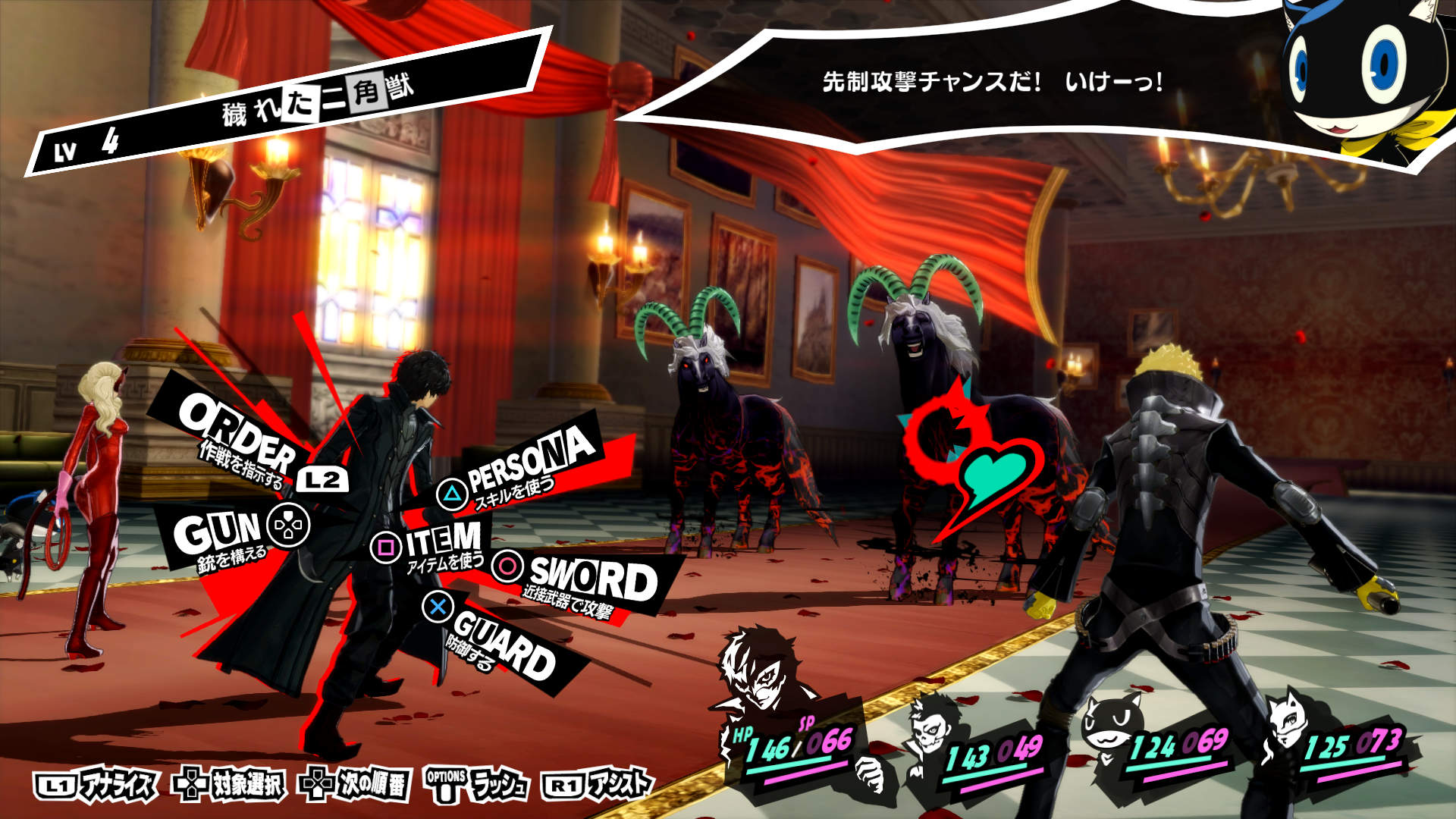
Battles have also never been more thrilling. Normally, in JRPGs, the thought of yet another random encounter is enough to infuriate the player, Persona 5 has such a bright and energetic presentation that just makes each battle so enjoyable. All the enemies have wonderful, unique designs with a specific weakness of some kind that must be exploited by the player. There is also the addition of guns to the game, which adds new (though slightly under-explored) level to the battles. The biggest change is how one acquires personas. In the previous game, it was through loot and creating new creatures in the Velvet Room. Here, one must battle the creature, 'down it' and then interrogate it. If you can convince the creature to turn to the path of righteousness (or simply that you're a fun person to hang around with), they will join your cause. This change has divided some players and while it's not perfect (it essentially comes down to knowing the personality of the creature - which is listed at the start of the interrogation - and selecting the appropriate responses) I do feel it suits the tone of the game. The fun then comes from experimenting with Fusion, in which multiple creatures can be fused together to form better personas. It's endlessly deep, fun and rewarding.   

Amazingly, battles never get dull in Persona 5

Persona 5's biggest new addition is Mementos, a massive Palace formed from the cognition of the general public. You will explore various different levels and sections of Mementos over the course of the game. The player can freely explore the dungeon in your free time, grind for EXP, try to reach its depths or complete the dozens of side-quests the game offers you. A slight flaw in Persona 4 is that the combat and exploration elements are locked to the dungeons. Here, Mementos allows the player to gain EXP and experiment with their Personas and train up new members While the Phantom Thieves have bigger goals of changing society, they never forget the little people. A confidant will keep you up-to-date on requests the general public to change the hearts of evildoers. Mementos allows time for little side-stories to be fleshed out, sometimes linked to the various different confidants. It is somewhat similar to The Witcher 3's side-quests and mini-stories, though maybe not quite as rich. 

Mementos is a massive side-dungeon that'll keep you going for hours, whilst also grinding for EXP and experimenting with your new Personas. 

Do I wish Persona 5 was on the Vita and not the PS4? Sure, it would be great and I hope that a handheld version will someday be released (a perfect game for the Switch, maybe). That said, playing Persona 5 on a console, with my 5.1 surround set up, is truly an excellent experience. Which brings me nicely onto the soundtrack. The music of Persona 5 is simply brilliant. Bright J-Pop, backed by irresistible strings, makes the whole world of the game come to life and perfectly sets the tone. The song choices might get a bit repetitive after 110 hours of playing (something my partner voiced!) but there is no denying that the music is insanely good. The presentation in general is pretty great, though cut-scenes can be a little bit static. The character models really come to life in the rare higher-quality cut-scenes and the anime segments are a lovely addition as well. The voice-acting averages out as being good, even if there aren't as many standout performances as 4. 

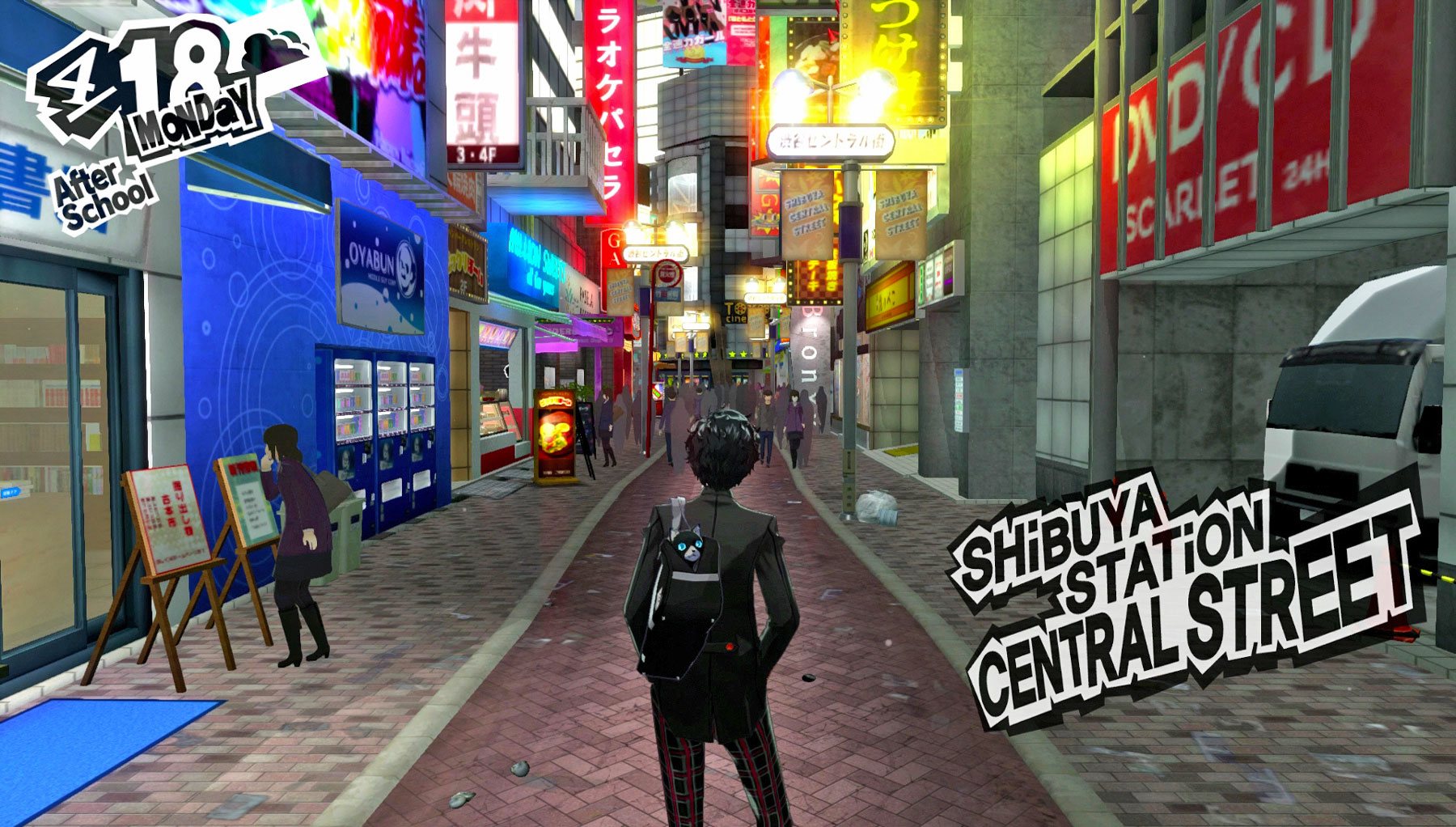
Then there's the exaggerated version of Tokyo, beautifully rendered with all the hustle and bustle of the legendary city. It makes me pine to return one day. Persona games are always excellent at representing a certain place, in particular 4 with the charming small town of Inaba, and the choice to set 5 in Tokyo is inspired. The game was originally going to based around the concept of back-packing, meaning you would have to travel around the world. However, following several crises affecting Japanese society in recent years, Atlus decided to look inwards and set the game in one of Japan's most iconic cities. In general, Persona 5 deals with real life villains - molesters, gangsters, corrupt government officials etc. This marks something of a turn in the series, that I honestly welcome. It's unique, just as 4 was essentially Twin Peaks in the guise of a Persona game. In the age of Trump and irresponsible adults, there is something incredibly appealing about a group trying to fight back against this tide of larger authority.    

Exploring Persona 5's take on Tokyo is such a wonderful experience

What's there left to say. If you have any kind of love for JRPGs, or simply games where you get lost in their worlds, then I can't recommend Persona 5 enough. You owe it to yourself to play this game (or any of the others in the series). The game's success is a testament to the quality of its design and execution. As the final hours begin to unfurl, characters reflect on their first encounters with you with a sense of time and affection, which you also feel as the player. Saying goodbye to a cast of Persona character is always a hard thing. With its stylish art design, infinitely deep gameplay, a system that actively encourages you to get to the know the characters and an epic story, Persona 5 will keep you going for hours and hours and hours...

However, it does mean I can move on now and play some of the year's other gems!

Monday, 3 July 2017

The Walking Dead: A New Frontier (Season Three)


I often cite Telltale's The Walking Dead series as an example of a type of experience that can only be achieved in video games. Robert Kirkman's long running comic book series, and subsequent TV show, have employed legions of fans through its dramatic storyline. The appeal is watching the desperate group of characters being forced to make morally ambiguous decisions in the face of a zombie outbreak. However, I would make the argument that the video game adaptation is the best incarnation of this series precisely because you, the player, are forced to make these incredibly difficult decisions and have to face up to the consequences in game. It is for this reason that the first two 'seasons' of Telltale's critically acclaimed series are so beloved by fans - you feel like you are experiencing this post-apocalyptic-zombie-infested world. Couple this with an excellent script and characters and you have a winning combination. I also give eternal plaudits to Telltale for reviving the point-and-click adventure genre for a new generation, which moved away from puzzle solving to decision making (which I have some mixed thoughts on but ultimately I think it's positive). 


So three seasons in, Telltale have decided to take something of a risk. The breakout character of this series is, of course, Clementine, an innocent child thrown straight into this crazy and bloody world. Clementine is unlike any other child character in a video game, mostly through intelligent writing and an excellent vocal performance from Melissa Hutchinson. Season One sees Clementine as something of a moral compass for the main character, Lee. Season Two, due to plot developments, shifts the focus to herself - a character who once served as the innocent now has to make these incredibly difficult and traumatising decisions. I can't stress how revolutionary this is - big companies would have you believe that this is the exact opposite of the kind of character the 'intended demographic' of video games want to play as. But companies like EA and Activision are stupid and wrong, so Clementine became an incredibly popular character. So Telltale's decision to put Clementine back into being a side-character in Season Three is a little bit odd but it ultimately pays off. Season Three doesn't quite hit the high notes of prior seasons but it does successfully make you care for its new cast of characters and re-positions the story in an interesting way for future installments. 

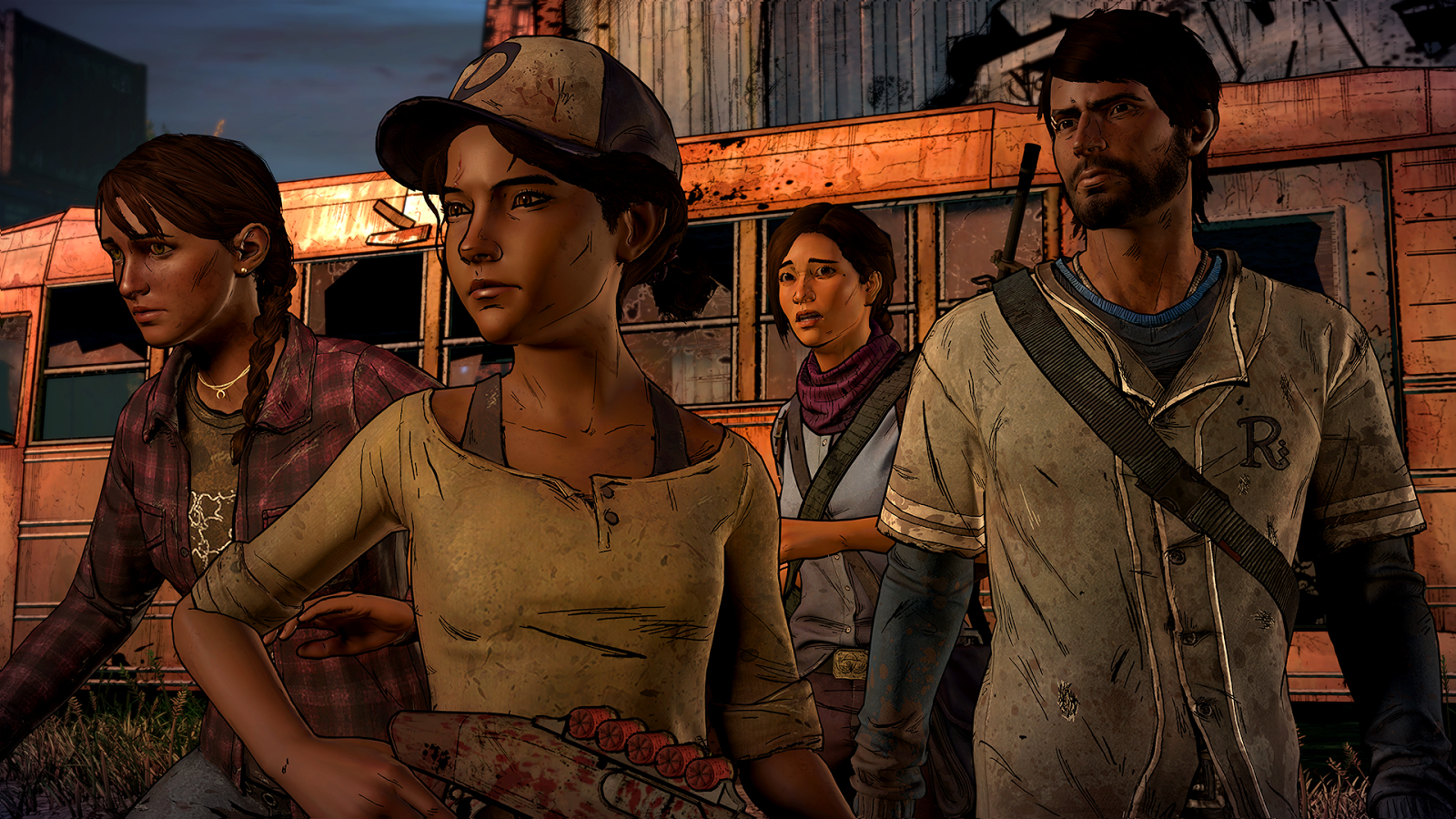
Clementine returns with a cast of characters, including player-character Javier

This time you're put in the shoes of Javier, a disgraced baseballer who is looking after the remnants of his family, who include with brother's children and wife. The family live on the road and seem to have made a relatively comfortable, albeit still dangerous, life for themselves amid the zombie apocalypse. Things are thrown into chaos when when the gang cross paths with the New Frontier, a community from a settlement named Prescott. Along the road, Javier meets and befriends a familiar face to the player in Clementine, who is desperately picking up the pieces after the devastating conclusion of Season Two. However, forces from Javier's past threatens to tear this defacto family apart.


In terms of the gameplay, it is very much business as usual. You have a branching dialogue tree in which you make decisions or react to other characters. These of course all have implications for later parts of the game and shape the narrative. This is littered with quick time events and investigator scenes. Players of the first two seasons can import their save data from another file (irregardless of the platform, as it uses Telltale's cloud based system) so all your previous choices can pull through. Ultimately, your choices from the previous game don't have a massive impact on the plot of Season Three, it is more for flavour. The title of New Frontier is in reference to the in-game group, of course, but this is also to give the impression of a clean slate - with this one, first timers can easily jump in, even if they haven't played the first two seasons. This is a choice that will no doubt be controversial with fans. I think overall it was a wise move. It re-orientates the pieces for Season Four in a way that only becomes clear at the end of the season. I haven't experienced every implication of the choices brought forward from Season Two but I was satisfied with mine. It was tragic, heart-wrenching and just the right level of depressing for the world of The Walking Dead. 

Get ready for more difficult choices
Graphically, it benefits from working on an engine specifically designed for next-generation hardware. The game introduces more cinematic scenarios for our band of heroes, even if the character models still feel a bit stiff. This is saved though by the excellent art design. Everything has a more vibrant look and feel, with the character models themselves particularly benefiting. Everything is very detailed and helps bring the stiff models to life. Telltale has clearly worked to this the series feel fresh again. However, there is one area that does need improvement on. This review is looking at the season as a whole but a source of some disappointment, as I waited for each new episode, was the length of each entry. This has been a problem for some time now for Telltale games and it is still apparent here. Played as a whole experience, it will probably take you 8-10 hours. This is a far cry though from the meaty days of Back To The Future and The Walking Dead: Season One. This might not bother players coming to the game with all the episodes released now but I still wish they could have been extended.


As a whole, Season Three becomes a very emotionally engaging experience. At first, it is hard to gauge what the end game of this season is. The early episodes are engaging enough, with a particularly harsh twist really ramping up the stakes, but doesn't leave much of an impact. That said, time is taken to set up the characters' relationship with each other and it works, for the most part. Events become very interesting when we flashback to Clementine pre-Season Three and we are put back in her shoes. This is a clever way of doling out the information to the player whilst retaining some mystery as to what exactly Clementine was up to all this. My only major complaint about the story of season three is that there is no clear motive to the New Frontier group, outside of being an insular community. I wish a bit more time could be afforded to examining this group's motives. The flipside though is that the character work is super strong, especially when an unexpected character from Javier's past turns up in Richmond. This leads to flying sparks, bruised emotions and plenty of good drama. This is easily the highlight of the middle episodes (three and four), which slowly begin to reveal Telltale's master plan for the season. Episodes three and four succeed massively at building up a pressure cooker situation. 

This leads into the final episode, which I feel is the strongest of the season. Great character work, good length and interesting threads leading into Season Four. The only misstep of the final episode is an all too obvious decision. Spoilers - it is the choice between one character living and one character dying. The player is forced into a situation with a no-win scenario. I find this a bit counter-productive to a story where you forge the narrative. I understand that Telltale don't have an infinite well for their budget or resources to account for every decision but there must be smarter ways of doing this. Earlier in Episode 4, a particularly cruel decision turns on your head in an unexpected way. Other than that, it is a very strong ending which repositions the series in an interesting way for Season Four.

Javier proves to be an interesting and sympathetic character; the gamble of swapping leads from Clementine pays off well

The Walking Dead: A New Frontier may take small missteps but I actually appreciate the shift in perspective to a new character. It helps to give each season a unique flavour and tone. It's not the strongest season of The Walking Dead but it is still manages to match the expected Telltale quality. Concentrating on Javier as a character takes a while to pay off but it ultimately leads to an interesting and surprisingly emotional experience. As the final scenes of Season Three began to play out, I realised that I actually cared about these characters. If you love the previous games, stick with this one, even if you have some reservations, and you may find yourself engaged, maybe even moved.


Rating: 8/10 


Side-Note


I'm desperate to give my thoughts on the other Telltale series - I've not played them all but have finished a good chunk of them. The Walking Dead: Season One (10/10) is a revolutionary masterpiece - an emotional journey where you truly become bonded to the characters. This is still an unmissable video game mostly through its well-written and acted characters. The Walking Dead: Season Two (9/10) has a slow start but it ultimately morphs into something that almost matches the power of the original and sometimes surpasses it. It is also brilliantly plays on the player's emotions and nostalgia for the original season. The Wolf Among Us (9/10) is an excellent adventure story. I honestly did not know what to expect and was delighted by its contemporary setting inhabited by fairy tale characters. It has a twisty-turny plot that keeps the player guessing and just when you think you have a handling on what is going on, the rug is pulled right from underneath your feet. Back to the Future (10/10) I absolutely love. This is where I alluded to my mixed feelings in the review about point-and-click adventure games moving towards decision making as opposed to puzzle solving. Back to the Future is defiantly retro in its design with bizarre (but brilliant) leaps in logic to solve its puzzles. I add an extra point as well for being a massive fan of the original trilogy of films - this feels like a full on sequel to the film series, while also providing fan service and callbacks. Game of Thrones (6/10) is a frustrating experience and actually highlighted a problem I have with the books and the show. Games of Thrones does exceed in making you feel as beaten down as one of its characters, as every decision you make in the game feels like the wrong one. So in a way it is an accurate reflection of the harrowing series but it doesn't make for a satisfying game. I think it's a little too ambitious for a Telltale-style game. And despite having six episodes (up from the usual five), the plot feels like its been stretched very thin. Until the conclusion of the shows's sixth season , I was a bit fed-up with the series' incredibly dark and frustrating turn  - I just wanted the characters to succeed once! And the game just managed to bloat this issue for me.


Saturday, 1 April 2017

Persona 4: A Retrospective

Criminally Underrated 
(a new series in which I highlight and discuss films, TV, music or games worthy of your attention that don't get enough time in the limelight)

3. Persona 4


With Persona 5 (the latest entry in Atlus’ much beloved cult series, which itself is a spin-off of the long running Shin Megami Tensei series) literally just around the corner, I thought it would be a prompt time to look back at the last entry in the series, Persona 4 aka one of the greatest video games of all time. I have decided to put Persona 4 under the Criminally Underrated label as, while it has a loyal fan base (mostly otakus and anime fans) it has yet to break into mainstream consciousness as one of the all time greats. However, amongst those in the know, Persona 4 is often ranked extremely high. With pundits expecting that Persona 5 could be the entry that breaks through, there's no better time to cast a light back on this critically acclaimed entry.  

Persona 4 follows the adventures of an average high-schooler (i.e., the player character) as he moves to the countryside town of Inaba. Here he lives with his uncle, a cop, and his younger cousin, Nanako. The player-character begins to navigate the highs and lows of teenage life as he balances school work and social time with his new friends, a wonderful cast of colourful, interesting and loveable characters. However, as you soon discover, this is no normal town. A strange TV program, known as the Midnight Channel, is transmitted at midnight on certain days of the month. The Midnight Channel has a new subject with each screening, normally someone with a close connection to Inaba, where, in a trance-like state, they reveal their darkest secrets. To further add to the problem these people turn up murdered the next day. The player-character and his gang of friends soon learn there is a connection between the Midnight Channel and a portal to a bizarre world they discover hidden in a TV screen. The gang embark on a mission to uncover the mystery of the murders, solve the secret of the Midnight Channel and the world behind the TV and hopefully pass the semester. Stranger still, the player-character has recurring dreams about a mysterious Velvet Room, where some very odd characters warn that you only have a year to solve the case...


Your unforgettable party (l:r) Kanji, Rise, Yosuke, Yu (player-character), Yukiko, Chie, Teddie, Naoto

Persona 4 was originally released on the PlayStation 2 back in 2008, literally on the cusp of the new console generation. It was created by the same team as Persona 3 and several new hires who were fans of the previous game. Director Katsura Hashino made a conscious effort to make this new game different to Persona 3, by improving the story-telling and gameplay. This is Persona 4’s first major accomplishment- the tone. The way Persona 4 balances conflicting tones, and the gameplay fallout from this, is exemplary. While Persona 3 handled much darker material, Persona 4 is much lighter in comparison, with some dark undertones. On the one hand, you have a comedic, and often drama-filled, high school storyline to experience. However, there is also a dark murder mystery to solve. The two conflicting tones shouldn't work. However, because of the brilliant writing, you become invested in the characters (understanding their day-to-day life and worries) so when the dark stuff kicks in, we truly do feel for the characters. When an individual appears on the Midnight Channel, there is usually a passage of time until the murder occurs. The murders seem to occur after an unseasonably heavy bout of rain turning into fog. This gives the gang an opportunity of a few days to venture into the TV and launch a rescue mission (as the victims are trapped in the TV world). This gives a ticking time bomb element to proceedings. The gang can venture into the TV to save those trapped on the Midnight Channel but first must complete an intimidating dungeon, usually tailored to the captor’s personality and hidden secrets. 


Exploring one of the vast dungeons

The central tenant of the game is the brilliant Social Link system. With this, the game actively rewards you for taking time out of your busy schedule to explore Inaba and to get to know the characters. After a lengthy 5 hour opening section (trust me, stick with it) you are let loose in Inaba. These interactions can range from dates at the mall, uncovering a new side-quest or a simple conversation where we learn new depths to the characters. In addition to getting to know the characters, you can spend time pursuing hobbies, holding down a part-time job, work towards earning a scooter licence to venture further afield or take part in after-school activities. Or you might want to spend your days staying inside and studying for that upcoming exam. Or you can ditch the exams and train to tackle the tricky dungeons.  This all helps to give a real lived in feeling to the world. Inaba is small but the way Persona 4 lets you play the day-to-day life of your character, you eventually feel at home. While there is a set limit on what you can do per day, there is a lot of variety to the activities you can do, all of which will have a positive impact on building your character up. So you gravitate to what you enjoy. With so many characters and hidden side-stories to uncover, there is plenty of replayability here. The stroke of genius is that by taking time to complete the side-quests and interact with the characters, this is actively helping you in tackling the dungeons. This is where the reward of investing time in the characters begins to pay off on a gameplay level. When the player-character first ventures into the TV, he unlocks the power to summon Personas, powerful ethereal beings that can bestow great power while in combat. Each Persona has a unique set of abilities that the player-character can use. There are dozens of the creatures to find, found mostly through random loot cards at the end of battles or in chests hidden in the dungeons. All of them have brilliant art designs, which range from cute to epic. There is a good mixture of original designs and creatures inspired by mythology and ancient religions. While the other members of your party are stuck with one Persona, the player-character can swap and change between them, creating a great deal of flexibility and experimentation. 

Over the course of the game you can increase stats, such as Knowledge, to help your day-to-day life in Inaba and unlock new sections of the Social Link side-quests
Inaba is quaint and small. You will soon feel a great sense of attachment here.

There are dozens of Persona to find and use in combat, all with varying different styles

This is where the Social Links come into play. Powering up Personas work in traditional RPG terms. You gets into random battles, you fight through turn-based combat, win and gain experience points. However, Persona 4 gives you the opportunity to improve upon the creatures through Fusion. Fusion allows the player to blend two or more Personas together to create a more powerful being and is directly linked to your Social Link. All the characters you can interact with have an attribute linked to them, which is also in turn linked to a mixture of different Personas. The more you interact with the characters and improve your Social Link level, the more powerful your creatures become through fusion. For example, Chie is linked to the Chariot Social Link. This means the more time you spend interacting with Chie the more the Chariot Social Link ranks increases. This will give Chie new abilities with each ranking to use in combat. However it also has the added benefit that when you fuse to create a new Persona that comes under the Chariot ranking, the more experience can be bestowed upon them (depending what level the Social Link is at). This gives a massive EXP boost and allows you to create some of the most powerful Personas in the game.  

The more time you spend getting to know the characters the more your Social Links will increase
Persona 4 also has a handful of characters you can form a romantic relationship with.  I chose Chie.  

So, Persona 4 offers a simple yet endlessly deep combat and levelling up system, that works hand-in-hand with the story telling and character development. Brilliant. But the true heart of the game lies with the characters and more specifically your party. The party that you slowly form over the 60 hour plus experience is one the greatest in the genre. They are given clear personalities, with some complications, and are ultimately positive characters. This is something often lacking in JRPGs, as protagonists tend to sway toward the dark, tortured side. Persona 4’s characters feel real. Sometimes they’re goofy, sometimes they’re serious, sometimes they're sad and sometimes they're high on life. The way the game beautifully interweaves the characters’ wants and needs is something to behold. The social interactions only work to strengthen our bond with them. And they are truly unforgettable. There's Yusuke, the loveable goof trying to live up to his father’s legacy. There's the boisterous Chie, the rough-and-tough no-nonsense member of the group who loves kung-fu. And we can't forgot about the bookish Yukiko, struggling to balance academics while running the family hot spring. Hot-headed (but secretly sensitive) punk Kanji provides the brawn while the mysterious Naoto, young detective wonder, provides the brains. To bring some brightness into grim situations is the teen pop-idol sensation Rise, taking time out of her celebrity lifestyle to lay low for a while. And, finally, the game’s mascot, the awkwardly adorable Teddie, who is both hilarious and surprisingly tragic. Over the course of the game’s epic run time you will grow to love these characters. Their connection with the player-character feels earned and, as the credits begin to roll, you might even find yourself with a tear in the corner of your eye as you say goodbye to this beloved gang. Ultimately, Persona 4 is about how people can come together and help one another to become better individuals. 

The united party

Yup, you even get to play in a band at one point

Of course, one of the major selling points of Persona 4 is its style. Backed by a brilliant soundtrack of original J-Pop and rock songs, Persona 4 effectively feels like you have walked into a living anime world. There is a livlinesses to the setting, which is further communicated through a handful of anime cutscenes. The town of Inaba also feels alive, as different seasons come and go (and you can interact with all the Japanese holidays, as special events occur in the town). While the basic blocks of the town feel primitive today, you do become slowly affectionate towards the town. This is also to contrast the bright and bizarre dungeons you venture into. As mentioned earlier, each dungeon is a manifestation of the kidnapped victim. For example, Kanji’s dungeon is a manifestation of his confused sexuality (a major breakthrough in the representation of LGBTQ characters in JRPGs, something the genre often shies away from). A blocky 8-bit video game world is the manifestation of a deceased mind of a geek. You get the picture. Each one has a unique design, even if the layout ends up feeling a bit familiar. You’ll spend a lot of time in the dungeons but the brilliant art style on both the location and the creatures you encounter will keep you more than entertained. The graphics hold up ok, particularly if you're playing on the Vita, but the strength of the gameplay and the writing more than make up for now basic sprites. 

Inaba changes throughout the course of the year and lets you experience traditional  Japanese festivals

The influence of Persona 4 is unmissable. The fact that Altus have spent so long preparing Persona 5 is a testament to this (almost 10 years). There have been several spin-offs including a full length anime series (which gives a bizarre personality to the blank slate player-character), a manga series, several spin-off video games, including a strange dance rhythm game (and oddly serves as a full on sequel), various toys, plushies, soundtracks and more. The game clearly made its mark on the group of fans who first discovered it on the PlayStation 2. Persona 4 continued to find new fans when it was ported to Sony's underrated handheld system, the Vita, in 2012. And this is where Persona 4 truly found a second coming. Most RPGs have to be played on a home console. Due to the sheer size of these kind of games, they simply can't fit onto a handheld cartridge. However, for busy adults, this can mean investing less time than what you might have done as a teenager. And this is where the handheld version of Persona 4 comes in (dubbed Persona 4 Golden). The game's mechanics make it perfect as a game to play on the go. I'll play a couple days in the game while I'm waiting for my train. Ah hell, I’m in the middle of a dungeon and I'm about to arrive at work. But it's ok – the brilliant long battery life of the Vita’s standby mode means I can pick up on this at lunch. You get the picture. The bite size nature of the game means it's easier to get invested than on the PlayStation 2. Heck, I know I wouldn't have been able to finish the game in the time that did if I played it on a home console. It's probably the best handheld gaming experience I have ever had.  Returning fans can also enjoy new dungeons, a whole new character and accompanying side-quest, several visual and gameplay improvements, a whole batch of new Personas and the promise of the true ending. Persona 4 Golden is one of the greatest ports of all time and is the definitive experience of the game. Atlus. Please make Persona 3 Golden. 

One of the stranger spin-offs - Persona 4: Dancing All Night for the Vita
Persona 4 Golden was released to critical acclaim and renewed interest in the series. It is seen as one of the best games for Sony's underrated console, the Vita

My final thoughts on Persona 4 are simply that it is an unmissable game. I honestly don't feel that words can effectively communicate the amount of affection and love I have for this game. The fact is, video game journalists are quick to write off the JPRG genre as antiquated. Some games do seem to fall into this view (mentioning no names) by sticking to the same tired formula. Persona 4 and the wider series shows that there is still a beating heart left in the genre. My hope is that Persona 5 will start to bring people back round to the idea of quality JRPGs. For this series emphasises experimentation, traditional RPG gameplay and brilliant writing to create unforgettable experiences. With Final Fantasy XV breaking into the mainstream the way it did, I hope those same people will buy Persona 5 to show to developers that this is still a viable genre. But even if it doesn't, those in the know will have a brilliant series of games to enjoy, with Persona 4 as the kind of the lot. Simply put, anyone who calls themselves an RPG fan owes it to themselves to play Persona 4. It's addictive, heart-felt and offers endlessly deep gameplay. An essential. 

Rating: 10/10