Saturday, 17 March 2018

Studio Ghibli: A Retrospective, Part Eleven - Whisper of the Heart


The meta-narrative of Whisper of the Heart is the story of the film's director, Yoshifumi Kondo. Kondo served as much a key part of the Studio Ghibli narrative as Miyazaki, Takahata or Suzuki. Born in 1950, Kondo became associated with Miyazaki and Takahata early on, working on TV projects such as Future Boy Conan and Anne of Green Gables. He was eventually promoted to character designer on the TV series Sherlock Hound in 1980. Following a spate of inactivity in the mid-1980s, due to recovering from pneumonia, Kondo re-joined his former animation comrades at Studio Ghibli in 1987 where he was quickly promoted to animation director on Kiki's Delivery Service, Only Yesterday and, eventually, Princess Mononoke. While a huge chunk of the gorgeous animation can be attributed to the visions of Miyazaki and Takahata, Kondo had to actually execute this vision. A hugely important role. The studio's faith was so strong in Kondo, that they gave him a project of his own to direct, Whisper of the Heart, released in 1995. The 1990s was period when Ghibli really began to consider their legacy for the first time. Kondo was expected to become one of the top directors at Studio Ghibli and, eventually, Miyazaki and Takahata's successor. However, following the conclusion of production on Princess Mononoke in 1997, Kondo died the following year of aortic dissection. His death is said to have been caused by excessive work and contributed in part to Miyazaki deciding to retire from filmmaking in the late 90s. While he would eventually return to the studio for Spirited Away, Kondo's death was the catalyst to work at a more relaxed pace at Ghibli. This leaves Whisper of the Heart as the only film in Kondo's filmography, a bittersweet epitaph to a clear animation genius. 
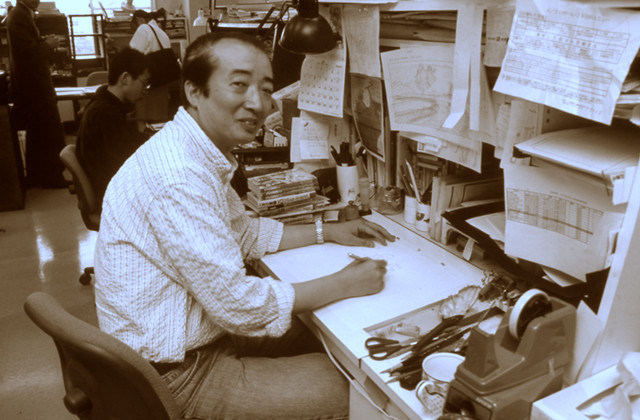
Yoshifumi Kondo 1950-1998
So how does Kondo's only film hold? Pretty well actually. While it's a bit slight in places and takes a while to get going, Whisper of the Heart slowly builds into a lovely film about the teenage experience, yearning, learning to take responsibility, overcoming depression and, ultimately, working towards attaining one's aspirations. Based on the manga series Mimi o Sumaseba, by noted shojo author Aoi Hiiragi, it is a great encapsulation of  where Studio Ghibli were in the 1990s, telling a subtle story placed very much in the real world, with only hints of the fantasy elements that distinguish their previous works, along with a very mature art design and approach to the animation.

Shizuku is a sullen 14 year old struggling with many of the usual teenage problems - family life is a bore, with both parents busy pursuing a career in education and a sister away at college, the pressures of school life and exams encroaching with her every step, hanging out with her friends and trying to avoid that one really obnoxious boy she can't stand. Hormones have hit Shizuku hard and her only solace is her books. She also seems to enjoy writing. Her school friends take great delight in her translated version of the John Denver classic Take Me Home, Country Roads, which is reinterpreted to be about her feelings being, basically, depressed (she has, however, done a more comical version called Concrete Roads, poking fun at the urban diaspora of Tokyo). But there's something ... missing in her life. She admits that even reading doesn't make as happy as it once did. Hrm. 

Honestly, what saves the slow moving first act of Whisper of the Heart is the characterisation of Shizuku. She might be the most nuanced of all the Ghibli heroines. She's a bit lazy, unambitious and is battling with her hormones but she is kind, understanding and sweet. She can be somewhat selfish at times but she is ultimately more intelligent than she realises. Shizuku eventually uses her daydreaming to her advantage, when she starts to draw this into her writing. It does soon become apparent that Shizuku has some form of depression that comes from a yearning to complete ... something. 

Whisper of the Heart is a great addition to the Ghibli canon. Whilst not a personal favourite, it has so much going for it  that it definitely warrants multiple watches

Things start to change when Shizuku notices that every book she borrows from the library has the same name on the check-out card - Seiji Omasawa. Getting swept up in one of her fantasies, she almost imagines this idealised young man in her head. Her yearning for adventure leads her to following a cat across town she seemingly seems to be egging her on (almost lie Alice following the White Rabbit). The trail eventually finishes at an old antique shop. She meets the shop proprietor, an old man, who owns a variety of trinkets including a statue of a cat character named the Baron. She eventually realises that the old man's grandson, the obnoxious boy she keeps running into who I mentioned earlier, is in fact Seiji Omasawa. To be brutally honest, I do find the opening 45 mins or so painfully slow. There doesn't seem to be any clear goal, at least not until our lock in with the story. When it's revealed who Seiji Omasawa is, the film peaks up in interest. Seiji, as it turns out, has a rather unconventional hobby - he builds violins and dreams of studying with the greats in Italy. The revitalised narrative begins with Seiji showing off his violin playing skills by playing Country Roads. She fumbles along, trying to sing the lyrics and they are soon joined by Seiji's grandfather and friends, which turns into a musical extravaganza. Honestly, this might be one of my all-time favourite Ghibli scenes. 

The famous Country Roads scene - easily in my top 10 favourite Ghibli scenes

However, things take a sad turn. Just as Shizuku and Seiji begin to defrost their previously icy relationship and become very close, the violin maker announces that he is moving to Italy for a year to study with the masters of the craft. After finally finding the One, Shizuku faces the prospect of being alone once again. Shizuku decides to funnel her depression and loneliness into writing a novel. Seiji and his grandfather provided her with the inspiration to write a story, now she just has to complete it. This is where the wonderful fantasy sequences come into play. Shizuku imagines herself as the heroine in a wind-swept realm, accompanying the Baron on a grand adventure, as a visualisation of her laying about the narrative framework for her novel. Shizuku decides to turn the statue of the Baron into the main hero of her story, much to the delight of Seiji's grandfather, who actually has something of a sad backstory of how it fell into his posession. These fantasy sequences are just stunning, especially in the sophisticated world building and how they reflect what is happening in Shizuku's life. Invariably, her new focus takes her away from her studies and her grades at school begin to slip. Her parents offer an ultimatum - get on with your studies or finish the book. 

The brilliant fantasy sequences help to visual Shizuku laying out the track for the narrative of her novel and experience her emotions

The conclusion is sweet. On a foggy Tokyo morning, after finishing the first draft of her book, Seiji, out of the blue, returns to Japan and goes to see Shizuku. The two rush up to the top of a nearby hill to watch the dawn break. The realism of the animation here is truly breath-taking. Shizuku admits that she is not a perfect person and that there's a lot she needs to do to make her into the best version of her. The two ultimately make an unbreakable bond to support each in all their future endevours. Thus caps off Whisper of the Heart. It's not a perfect film and I certainly wouldn't recommend it for those just getting acquainted with Ghibli. However, there is a profound sense of maturity to the story-telling and animation. It's stripped back, for sure, and the first act is very slow moving but Whisper of the Heart manages to pull it back with a very emotionally gripping narrative arc. I think it's the honest sentimentality of the teenage experience that really holds it all together. Shizuku is a great addition to the pantheon of Ghibli heroes and her struggles navigating teenage life are all too relatable. At the end of the day, the film is subtle and quietly moving. As usual, every aspect of the art design and animation is perfect, with the animators clearly pouring their real life experiences of living in Tokyo and similar urban diaspora into every frame. Basically, this is the film that Ocean Waves should have been. The underrated score by Yuji Nomi is also fairly wonderfully, lending a fairy tale like sense of wonder to the proceedings. And as a debut film, it is incredibly assured. It just makes me a bit sad that Kondo was never able to follow up on this film. He was certainly a great talent and had the spark of an animation genius. 


Some quick notes on the dub and it's just a-ok. Brittany Snow is spot on as Shizuku adding a vulnerability whilst retaining her slightly more brattish but ultimately sweet tendencies. David Gallagher voices Seiji in his trademark Riku voice (yes, that's Riku of Kingdom Hearts fame, making this something of a mini reunion for the voice actors of this video game series, as Snow voiced Namine in the second instalment). Cary Elwes voices the Baron in the fantasy sequences and the rest of the cast is rounded off by established and respected TV actors, such as Jean Smart; plus Ashley Tisdale as Shizuku's best friend - because this was a dub produced by Disney in the mid-2000s!  

After four years away, Miyazaki finally unleashes her magnum opus - next time we talk about what is probably my all-time favourite film - Princess Mononoke.

Sunday, 4 March 2018

Oscars 2018 - What I Want To Win and What Will Win


The 90th Academy awards show is happening...well, tonight! While the whole thing is a phoney industry-trade award show, designed to pat itself on the back, the Oscars in 2018 have certainly produced one of the most varied line-ups in years. And how the Academy is going to vote following one of the most tumultuous years in Hollywood history has been the source of debate, controversy and internal politics.

So just for a bit of fun (well, until I get to Best Picture), I'm going to go through the major awards and talk about what I think will win and what I want to win.

But first, a few things:

Not going to go through the technical awards. I want Blade Runner 2049 to win as much of them as possible, but if I was to pick just one award I hope it gets Best Cinematography. The Best Animated Film section is a joke this year. Coco will win, of course. But The Boss Baby as a nominee? Really?? No nod for The Handmaiden for Best Foreign Language Film. What the hell. I want my lad Jonny Greenwood from Radiohead to win Best Score for Phantom Thread. Original Song, I would be happy with Remember Me from Coco, since it's catchy and an integral part of the film. Adapted Screenplay, I really want The Disaster Artist to win. Not because it's the best in that category (I do kinda want Logan to win...comic book/genre fanboy here) but more for the chance of Tommy Wiseau storming the stage...

Here's a picture of Tommy. Why not?
Anyway, let's get on and see how right I am!

Best Supporting Actress

Who I Want To Win: Laurie Metcalf - Lady Bird


This is a just a brilliant, soulful and genuine performance. A key cornerstone of making Lady Bird work as a film.

Paddy Power Bet: 4/1

Who Will Win: Alison Janney - I, Tonya


Haven't seen I, Tonya yet but the press are widely praising Janney's performance and this is one everyone seems to agree on is a dead cert to win.

Paddy Power Bet: 1/8

Best Supporting Actor

Who I Want To Win: Willem Dafoe - The Florida Project


I haven't seen The Florida Project yet so this is more because I've loved the weird, quirky and over-the-top performances of Willem Dafoe for years, so it's about time he got some recognition. He's like Christopher Walken. Is he a good actor? Not too sure. Is he memorable in all of his roles? Hell yes. I have heard though that his turn in The Florida Project is quite brilliant, so it seems deserved.

Paddy Power Bet: 5/1

Who Will Win: Sam Rockwell - Three Billboards Outside Ebbing, Missouri


Rockwell has always been an unappreciated character actor and Three Billboards has finally given him a platform to be recognised. It's a problematic role, one that will no doubt cause a wave of controversy on social media, but most of the press are in agreements that Rockwell has the strongest shot of winning.

Paddy Power Bet: 1/10

Best Actress

Who I Want To Win: Saoirse Ronan - Lady Bird


Really hard one to choose. I loved Sally Hawkins in The Shape of Water and I found both performances charming and brilliant in their own ways. However, Saoirse Ronan was something of a revelation to me for Lady Bird. I always knew Sally Hawkins was brilliant but Ronan was a genuine surprise.

Paddy Power Bet: 12/1

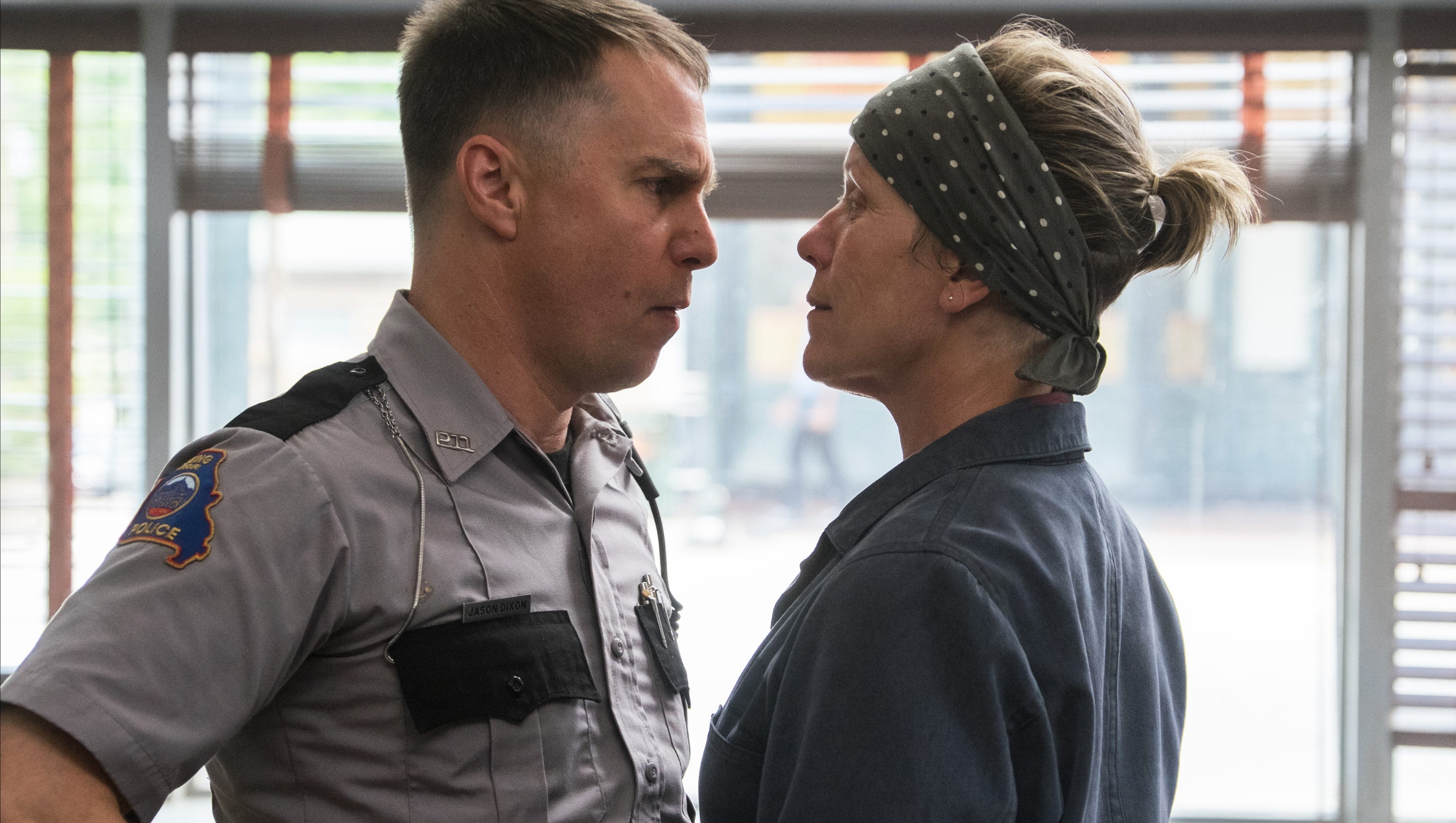
Who Will Win: Frances McDormand - Three Billboards Outside Ebbing, Missouri


Tricky one to call, but I just having a feeling. The character herself is quite problematic but channels the rage of the #MeToo movement and the voice for silenced women. Plus, she gets all the big speeches and scenery chewing the Academy tends to like.
Paddy Power Bet: 1/20

Best Actor

Who I Want To Win: Daniel Kaluuya - Get Out


Has the image of Daniel Kaluuya crying already become one of the iconic images of horror? Like up there with the twin girls in The Shining? Reagan spewing vomit in The Exorcist? Carrie covered in pig's blood? I'm pretty sure it is and this powerful image was used as a key part of the film's marketing. And Kaluuya is excellent in the film. I was tempted to put Daniel Day Lewis for his brilliant turn in Phantom Thread but so rarely is a performance like Kaluuya's nominated you simply have to give with him in an instantly iconic performance.
Paddy Power Bet: 16/1

Who Will Win: Gary Oldman - Darkest Hour


No question - he has this in the bag. Darkest Hour is one of the few films I have not seen from the line-up this year but the accolades speak for themselves and are around expected. Ok film, brilliant central Gary Oldman performance. He's been working for decades and has not had his Oscar yet. Now is the time.
Paddy Power Bet: 1/25

Best Director

Who I Want To Win: Guillermo del Toro


I've talked at length before how del Toro's projects just never seem to take off making any that do come out a mini-miracle. He's been working in the industry for years, is a brilliant, creative and smart individual and I think it's about time he gets some mainstream recognition for his years of work in the fantasy/horror genre. Plus, I would a fellow genre geek to take the award home. My mind says Paul Thomas Anderson but my heart says Guillermo.

Paddy Power Bet: 1/14

Who Will Win: Guillermo del Toro


Yeah, for the reasons I have outlined above, I think del Toro will win this year. I don't think The Shape of Water will win Best Picture though (it's a bit too weird for the Academy, even though it evokes tropes from classic Hollywood romance and horror films - i.e. the kind of thing the Academy loves). Might be wrong but I have a feeling. But as a runner-up prize, and because audiences and critics loved that film, they will recognise del Toro for his years of service to the film industry by awarding him best director. Then again, I used the same logic for George Miller when he was nominated for Mad Max: Fury Road and was supremely disappointed when he didn't win. Still the biggest crime in Oscar history.

Paddy Power Bet: As Above

Best Film

What I Want To Win: Get Out


OK, Get Out is not my favourite film from the line up - that goes to either Lady Bird or The Shape of Water. But Get Out is the film of the now. There's a reason this film connected the way it did and I would love for a genre film to take home the award. The fact that some Academy voters have refused to see the film is quite baffling and a sign of who ultimately has a say in what takes home - old, white men. It won't win for precisely that reason. A big part of that film is a holding a mirror up the elite white men in the story and how they silence the experiences of ethnic minority groups. Maybe a bit too close to home for the Academy?

Paddy Power Bet: 11/2

What I Think Will Win: Three Billboards Outside Ebbing, Missouri


Quick run through why I think the other nominees won't win (ignoring Darkest Hour and Call Me By Your Name, since I've haven't seen them yet). Phantom Thread is too weird. The Shape of Water is also a little too weird - plus it's a sci-fi film (though it has a higher chance than the other films listed here). The Post is the obvious "Oscar" choice but they don't want to seem out of touch so they won't vote for it. Dunkirk was a technical marvel but that's about it. Get Out is a little too politically charged for the reasons I outlined above - plus it's a horror film. Remember this isn't a comment on the quality of the film - far from it. The Academy just likes certain kinds of films. And they traditionally don't vote for genre films.

I think it will be Three Billboards or Lady Bird. I have argued before that in the year of #MeToo, the Academy will give this ultimate award for Best Picture to a female centric film. Remember, these awards are often backed by political reasons and trying to make Hollywood look like a great place (side note - it isn't). And after the fallout from Harvey Weinstein, it makes sense to sweep all the issues Hollywood have with women (unequal pay, casting coaches etc.) under the carpet by giving the award to a film like Lady Bird. But then I got to thinking that Three Billboards may just swing it.

Consider this. The film centres on a wronged woman raging against the system in place to try and get justice for a horrible event that has traumatised her and her family, that informs all of her actions and ultimately taps in the furious divide in modern America in the era of populism and Donald Trump. Think of that from an Academy perspective. They want to make themselves look good and relevant but they have that nagging Weinstein issue...The Academy has a history of co-opting films to suit their current political agenda. Are we in any doubt that the Academy picked Moonlight not because it was the best film of that year (though, it probably was) but because, after the #OscarSoWhite controversy of the previous year, they wanted to give the gong to a film with a predominantly African-American cast? So, Three Billboards seems to tick the necessary boxes of this year - it does deal with a wronged woman, tapping into the #MeToo controversy, but ultimately diverts attention away from Hollywood's inherent problems by blaming the system in place. After all, everyone can get behind hating Donald Trump. Let's just sweep the rape, sexism and misogyny under the carpet by kind of acknowledging it but not really dealing with it... Sad? Hell yes. Cynical? Definitely. Tactical? Most certainly. And it would be even more sickening considering the decades of emotional and physical abuse that has happened.

I want to be wrong. I want a genuinely wonderful film like Lady Bird to win or even Three Billboards just for being a great film but the Academy winners nearly always follow a line of thinking that tries to make them look good. I might be seeking a conspiracy theory but this is just the way the Academy works...always remember. Old, white men vote for these things....

Paddy Power Bet: 11/10

Anyway this was fun to write, though this article will only be relevant for a few more hours...

Lady Bird


2018 might possibly be one of the most exciting line-ups of Best Picture nominees in years. Not that any of this really matters (at the end of the day it is, and always has been, an industry trade show that pats itself on the back) but if we are going to award a single film Best Picture, I'm glad there's at least a diverse and interesting selection of films to pick from. In the past few weeks, I have seen some films that I do think will go down as genuine classics and perhaps the most quietly revolutionary is Greta Gerwig's (she of Frances Ha) Lady Bird, an excellent coming-of-age film shot through the tender loving eyes of experience. There has never been a teen drama quite like Lady Bird to the point where others have a bit of catching up to do.

It's 2002 and we're in Sacramento, California, described by the titular character as the "Mid-West" of the state. This is just one of the many opinions held by the outspoken 17-year old teen Christine McPherson (Saoirse Ronan), though she prefers (well, more demands) to be called "Lady Bird". She is senior at a Catholic high school and suddenly the prospect of the "future" is on the near horizon. She has clear(ish) plans though - she wants to go to an art college on the East coast and escape the drabness of Sacramento. And the fractious relationship with her mother Marion (Laurie Metcalf). Finances are tight and it looks like her parents can only afford local city colleges. Not if Lady Bird has anything to say about it...

Now if that plot summary sounds a bit familiar then ... yes, I guess it somewhat is. Lady Bird doesn't shy away from the fact it is a coming-of-age tale but Gerwig tells it in the most unconventional way possible. We get the usual right-of-passage moments expected from this type of film - first boyfriend, break-up, swooning after the cool kid, dumping best friend, going to the prom etc. However, Gerwig is more interested in fleshing these elements out via a feminist point-of-view that never veers into cliche. Everything is shot through the lense of nostalgia. The setting sun of the west coast and the grainy cinematography all evoke the sense of a memory, a polaroid picture in an old photo album. In fact I was convinced this was shot on film but it was, indeed, digital. Go figure. The pacing is absolutely perfect as we float across a year in the life of this character, cutting from event to event.

Lady Bird is an all-round perfect film, that is a sensitive and funny look at the teenage experience

In terms of the characterisation, Gerwig and Ronan, somehow, never make Lady Bird unlikeable. This is absolutely key to the film. She does some pretty nasty things, that I don't think the film excuses her from, but it's all wrapped up in the shell of an angry, frustrated and often quite charming 17 year old. And Lord knows we've all been there. A huge amount of cudos to Ronan. She completely envelops this character to the point where you forget your watching Saoirse Ronan. And this is something of a coming of age for her as an actor. In the past, I've somewhat underestimated her, maybe because of the films she's been in, but here she is absolute brilliant. The rawness and tenderness of being that age just oozes from the performance, pimples and all (Ronan wanted to show teenage skin for what it usually is, as opposed to the glamorous Hollywood interpretation of being teen). This is an all time great character.

The film's core though is the relationship between Lady Bird and her mother. Originally wanting to call the film Mothers and Daughters, Gerwig never shies away from this hurtful but ultimately deeply loving bond the two characters have. Metcalf is absolutely brilliant as Marion, a kind of OCD riddled yet open-hearted woman trying to keep her family together under tight finance restrictions and mental health issues. Like Lady Bird, Metcalf never makes her unlikable. She is the ultimate authoritarian figure in the story but all of her actions come from a very real place. It is the space between the two that informs pretty much most of Lady Bird's actions and the film, quite rightly, uses Metcalf sparingly for maximum effect. When the two do find some common ground, we do see how there is room for these characters to relate and really get on but this is only fleeting. We open with both getting emotional over the powerful words of John Steinbeck on an audio book of Grapes of Wrath but soon explodes into argument about having the radio on or not following the novel's conclusion. This just makes it more tragic that the two revert to defensive stances with each other. It's a complex relationship but the film makes us understand it completely.

At the centre of the film is the complex relationship between a mother and a daughter 
Lady Bird rounds off with a stellar set of supporting characters. Beanie Feldstein is pitch perfect as Lady Bird's best friend, Julianne. She might be the most quietly feminist element of this film. This character type is often played up for laughs - the overweight, slightly dim best friend. But she is never played to be the butt of jokes. Feldstein's performance is incredibly funny but it comes from a genuine place and never at the expense of her. Lucas Hedges is just as sweet as Lady Bird's first boyfriend, Danny. Again, this character also never veers into cliche and their break up comes from a very interesting place that morphs their relationship in unexpected ways. It's really unanticipated and quite authentic. And it's the little details that fill out the rest of the figures in this world. Tracy Letts as Lady Bird's quietly suffering father. The down-to-earth nun. The charming math teacher. The odd relationship between Lady Bird's brother and his beau. Timothee Chalamet as the too-cool-for-school-but-not-really-that-cool-guy-in-a-band. Stephen McKinley Henderson as the kind and loving Father Leviatch, who heads up the drama club but is secretly suffering from depression. With a brilliant and funny script (and it is funny), the world of Lady Bird just feels lived in and honest.

Lady Bird is probably one of the most confident and self-assured debut films from a director I can think of (she collaborated with Joe Swanberg on Nights and Weekends, so Lady Bird is Gerwig's debut single credit film). The whole thing is so wonderfully effortless that is emotionally raw, incredibly funny and beautifully made. The film finished in the blink of an eye and I was just left wanting more. Gerwig has promised three further unrelated films set in-and-around Sacramento and I can hardly wait to see where her talent takes her. The bar has certainly been raised higher for teen coming-of-age films. In its own way, Lady Bird is revolutionary in its feminist reinterpretation of the material. I loved, loved, loved every moment of this film. It's about as perfect of a film as you could think of.


And this is a somewhat tough call for the Oscar this year. Having seen 7 out of the 9 nominees, I do think this is one of the strongest, and toughest to call, line ups in years.

Saturday, 24 February 2018

Black Panther


Black Panther is predicted, and largely on track, to become one of the year's biggest films. It has been praised for breaking the Marvel formula, making strides in film representation and is largely loved by audiences and critics alike. With acclaimed director Ryan Coogler in tow, Marvel seem to have created a film that has really tapped into modern sensibilities and where we should be aiming to go with representation on screen. All this is very true ... yet, I found Black Panther to be ... ok. I'm sorry. 

Black Panther picks up soon after the events of Civil War. The African state of Wakanda is mourning the death of its king but are also celebrating the ascension of his son, T'Challa (Chadwick Boseman), to the throne. Wakanda for centuries has maintained the illusion of being a poor country but in reality they hide a highly-advanced technologic city, housing both wealth and some of the most brilliant minds in the world. It remains hidden because the city was built on one of the most precious materials in the world - vibranium - and they hold it to be their responsibility to protect it. And in control of this nation is the Black Panther, a great power passed on from generation to generation. T'Challa and co. don't have long to celebrate before they go on a mission to hunt down Ulysses Klaue (Andy Serkis), an enemy of Wakanda. However, they soon discover that Klaue has a connection to an even bigger threat, one that could potentially destabilise Wakanda as a nation and bring its ideology crumbling to the ground - Erik Stevens, aka Killmonger (Michael B. Jordan). 

I think Black Panther's biggest problem is the first half. There's plenty of interesting elements, for sure and I'll get onto that, but it all ends up feeling somewhat clumsy. There are new characters that need to be introduced, world building to be done, plot strands to resolve from Captain America: Civil War and even further back from Avengers: Age of Ultron and a slightly underwritten hero at the centre trying to keep it all under control. I just think it's a case of trying to do a bit too much all in one go. Individually these elements are fine - Wakanda is well-establish, we understand the complex mythology of the nation, the loose plot strands from previous films are picked up and resolved and the new characters are good (which I'll get to). However, it's a lot of baggage to get out of the way, and some underwhelming action scenes, before getting to real crux of the film, which only appears after in the second half. 

I found T'Challa to be a bit of a stick in the mud in Civil War. I wished that Black Panther would go to show another side of this character, to make me care about him. After all, Black Widow kinda sucked in Iron Man 2 but Joss Wheadon made her into a compelling character in The Avengers. And certainly T'Challa reveals new stripes, for sure, but not enough to make me care for his character. Royalty are often difficult characters to write, mostly because most people aren't royalty thus are difficult to relate to. I was oddly reminded of The Lion King throughout this film. That film is one of the rare occasions where the plight of a prince is really relatable. Consider this. Both T'Challa and Simba are African princes and come from a line of proud kings but are faced with the burden of taking on their deceased father's legacy. A usurper to the throne appears that challenges the main character and both are forced to rise up from the ashes to take their true place. The difference? Simba blames himself for his dad's death. Relatable. T'Challa .... just kind of goes along with the narrative flow. We know he's a good guy and his actions never really come into question, outside of trying to come to terms with his father's morally questionable legacy. Outside of him learning to become a better king, I guess this just makes for a bit of a flat character arc. Is it a good performance from Chadwick Boseman? Definitely. But there's just no meat for the character. 

Chadwick Boseman turns in a good performance as T'Challa, aka the Black Panther, but it's not enough to get past a flat character arc

These issues aside, there is a lot I did like in Black Panther. As I said, I evened out at enjoying the film. In fact, I like T'Challa's cavalcade of sidekicks more than him! Leitita Wright is a complete delight as T'Challa's sister Shuri, a brilliant hyperactive teenage scientist. With brains to match even Tony Stark, Shuri just lights up every scene she is in. Martin Freeman is also good fun as returning CIA agent Everett K. Ross, an effective replacement for the Agent Cole character from The Avengers. Lupita Nyong'o is strong and determined as T'Challa's ex, returning to Wakanda after years adrift as a spy. And Danai Gurira is simply awesome as Okoye, T'Challa's bodyguard. In fact, I have to hand it to the film for another layer of representation - it's very rare you see this many women in roles that are usually filled by men in the action-adventure-superhero genre. Cudos, again. The world building, while a bit rushed, is also very good. While I wished we could have spent even more time exploring Wakanda, the mythology and history of the state are efficiently set up. The actual process of how the power of the Black Panther is imbued into someone is also fascinating. The user is brought to a spirit realm, beautifully rendered with a neon-infused aurora borealis lighting the night sky. Here, T'Challa encounters the spirit of his father (and see that Lion King comparison again...) and these are really lovely scenes. 

I have seen the future ... and it is Letitia Wright's Shuri, T'Challa's awesome brainy sister
Fortunately, the film really starts to even out when Michael B. Jordan's grand master plan begins to come together. Deciding that Wakanda can offer a lot to the world, and perhaps help underprivileged minority groups, he decides to destabilise the country, take the throne for himself and spread the wealth / weapons globally - in order to help minority groups to take up arms and destabilise the world order. This is when Black Panther gets genuinely interesting. And honestly, I think this could have easily been the whole film, as the concept behind Jordan's plan is really quite brilliant. Marvel was already breaking new ground with all African / African-American cast but the fact that this aspect is part of the meta-narrative is inspired. Identity for the African-American diaspora is touched upon in the film and Jordan's villain directly tackles with this concept. If you haven't guessed, he is easily my favourite aspect of the film. It's a great performance with a strong motive - rare indeed in a Marvel villain! The film then becomes T'Challa learning what it means to be a true leader and how to move forward. Ultimately, T'Challa has to accept that Wakanda is wrong to hold back its wealth and technology and that his father was not a perfect man. However, Killmonger's aggressive militaristic way of enforcing this is also clearly not the way. T'Challa is now burdened with this legacy and how to heal a growing political rift in his country. It's pretty engaging stuff and goes a long way to just about redeem Black Panther from a clumsy first half and a slightly underwritten main hero. I do love the final scene between these two characters, as some genuine pathos and levity is given in a genre that rarely makes time for this. 

Michael B. Jordan, easily the strongest part of the film, has an interesting motive and works as part of the film's central theme of exploring African / African-American identity and diaspora 

Black Panther is far from perfect. I've have heard plaudits say it's one of Marvel's strongest films, which I largely disagree with. I'd put it fairly middle of the road. Now, that said, the cultural impact this film is going to have cannot be understated. The fact that Marvel have put together a largely confident action-adventure film with an all African / African-American cast is a sight to behold. It's crazy that it's taken this long. Better yet, the whole idea of African identity playing such a central part to the film largely helps push Black Panther away from the more standard expected tropes of Marvel films. I just wish the central hero was more compelling. The first half is incredibly clunky before veering into some genuinely engaging material in the second half, which then descends into the usual big Marvel action finale (tough with the addition of some rare pathos). I actually could have done with more time to explore this world and its characters. Still, what Black Panther does right, it does really right. I came round to just about liking it mostly due to its great central idea, the compelling performance from Michael B. Jordan, efficient world building and a roster of wonderful supporting characters.

Look, I know everyone is loving this film at the moment and I do feel bad for coming down on it, especially considering the great things it is doing for representation and making that part of the meta-narrative. Good on Marvel. But for me, the pacing and script issues got in the way of my enjoyment. If that second half of the film had been the whole thing, I would no doubt put this as one of Marvel's best films.


My enjoyment of the film may have been hampered by the oddly very quiet sound mix at our local multiplex. Add to this a symphony of dozens of popcorn munchers plus chatting teens and I was having to work a bit harder to understand the dialogue. The magic of the cinema. I've recently purchased a 32" TV. I've hooked up my 5.1 speakers and it's like having a mini cinema. When the sound and potentially the picture is better in your own home than at the cinema, then you know there's a problem looming for the multiplexes...

Friday, 23 February 2018

The Shape of Water


The Shape of Water is something of a glorious homecoming for director / writer Guillermo del Toro. I've talked on this blog before how the chap seems to have no luck in getting his projects off the ground. And most will agree that, while they have their defenders (myself included), his last two films, Pacific Rim and Crimson Peak, are not top tier projects from this master filmmaker. Fortunately, del Toro has returned to form with The Shape of Water, an elegant and beautifully crafted fairy tale to match even the mighty Pan's Labyrinth.  

We open with Sally Hawkins' lonely Elisa in a drab apartment above a worn out cinema in downtown 1960s Baltimore. Life is fairly mundane for Elisa - she has an artist friend next door, Giles (Richard Hawkins), and enjoys a jovial relationship with a co-worker at a local science lab, both working as cleaners; this is the extent of her social interactions. And the issue she has - Elisa is a mute and in need of something to happen to in her life. Hawkins is just as magnificent as you'd expect. With no dialogue to convey her emotions, it's all down to facial expressions and body language. While subtitles are sometimes used to translate her signing, del Toro and Hawkins simply trust the audience to understand the point, feeling or emotion Elisa is trying to communicate. It's a highly convincing, subtle, tender and highly unconventional performance that provides a great anchor to the film. 

Sally Hawkins is brilliant as the mute Elisa - yes, even Oscar worthy
However, things begin to change for Elisa when a new specimen is brought to the lab. She soon learns that this thing is a humanoid fish-creature, discovered in South America and brought back to the lab for further tests. She begins to grow an odd affinity towards the creature as the two begin to form a bond that can only be described as love. Now as silly and bizarre as that sounds, The Shape of Water goes to painstaking lengths to sell this relationship. In fact, the lack of dialogue between the two leads just helps to communicate the sincerity of the relationship even more. The Asset himself (listed in the credits as such) is a masterpiece of creature design work. Drawing upon The Creature From The Black Lagoon as a starting point for the design, veteran del Toro actor Doug Jones (Herb Spaien in the underrated Hellboy films and the terrifying eyeball-on-hands monster in Pan's Labyrinth) imbues animal-like tendencies with genuine human emotions in a highly convincing performance. It's really hard not to care about the couple's plight. 

Elisa and Giles, along with co-worker Zelda (Octavia Spencer) and disgruntled scientist Dr. Robert Hoffstetler (Michael Stuhlbarg), hatch a scheme to rescue The Asset and release him back into the ocean. The only problem is that they have to circumnavigate Michael Shannon's terrifying Colonel Richard Strickland. Shannon is truly unleashed in this role, playing a warped inversion of the traditional nuclear father desperately trying to control his inner rage. He is sadistic and cruel but not entirely unrelatable (though certainly not redeemable). The Shape of Water is really all about lonely people and how they deal with that loneliness. Elisa is isolated due to her condition. Giles is a struggling artist, fired from his job and homosexual in a time when this was entirely unacceptable. The Asset has been kidnapped from his home, tortured and in a completely alien environment. Zelda works nights but still has to the perform the, inherently sexist duties of a "house wife". And Strickland works an intense job which means he has become estranged from his family life and, really, himself. The film is ultimately about making the choice to break away from this cycle of loneliness. Freeing The Asset is the ultimate accomplishment of this by making a genuine human connection. It's even more beautiful that it's through people who struggle to communicate on a conventional level. Interestingly, just as you think the film is reaching its peak, the story continues to unfold in unexpected and highly engaging avenues, exploring this theme perfectly. Every character is given an arc to follow and it all pays off beautifully. 

The Shape of Water takes a silly premise and turns it into an emotionally thrilling experience 

The Shape of Water is a master class in film art design. Del Toro has always been brilliant at visualising his worlds in extreme ways but he uses this boldness in more subtle ways with The Shape of Water. Every frame is simply oozing with gorgeous colours, perfect set-design and excellent lighting choices. There is a return to the fairy-tale like tenderness of Pan's Labyrinth. This certainly isn't the Baltimore of The Wire or John Waters. There's just this heightened sense of reality, with the colour green permeating nearly every frame, to give the impression of a dream like world. 

The Shape of Water is a film to get swept up in. Every aspect works phenomenally well together and it does genuinely makes you care about a women falling in love with a fish-man. Really. I don't think I've ever seen a film with such a strange premise get this much mainstream applause, accolades and acceptance. This is a testament to just how great The Shape of Water is and the brilliant spell del Toro has crafted. Highly recommended stuff.

Saturday, 3 February 2018

Phantom Thread


I approached Phantom Thread with a sense of quiet optimism. The latest film from autuer Paul Thomas Anderson purpotes to be the final on-screen screen performance from actor Daniel Day-Lewis. The potential of these two reuniting is an enticing prospect. After all, their previous effort together led to one of the greatest films of all time, There Will Be Blood. There is also the sense of course correction on Anderson's part. After the criminally underrated The Master, Anderson dabbled in experimentation with Inherent Vice, a garbled and confused film that was visually uninteresting and a complete mess from a thematic and story-telling perspective. And it's become something of a punchline between myself and another film friend. So there's a lot stacked against Phantom Thread. Can it live up to be a worthy send off for Daniel Day-Lewis and can it re-align Anderson as one of the most brilliant filmmakers of his generation? 

Answer: yes, and more so.

Phantom Thread is absolutely brilliant cinema and a very early contender for my film of the year
I'll get the obvious out of the way - Daniel Day-Lewis is absolutely spectacular as Reynolds Woodcock. When news first broke that the actor and Anderson would be reuniting, I had in my head a new character similar to Daniel Plainview, so powerful was Day-Lewis' performance in that film. The good news is that Woodcock is very different kind of powerful male in this film. He is ferocious but in a spoiled brat kind of way. He is softly spoken, precise in all of his actions, deeply misses his deceased mother and is kept under the watchful eye of business partner/sister Cyril (a brilliant turn from Lesley Manville who manages to subvert many expectations of this character type). Woodcock is a high-end dress maker, arguably one of the best there is, living in post-World War Two London. He and his sister are at the epicentre of the British fashion industry, designing clothes for royalty, rich socialites, and other wealthy people all complete with their own distinctive designs. The kind of cult that surrounds him though is akin Philip Seymour Hoffman's gaggle from The Master. Woodcock loves his work, a little bit too much. He has a hard time connecting with people and discards long term relationships like rubbish. 

Life for Woodcock completely changes though when he meets waitress Alma on one of his countryside retreats. The two share an instant bond as Woodcock whisks her away back to London to become his creative muse. However, Alma soon discovers that life with Woodcock is far from easy. Relative newcomer Vicky Krieps more than holds her own against Day-Lewis, giving Alma a sensitive intensity as she tries to to unravel the mystery of how Reynolds ticks. Krieps, like Manville, manages to take this stereotypical archetype to fascinating new places as her character begins to push out against the tight, constricted world of Woodcock. It does essentially morph into Alma's story and Anderson keeps on mounting the surprises with this character. Phantom Thread is ultimately about two toxic people leeching off each other and I think the optimism can be more read as more ironic. 

Daniel Day-Lewis gives a wonderfully bizarre and idiosyncratic performance that is reportedly his final film role before retirement
The way the narrative unfolds is genuinely fascinating. The film sets itself up to be a story of a male-dominated relationship with the naive female character in tow following his every command and trying to unpick him. However, it soon becomes apparent that Anderson is not interested in this tired, misogynistic narrative. Alma soon begins to gain her own form of control over the relationship as the film becomes much more about the shifting power dynamics in what becomes an unhealthy affinity for one another. This is where the film veers into some very odd territory that becomes truly telling about its characters. You'll never feel like breakfast quite the same way again.  

Honestly, the whole thing is quite brilliant. There's a delicate beauty to every scene, as intricate as one of Woodcock's latest fashion projects. The film retains this hypnotic dream-like haze as Anderson's camera glides across the very limited space of a 1950s London town house. Spending most of a film in a tight and confided space doesn't sound immediately appealing but Anderson finds new and exciting ways to beautifully shoot this location. Gothic in its use as part of the wider narrative, the house is just as important as the characters. Even when we venture outside Woodcock's home, there is just this twilight air to every location - the one shot New Year's Eve ball scene is a particular highlight. Every scene is meticulously mounted, lit and shot to maximum effect. 

Equally great is newcomer Vicky Krieps, who injects Alma with intelligence, grit and a hidden dark side 

Then there's the Jonny Greenwood soundtrack. It's just pure brilliance. Having seen the quiet master on stage as part of Radiohead, subtly manipulating background sounds and distortion, he's easily one of the most exciting composers working today. His continued collaboration with Anderson has produced some of the most challenging film scores of recent years; but I would argue that Phantom Thread has the best of the lot. Armed with a 60 piece orchestra, Greenwood produces eloquent and intricate compositions that play over most of the film, heightening the dream-like haze of the film. The score is just as lavish as the setting of the film. Seeing one of the most engrossing recent collaborations between director and composer blossom is a rare treat and Phantom Thread secures this relationship up there with Spielberg/Williams and Hitchcock/Herrmann. 

Despite having the trappings of a traditional British costume drama, Phantom Thread is much weirder, astute and grandiose than expected. With a spectacular (supposed final) performance from Daniel Day-Lewis and pheonomal filmmaking technique, Phantom Thread is essential cinema. Every element coalesces together so brilliantly. I haven't gasped this much in a film in a long time. Welcome back Mr. Anderson - I've missed you. 


Eliminating Hard 8 and Magnolia, which I haven't seen, here's my top Paul Thomas Anderson films

There Will Be Blood>The Master>Phantom Thread>Boogie Nights>Punch Drunk Love>Inherent Vice

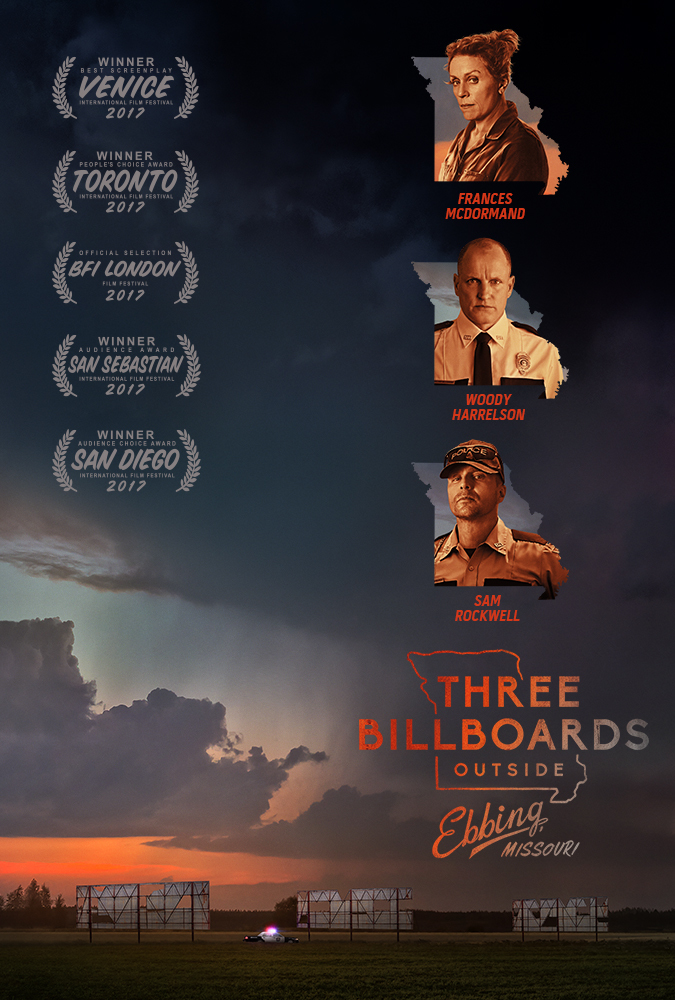
Three Billboards Outside Ebbing, Missouri


Director Martin McDonagh's filmography has a bit of a problem. Every film he makes stands in the shadow of In Bruges, quite possibly one of the best films of the 2000s. While those in the know will be familiar with McDonagh for his six plays that form two trilogies based in and around County Galway, Ireland (The Leenane Trilogy and The Aran Islands Trilogy, respectively), McDonagh really broke into mainstream consciousness with In Bruges, a genuine masterpiece of screenwriting and acting. His less assured follow-up, Seven Psychopaths, saw him break away from the Eurocentric, in particular Irish, world of his previous works. His latest film, Three Billboards Outside Ebbing, Missouri, which looks set to be his biggest commercial breakthrough yet, sees him move even further away with no Colin Farrell in tow this time. With an all-American cast, can McDonagh's sensibilities translate to somewhere as middle-U.S.A. as Missouri?

The good news is that, yes indeed they do. Keeping the same melancholic atmosphere of In Bruges, Three Billboards is a finely crafted, slow-burner drama that explores, in part, issues of anger, mortality, grief and vengeance. If that sounds a bit dry and austere, McDonagh laces the script with his trademark black comedy style, balanced by a brilliant cast of veteran actors. And just when you think the film is going to take the conventional route, the narrative completely shifts and begins to veer into some genuinely unexpected and morally grey material. 


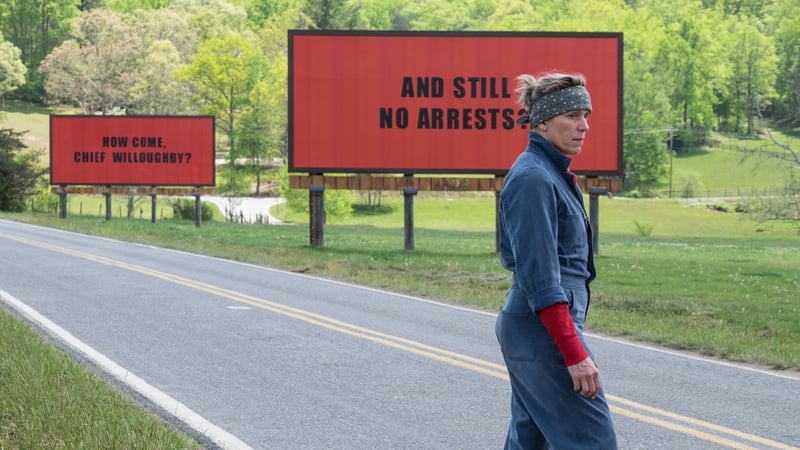
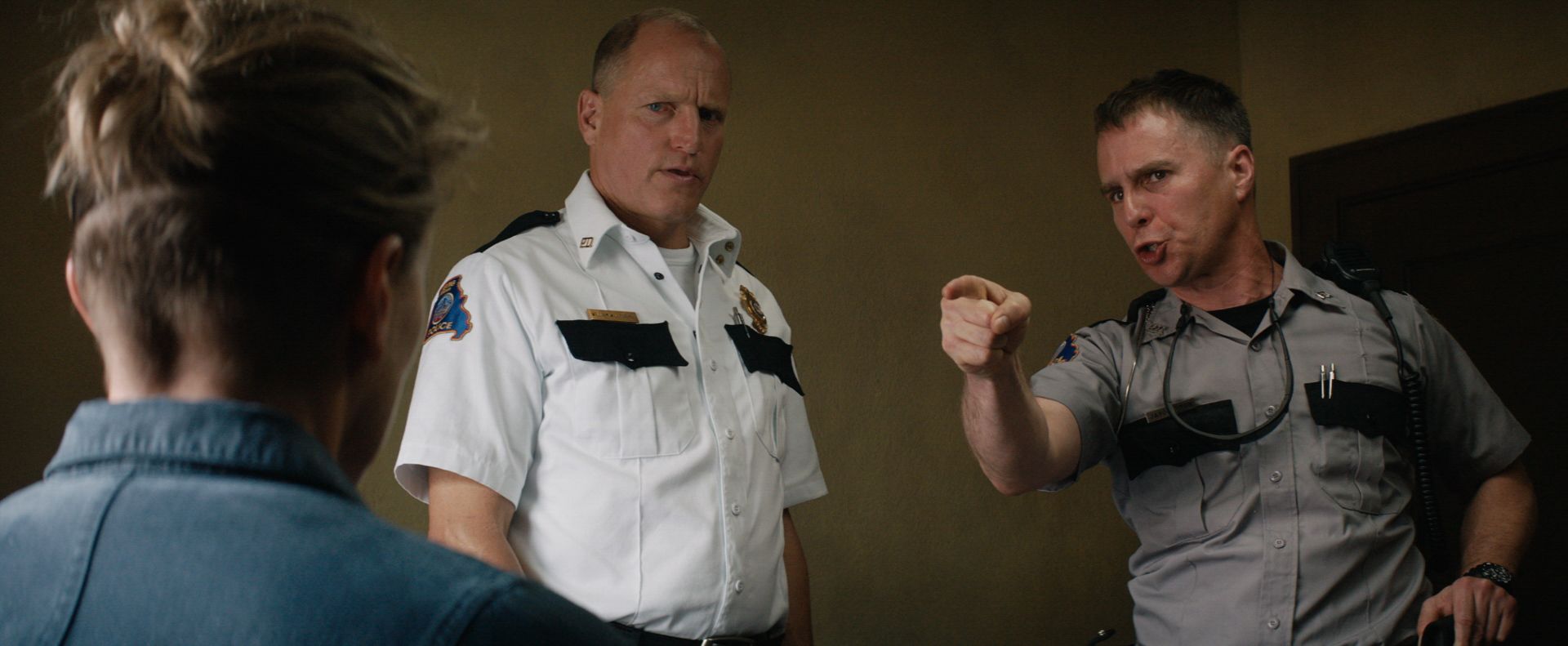
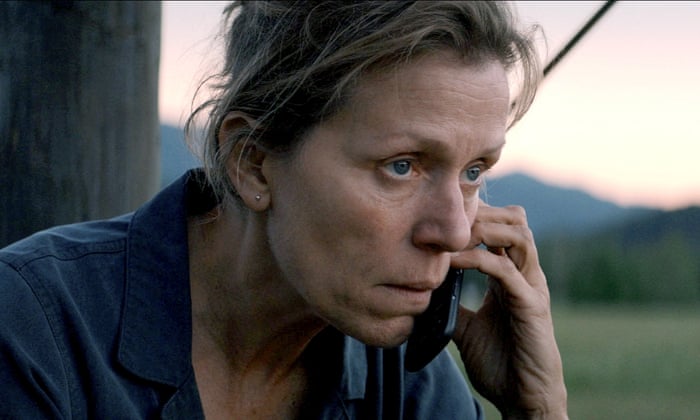
Several months have passed since the rape murder of local Ebbing girl Angela Hayes with no culprit found. Her increasingly frustrated mother Mildred (France McDormand) makes a bold move by renting out three billboards and putting up a controversial message calling out the police, in particular chief-of-police / town hero William Willoughby (Woody Harrelson) (Who is dying of cancer), on the lack of action on the case. Things get even messier when Willoughby's second-in-command, Dixon (Sam Rockwell), gets involved - a pampered, racist mother's boy with a penchant for violence and lack of thought for the consequences of his actions. Soon, Mildred finds herself as the town pariah, largely loathed due to her own internalised anger and clear, unstoppable goal of getting the police into action - no matter the cost...

Three Billboards is a film that certainly doesn't shy away from the uglier side of grief. Frances Dormand is phenomenal in the lead role of Mildred. Every action she takes clearly pains the character but is overridden by her resolve for action. This just leaves a sharp, furious husk of a character. It soon becomes clear that all her actions have taken a clear toll on the person. McDonagh gives some of his best lines of dialogue and monologues to Mildred - the highlight being a particularly incendiary piece of dialogue towards the local priest. 


However, things start to get interesting when Hayes and police chief Willoughby begin to find some common ground together. A kind of odd understanding towards each other is formed. Harrellson is equally great in a tender performance that ultimately doesn't paint the police as the bad guys - just stuck in the same mess. That said, one character ironically becomes a better cop when he is stripped of his badge. Which brings me onto Sam Rockwell's character, Dixon. I have heard some controversy surrounding this character - a racist low-IQ cop we are ultimately meant to sympathise with but I would argue it runs a bit deeper than that and works as part of the wider thematic framework of the film. His actions throughout the film are shocking, down right unforgivable, but Rockwell plays the charactet as mis-guided, confused and enraged for reasons he can't quite work out. Both Dixon and Mildred find themselves on a similar path before converging together - moving past their uncontrollable resentment towards the injustices of the world. The character arc Dixon goes in the space of two hours is something to behold and a testament to Rockwell's abilities. 

McDonagh himself is a master of taking absurd acts of violence, cruel twists, genuine emotional sucker punches and contrasting comedy with tragedy. His camera lingers on the scenes, like voyeur letting the events in front of the audience play out. We are powerless to interfere with the on screen violence, thus making us complicit in the actions of the characters. The cartoony violence of the first half of the film gives way to something much more brutal and realistic as the film progresses. 

Of course, all this feels fairly timely. Anger is a huge part of the make up of our everyday lives. Heck, those who claim to be serving our best interests, in particular in America, seem to be giving in pure, unadulterated rage in the decision making of leading a country. Thus, I think Three Billboards can be described as a timely film examining how our negative emotions are directed at each other, rather than the system in place that continually lets us down. Perhaps Three Billboards is an early example of Trump-era cinema?


I do feel that some elements go a little bit too far, in particular in the comedy department (which, fortunately, make up a small part of the film). Some of it is a litter broader than the McDonagh of the past.  For example, I know Mildred's ex-husband's new girlfriend's intelligence is played a bit tongue in cheek but I feel these scenes and the comedy are a bit drawn out. On the other hand, some parts don't go far enough. A few of the side characters get a bit lost in the fray and randomly appear again in scenes when they are needed (e.g. Peter Dinklage's character). And arguably, the only misstep of casting is Willoughby's wife, who never quite gels into the larger frame of the film - where this is the fault of the actor, the script or the director, it's hard to say. Ultimately, the side characters, while briefly featured, are there to mostly serve the emotional arcs of the main characters. So, in the contact of the narrative, it's fine; it's a more sham to see some genuinely talented actors underused. 

Despite this, Three Billboards crafts a fine spell that manages to find new ways to surprise with its deft script, undercuttings of black comedy and some all-time great performances. Is it In Bruges levels of brilliance? Not quite but with it dealing in many of the same themes as that film it is more than a worthy successor. It's not exactly a drama for everyone but judging by the sold out screening at a weekday night screening (we tried seeing it our local cinema, The Savoy, last weekend but both the Saturday and Sunday screenings were completely sold out) it's clearly getting plenty of people into the cinema and thinking about the film. It's rich, wonderfully acted and has plenty to mull over on the journey home; perhaps for quite a while after that as well.


I did like how there was almost a mini-HBO alumni reunion going on in the film - Peter Dinklage from Game of Thrones, John Hawkes from Deadwood (my favourite TV show by-the-by) and Clarke Peters from The Wire (my second favourite TV show) (Peters will always be Lester Freamon...). It just shows how far the TV landscape has come in the past couple of decades where actors who made their names on TV are also making it in film (a rare occurrence before the advent of the Golden Age of TV).