Sunday, 27 November 2016

Your Name


Every decade or so, an anime film from Japan crosses over into the West, converting a new wave of fans to one of the country's most famous exports. Generally, what links these films together are familiar genre trappings to a Western audience. Akira and Ghost In The Shell became massive cult hits amongst nascent anime fans, who also had a love of science-fiction cinema, in the 1980s and early 1990s. And is it any wonder that Spirited Away, with its Alice In Wonderland framework, managed to translate so well that it ended up winning the Oscar for Best Animated Film (as voted for by a mostly American academy)? The 2010s has finally, perhaps, found its cross-over film in Your Name

While it bears a very Japanese setting (with key parts of its cultural inheritance playing a part in the narrative), Your Name has the potential for universal appeal, with its hugely exciting and emotional storyline, unexpected twists and turns and gorgeous animation. Its director, Makoto Shinkai has been working in the industry for decades, having directed equally gorgeous films, such as The Place Promised In Our Early Years and 5 Centimeters Per Second, which have been mostly relegated to art-house cinemas and limited DVD releases in the West.  Along with fellow modern master Mamoru Hosoda, he boasts a small but dedicated following in Japan and in the West. With Your Name, Shinkai has created one of the most financially successful films every released in Japan. It has earned just under $180 million without a wide release in North America. For comparisons sake, only the films of Hayao Miyazaki have managed to achieve this monumental goal (for the record, Spirited Away is the only film in history to earn $200 million without having a wide release in North America). Due to its success, many critics have been holding Shinkai up as the new Miyazaki. While claims like this do need to be mediated somewhat, in a purely financial and artistic level it is easy to make this comparison (in particular with Japanese critics searching for the heir to the throne left by the semi-retired Miyazaki). There are numerous reasons why it has been such a massive hit in its native Japan but its the trans-global nature of its story and characters that has the potential to reach a much wider audience. 


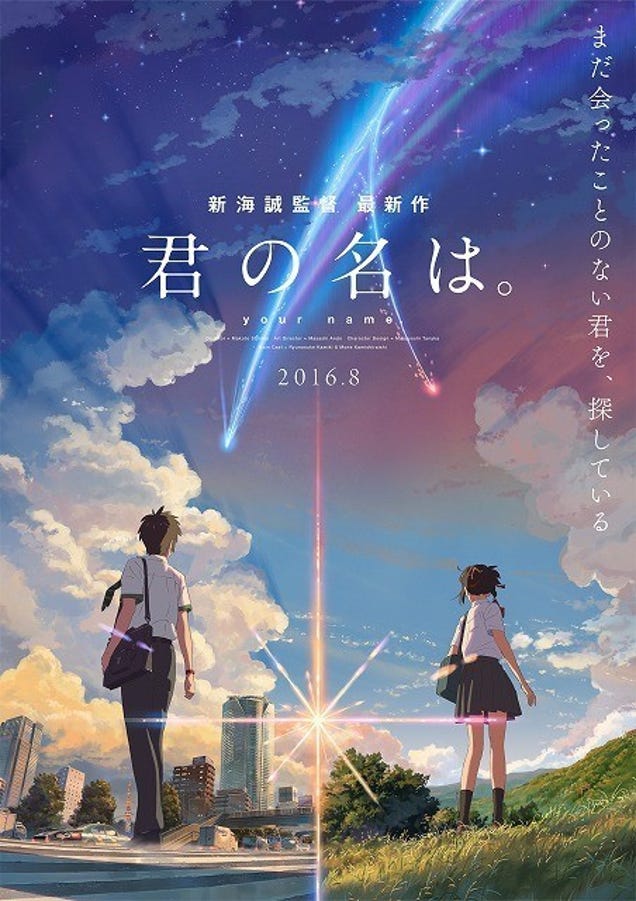
Your Name, on paper, seems to have the trappings of a normal, high-concept rom-com. Mitsuha (Mone Kamishiraishi) lives in rural Itomori, bored with her life living in the middle of the Japanese countryside and helping to keep ancient traditions alive at her family shrine. Short-tempered Taki (Ryunosuke Kamiki) is a student living in suburban Tokyo, who works at an Italian restaurant and harbours a crush on one of his co-workers. Essentially, both are trying to navigate the ups-and-downs of teenage life and to find their find place in the world. Things become strange when Taki wakes up one morning in the body of Mitsuha and vice versa. The duo soon learn that on random days they are swapping bodies. When they re-awaken in their real bodies, they have no recollection of what their counterpart has been up to with their body, leading to some very funny, and sometimes emotional, scenes. The duo being to adapt to the body-swap, leaving a diary in each others phones, scrawling notes on scraps of paper or on their bodies and setting ground-rules on do's-and-do-not's. At first, they are disorientated but fairly soon they begin to influence each others lives (with their friends and family bewildered at these apparent personality changes) for the better and begin to fall in love with each other. However, with a bright comet looming beautifully in the sky, a cataclysmic event occurs at the half way point which throws the whole relationship into jeopardy as the mystery of why they are body-swapping begins to be revealed..


Body-swapping stories are actually one of my most hated tropes (in particular on television) as it is a cheap excuse for the writer to make really obvious jokes (which every other writer has made). Only a handful have pulled it off successfully, with Red Dwarf's and Buffy's springing to mind. While Your Name does make a couple of obvious jokes (being fascinated, or terrified, of .. certain aspects of the opposite gender's frame - which even in this film is expertly handled!) it manages to take the concept to new and uncharted territories. It uses the body-swap framework as a mechanic to launch a story that is really about the unseen connections that bind people together. The film has universal appeal due to its blending of familiar genres, such as rom-com, sci-fi and (spoilers) disaster-epic signposts. It is this, and the likability of its main characters, that holds the whole film together.  

The aesthetic of the film is what makes Your Name stand apart from Miyazaki. While there certainly are similar elements to the grand master of anime, Shinkai is more interested in capturing that feeling of being a teenager and appealing to a contemporary audience. Joe Hisaishi's gorgeous full orchestra scores are replaced by bright and energetic J-Pop by the band Radwimps. Miyazaki's films look towards the past informing the present, Shinkai is more interested in separation and teenage alienation in the modern world. His almost photo-realistic renderings of Tokyo give a great sense of place, in contrast to the earthy tones of Mitsuha's home town. While Mitsuha and Taki are influenced by their very Japanese settings, they feel like any teenager - itching towards adulthood, compulsively interacting through their phones and trying to work out their place in the world. They are the heart of the film and transcend the setting into a universal coming of age story. Shinaki slowly unveils the plot - he is in no rush to reach its gut-punching and emotional third act without first properly establishing the characters and how the body-swapping shenanigans have affected them. This means when the third act comes around we are on the edge of our seats, nervously anticipating the conclusion. Shinkai creates a tender and exciting conclusion that puts the characters to the ultimate test. 


Shinkai uses the concept of kataware doki, where day and night meet to become twilight, to juxtapose the characters, settings, gender, traditions and time; this is where the film's emotional core lies and how these link the characters together. The comet that hangs in the sky is both awe-inspiring to behold and threatening, stuck between two worlds of thought. The film quietly evokes the trauma of the 2011 earthquake / tsunami and the subsequent Fukushima disaster which has lead some Western critics to compare the film to another masterpiece of teen angst, Donnie Darko. This is all rendered in gorgeous 2D animation. A complete digital creation, Your Name boasts hyper detailed frames with stark colours, gorgeous fluid character movement and expressions, immaculate and intricate backgrounds and subtle CGI backgrounds. One sequence in particular becomes very experimental with its combination of pastel artwork and CGI. Instead of having the makings of a dry, existential drama, Your Name is warm, affecting, beautiful, exciting and funny. How Shinkai turned all these concepts and daring animation choices into a massive audience friendly event without losing the integrity of its story, is nothing short of a miracle. 


Your Name is an engrossing film that encapsulates all the wonderful things animation can achieve. It's exciting, funny, hugely emotional, beautifully animated and takes an unexpected turn at the half way point to become life-affirming. Effortlessly blending genres and styles together, Your Name seems destined to become one of those rare anime films - a cross-over hit in the West (and an Oscar winner maybe?). If you can seen it on the big screen, I cannot recommend it enough - if you've only seen anime on the internet or on DVD, this unlike anything you have experienced before. Your Name is not to be missed, though with a very limited release in the UK it seems audiences might have to wait until the DVD.  Like the potential of Mitsuha and Taki finally meeting each other face-to-face for the first time, it's worth the wait. My film of the year. 

Rating 10/10 

Saturday, 12 November 2016

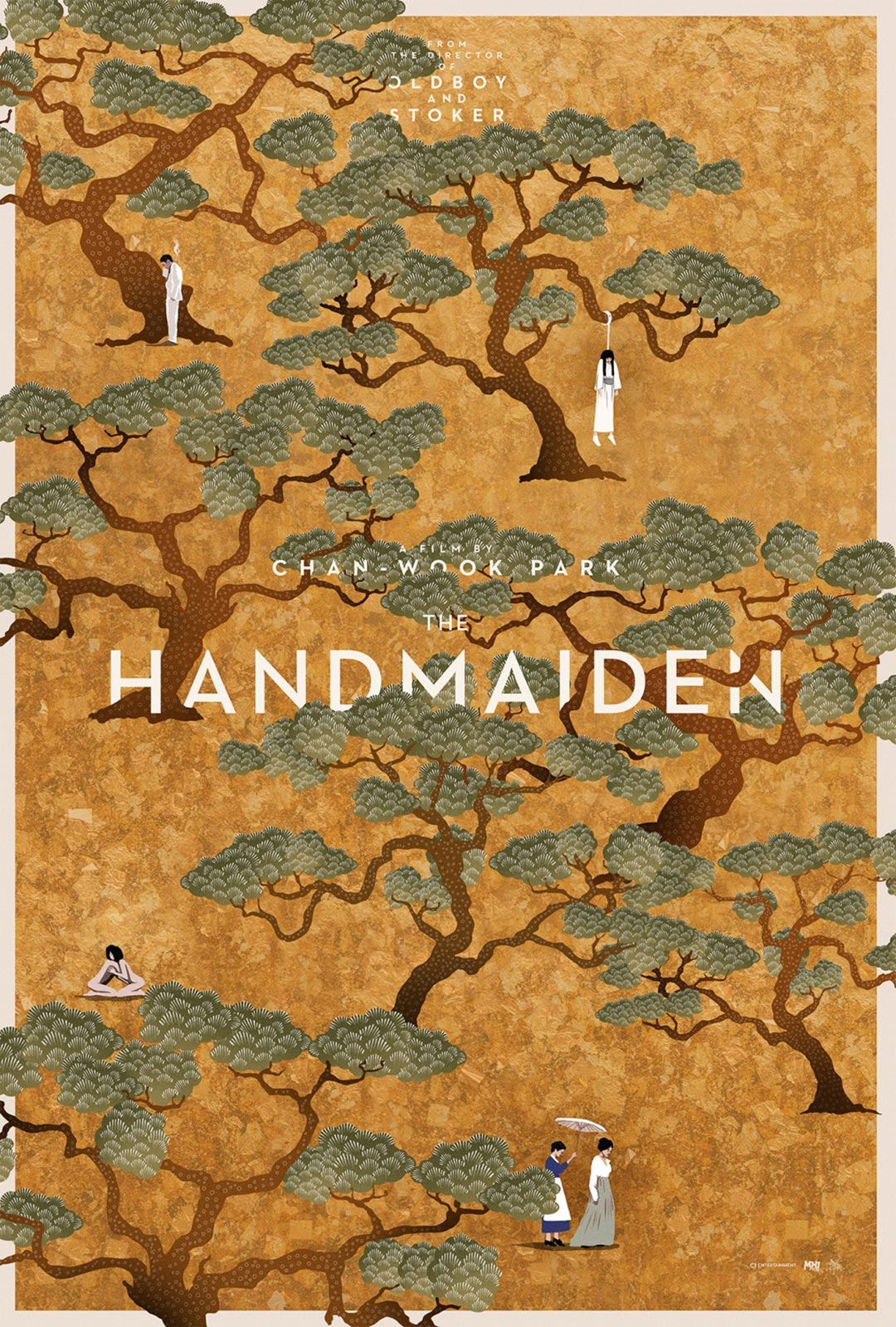
The Handmaiden


The structure of Park Chan-Wook's films are akin to a complex puzzle. They require your attention, they don't go quite the way you expected and are richly rewarding when you figure them out. Park Chan-Wook is one of the greatest living directors in the world. This South Korean filmmaker has created some of the most visceral and unforgettable films of the 21st century. Beginning with JSA (his treatise on North/South Korean relations), he moved onto direct three films which would form The Vengeance Trilogy (probably my favourite film trilogy) that would propel him to world cinema stardom - Sympathy For Mr. Vengeance, Oldboy and Lady Vengeance. I could easily talk all day about these films - their dense plotting, rich themes, immaculate technique, the unhinged performances; they simply need to be seen. Like a puzzle box, Chan-Wook continues to defy expectations, spanning genres in his follow up films, from romantic-comedy to vampire horror and touching upon gothic literature in his Hitchcock-inspired English language film, Stoker. Chan-Wook is back on home soil with his latest challenge, The Handmaiden - a film that could be cited as the ultimate example of the transglobal world we live in, in which Eastern and Western influences are effortlessly fused together. Showing as part of the excellent Leeds International Film Festival in a rare big-screen showing, this is easily one of the most anticipated events of the festival.

Set in 1930s Japanese-occupied Korea (based on the Victorian set novel Fingersmith by Sarah Waters), The Handmaiden follows a con-artist, who hatches a scheme to rob a rich Japanese noble woman - he plans to marry her, declare her insane, send her to an asylum and run off with her vast inheritance. Under the fake name of Count Fujiwara, he hires a fellow con-artist and pickpocket Sook-He to become the handmaiden for the mysterious and troubled noble woman, Lady Hideko. Sook-He's job - to convince Hideko that Count Fujiwara is the one. Sook-He soon learns that in Lady Hideko's vast estate there is a troubling under-belly, controlled by the authoritative Uncle Kouzuki. Things become more complex when Sook-He and Hideko begin to fall in love with each other...

Revealing anymore of the plot from there would actively ruin the film. Chan-Wook is no rush to reveal his hand. The best way to enjoy this film is to go in as blindly as possible, as part of the fun of watching this intricate and masterfully plotted film is enjoying the way it manipulates you and how it reveals its twists. I will be going into further detail from here on in however I would recommend stop reading here, watch the film, then come back. I 100% recommend the film - its an excellent, densely plotted thriller that deals with interesting themes of female sexuality and identity and comes from a master filmmaker at the top of his game. 


The film has a very steady pace and owes a debt not just to Kurosawa's classic Rashomon but also to classic Gothic literature, such as Jane Eyre and Rebecca. In a genius stroke of masterful set design, this theme of Eastern-Western influence is clearly evoked in the Lady Hideko's estate - a bizarre fusion of a Victorian and Japanese house. Chan-Wook is clearly revelling in holding the audience's suspension and manipulating their expectations. Divided into three parts, each section reveals new depths to the serpentine story and the disturbed cast of characters. Chan-Wook is clear in how he wants us to view his characters - expect the unexpected. Sook-he is spirited and young, open to experimentation, while Lady Hideko is more flawed, emotionally scarred and hides a hidden layer of deceit. Our sympathies are constantly shifting throughout the film, however they're anchored by their clear longing for each other.

In a rare turn (especially for conservative Korea), female and queer sexuality is at the forefront of the film and the simmering sexual tension leaps off the screen. The sex is explicit, you could even argue it is undermined due to the male director's gaze, however ultimately it is a bit more complex than that. The film gives a great amount of agency to its female characters and are not inactive standbys as the schemes of the Count come into play. They actively want to improve the situation they are in and want to pull the rug from underneath the carpet of the male characters. In sharp contrast to the longing between Sook-He and Hideko, male sexuality is represented as grotesque and unsatisfying. Benjamin Lee writes that the men of the film are "pathetic, unwanted voyeurs; misusing, abusing and misunderstanding what women really want"1. The Count looks the part in his well-made, tailored suits but is ultimately a pig who enjoys being a pig. The Uncle revels in collecting rare erotica and indulges in readings of them to a male audience. The performances from the four leads are uniformly excellent, though the standout is Kim Min-hee as Hideko - at first appearing to be the "mad-woman-in-the-attic" stereotype, she reveals much greater depths in a carefully observed performance that is as intricate and complex as the film itself.


With its serpentine plotting, complex characters and themes of sexuality, it is the style and technique that anchors it all tougher. Chan-Wook is one of the most celebrated directors of the 21st century for a reason. His understanding of the cinematic language is unparalleled  He has a wonderful way of opening his films by not really opening at all - you are thrust straight into his worlds and The Handmaiden is no exception. The narrative unfolds in a dreamlike manner, gliding from one scene to another. Perception is at the forefront of the film and Chan-Wook revels in familiar scenes shot from different angles to create new meaning. The richness of each frame, the perfection of the set-ups and the musical accompaniment almost makes it all seem effortless. Wide-shots of the countryside estate reveal its grandeur but also how the characters are trapped within it. That a plot this complex holds together at all is a testament to the director's skill. This is also punctuated by bursts of surprise comedy (often black comedy - the biggest laugh comes after an attempted sucide, bizarrely enough) which helps to keep the humanity and eases up the tension and intricate plotting just enough.


Unfolding like a rich novel, The Handmaiden is a masterpiece of storytelling and style. With its complex cast of characters, exploration of sexuality and themes of identity and truth, Chan-Wook has created another masterclass on filmmaking. Indulgent at times, yes, but the director has always walked this tightrope. Its engaging, surprising and enthralling, which the makes the 2 1/2 hour running time fly by..

Rating: 10/10

1 Benjamin Lee, The Handmaiden review https://www.theguardian.com/film/2016/may/14/the-handmaiden-review-park-chan-wooks-lurid-lesbian-potboiler-simmers-with-sexual-tension

Monday, 31 October 2016

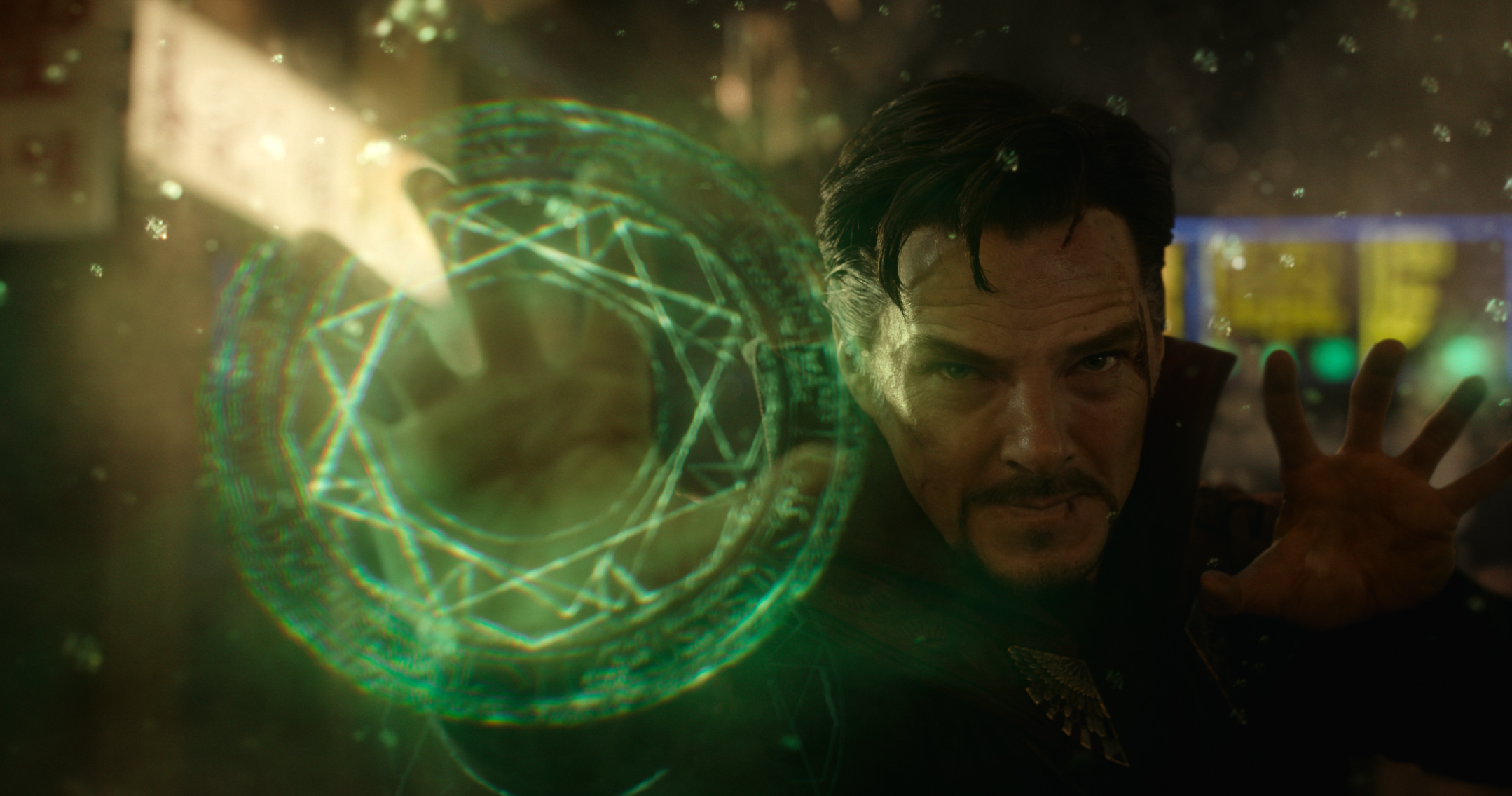
Doctor Strange


Superheroes have truly taken over the screen. With an avalanche of titles heading our way and Marvel and DC battling to a never-ending conclusion to make them as profitable as possible, it is fair to say that fatigue is creeping in. Audiences were split over Batman v Superman and Suicide Squad and even Marvel with Captain America: Civil War, while making a good film, struggled to balance the familiar with something new. No doubt eyes rolled amongst some when Marvel and DC presented their upcoming film calendar planned well into the next decade. Seemingly, Doctor Strange (a classic, but odd, character created by Steve Ditko in the early 1960s) seems to follow a similar structure to past Marvel films - a flawed yet likeable lead gaining superpowers after a life changing event and uses them to combat an underwritten villain and establish their place in Marvel's cinematic empire. All this is there but the film pushes itself one step further than lazier origin films by casting a very likeable lead, a Hogwarts-esque setting, good comedy and, most importantly, incredible triply visuals. 


Doctor Stephen Strange (Benedict Cumberbatch) is an arrogant neurosurgeon who is involved in a horrendous car accident leading him to lose control of his hands. Emotionally destroyed, he first seeks the best medical advice in the world only to learn it will be a useless endeavour. He hears a rumour from a former paraplegic who is now able to walk again that there is an ancient technique in the middle of Nepal that could heal his hands (as it healed his body). Dr. Strange ventures to Nepal and meets the Ancient One (Tilda Swinton) who opens his eyes to the multiverse, astral planes and her ability to draw upon its power to create magic. If he could master this art, he could be able to use it to control his hands again. Strange takes up residence in the Ancient One's school (see the Harry Potter comparison) hoping to achieve these goals. However, Strange's lessons are interrupted by the nefarious schemes of Kaecillius (Mads Mikkelson) (who I am just going to call Kae from now on), who is planning on opening the door to the dark dimension, the home of the evil-being Dormammu hoping to unleash him on Earth, in exchange for gifting him eternal life. Strange is forced into his biggest challenge yet as he grapples with his own ego and the fate of the universe...

So the plot and trappings are incredibly goofy. However, the films sells it mostly thanks to Benedict Cumberbatch's performance. Admittedly, I am not the biggest fan of his past performances but he is perfectly cast as Dr. Strange - egotistical, brilliant, funny, cocky, Cumberbatch is able to bring a Robert Downey Jr. vibe to the character whilst also making it his own thing. He is suddenly thrust into a world where people no longer find his corny, Joss Wheadon-quips funny (though there is a great scene involving a wi-fi password - I will say no more). A man of science coming up against the mystic arts is interesting, funny and kind of profound at times, as Strange has to grapple with lure of immortality and letting go of his preconceived notions of the universe. It works really well, surprisingly well! There are some border line schlock moments but these are managed well. What's important is that we are emotionally invested in Dr. Strange's struggle making it all the more satisfying as he comes to accept his place in the wider universe. 


The comedic highlights of Strange come from its secondary characters, especially from a particularly funny turn by the brilliant Benedict Wong, playing the stone faced, newly elected librarian Wong, which is played up for great laughs. Chiwetel Eijfor plays Mordo, a pupil at the Ancient One's school and while not the most special character in the world, he is an effective foil to Strange and does go on a semi-interesting arc. One of Marvel's bug-bears, outside of underwritten villains, is equally under-written love interests. Rachel McAdams does the best she can with the material in the role of Christine Palmer, a fellow doctor, but can't get past the script's fundamental disinterest in her. Which is a complete shame. Bizaarely, one of the most fun 'characters' is Doctor Strange's cape, which feels like Aladdin's Carpet's long lost (and more well tailored) cousin and actually gets one of the biggest laughs in the film - again, I will say no more. 

The casting of Tilda Swinton has been controversial as the Ancient One in the comic is a Tibetian male and now played as being a white Celtic woman living in Nepal. While I will not get into the politics of this casting decision in the this review, it does highlight that white-washing is still a terrible part of the film-industry and is also unfortunately informed by the state of global affairs. That said, it should be noted that Swinton plays the Ancient One as a non-binary character, a massive step forward for gender representation not just for Marvel (who have only just grappled with sexuality - straight and gay! - on the excellent TV series Jessica Jones) but also the film industry. Marvel have been fairly adamant in response to criticism that the gender of the character does not matter and that it is simply in the eye of the beholder. So while on the one hand, yes the decision to white-wash the character does deny a Tibetan actor the chance to take on the role, it is used to at least push another form of positive representation. I'm not saying what should have been the right decision, more taking what I can..In any case, the Ancient One is essentially the Merlin or Obi-Wan Kenobi of the film (which, again, it is rare that this role is played by a woman) and Swinton is clearly relishing the chance to play this role. She opens Dr. Strange's mind to the power of the universe and its endless possibilities, though she is hiding a much darker secret. One of the most effective and philosophical moments comes at the end of Act Two and is about as profound as Marvel can get.


With all Marvel Cinematic Universe properties (bar Loki in The Avengers and Kilgrave from Jessica Jones) the villain is one of the bigger let-downs. Maybe not to the extent of past films, as Doctor Strange and Kae do exchange interesting notions to each other, the villain does feel underwritten to the point of posing no real threat (outside of his evil scheme). Some fans of the comics might be disappointed by Dormammu as well (his design differs greatly to comics and does not have a lot of screen time), however the sequence he is featured in towards the end of the film is one of Marvel's greatest, and most unexpected scenes, which will go down with the likes of Hulk unexpectedly bashing Loki around in The Avengers as one of the classic moments in the MCU. I understand that with an origin film the hero should be the main focus but Marvel needs to work on its Big Bads...


Finally, I want to discuss the visuals of the film. This is easily Marvel's most ambitious film to date in terms of creating new and exciting action scenes. Dr. Strange's initial voyage through the multiverse is like something out 2001: A Space Odyssey for its bright colours and trippy visuals. Better yet, this same ambition is employed during action sequences where Kae and the Ancient One are able to bend reality around them to create three-dimensional mazes out of New York. It is vibrant, inventive and incredibly fun to watch. This becomes even better when Dr. Strange discovers the power to manipulate time. As the sequence moves in reverse (objects, extras etc.), the heroes and villains fight at normal speed. Marvel's doctorate to try something different visually with each film (whilst sticking to a very familiar framework) make them a treat to watch (mostly) and Doctor Strange is no exception. One of the big selling points is its visuals and it does not let down at all. It actually manages to outdo the similar reality bending antics of Inception.


Doctor Strange feels like a very familiar film at this point, especially in the sea of superhero films on the horizon, but its strong central performance, good comedy, fascinating central concepts, hints at existential themes and excellent trippy actions sequences make up for the script's downfalls, which come in the expected places for MCU films. I was ready for a second to maybe even third tier Marvel film but the shortcomings are made up for in the right places, which manages to make Doctor Strange engaging and, more importantly, fun. For the first time in a long while, I'm actually interested in how the introduction of a new hero into the MCU will affect the wider narrative arc of these films. Doctor Strange is another example of Marvel's winning formula to create interesting, engaging and sometimes even thoughtful blockbusters. 

Rating: 8/10

The Innocents

Criminally Underrated 
(a new series in which I highlight and discuss films, TV, music, games or books worthy of your attention that don't get enough time in the limelight)

2. The Innocents


The Innocents is one the greatest horror films of all time. It contains no blood, no monstrous beast or indestructible serial killer to defeat and no jump scares. Instead, it elects to maintain a constantly creepy atmosphere suggesting a disturbing undercurrent to the proceedings. This is the definition of a film that gets under your skin. In this regard, The Innocents' tone and pace are somewhat the coin flip to another classic British horror film, The Wicker Man. While seemingly having little in common, both films choose to maintain a slower pace building up the atmosphere (in The Wicker Man's case, the tone built gets steadily stranger and stranger) to reach unforgettable climaxes. The Innocents is the kind of the film that will leave you ruminating for days after watching.

The Innocents is based on the novel The Turn of the Screw by Henry James. The story follows Miss Giddens, a newly elected governess who has been tasked with looking after two orphaned children in a massive countryside estate. At first, the job seems like a dream. Miss Giddens is instantly taken aback by the younger girl, Flora, but is troubled by news that the eldest boy, Miles, will be returning home due to being expelled from his boarding school. Despite this cloud hanging over him, Miss Giddens is again instantly entranced by Miles. However, there is a dark undercurrent working within the house. Miss Giddens begins to see people that don't belong, perhaps spirits and apparitions? Miss Giddens soon learns that this large house holds many dark and twisted secrets, which seem to centre around the two children. As her own mental psyche begins to unravel the true mysteries of the house begin to reveal themselves.


Martin Scorsese placed The Innocents in a list of the Top Eleven Scariest films of all time. Guillmero Del Toro lovingly referenced sequences and costumes from the film in his celebration of gothic horror, Crimson Peak. While modern, more cynical audiences might call it out on its lack of scares, the film successful builds a tense, entrancing and disturbing atmosphere (with Freudian undertones) which is achieved through several different filmmaking and writing techniques working together. I would call it the film director's horror film. Truman Capote, author of In Cold Blood, contributes the script to director Jack Clayton, a master craftsman. Should I ever achieve one of my life goals of becoming a film tutor, The Innocents will be part of the module I teach on the Language of Cinema. In terms of technique, it is impeccable in its construction. The film perfectly blends stylish and stately cinematography with cutting-edge sound and editing design. This is no more apparent in the film's most famous sequence - the chilling scene in which Miss Giddens views a spirit in the background with young Flora playing in the foreground by a lake. It actually feels like Clayton captured on film a real ghost on screen, only improved by the graininess of the film, the sound of flies buzzing (more on that later) and, oddly, the decision to shot it in the day time, creating a stark contrast between the living and the dead. 


I also feel that Scorsese used an underrated element of the film in Shutter Island - the intentional continuity errors. This creates a dreamlike atmosphere where nothing is at it seems. Miss Giddens walks into Flora's room, with the wide-shot making it clear that no-one is there, with only the window open (generally this technique is used to establish the geography of the scene - how big is the room, what characters are in it, where they are placed etc). Cut to a close up shot of Flora staring out of the window... As Miss Giddens wanders the house at night the candles appear to grow and shrink from shot-to-shot (no doubt due the nightmare of keeping up the continuity of candles melting!). Now these are probably genuine mistakes but they help to give an extra nightmarish layer to the film. Finally, the last element of technique I wish to discuss is the incredible sound and experimental sound design. A genius move to indicate the arrival of the ghosts is the use of a wasp sound, indicating decay and death and that we have entered another world, which is enhanced by the large amounts of silence in the film and lack of musical accompaniment. The only musical piece in the film is diegetic - the children hum or play a simple melody which will become a key part of Miss Giddens uncovering the plot's secrets. 


Deborah Kerr plays Miss Giddens, an educated governess willing to take on the huge challenge of educating and raising two orphaned children. Immediately, her sense of the world is brought under question as she sinks deeper into the mysteries surrounding the house. The performance is believable (in a classic Victorian way) and Kerr wonderfully plays the character's determination to seek the truth (whilst also being vulnerable as she begins to fall for the charms of the children). Like Howie in The Wicker Man, Miss Giddens' faith is put to the test (interestingly, she is the daughter of a preacher) and her perception of reality is constantly under question. The film is an excellent example of how costume can inform us about character. Miss Giddens begins the film in flowery, white dresses, constantly wearing her hat. However, as the film proceeds she begins to not wear it (one of the children ask where it has gone) and starts to dress in black, in sync with her becoming consumed by the mystery that is engulfing the house and her own impending madness (and moving towards looking like the mysterious spirit by the lake).

Both actors who play Flora and Miles are very good but the latter is the stand out. Uptight and privileged, yet charming and intelligent, Miles is the definition of a privileged brat with darker plans bubbling underneath. However that said, the actress who plays Flora does an almost equally good job and also has to perform for what is probably the film's most disturbing sequence. The purpose of Criminally Underrated is to highlight pieces of media that I think don't get enough time in the limelight; as such I will not be discussing spoilers within this review. I say this because the twist surrounding the house, the children and the dark past imply a disturbing undercurrent that highlights the film's strongest attribute to suggest as opposed to show - to discuss the film further I would need to reveal the big spoiler, which I am not going to do. Let's just say that plot takes some very interesting turns and the secrets revealed are fairly ambitious to suggest on screen even now, never mind in 1960. So I suggest you pick up a copy and go on the journey for yourself...


The Innocents remains one of the classiest and well-paced horror films of all time. Its steady pace, innovative filmmaking techniques, excellent acting and disturbing sub-text make it an unforgettable film. Some modern audiences might scoff at the slower pace, ambiguous story and lack of jump scares but those who stick around will find a gorgeous film that uses every trick in the book (and some new ones) to unsettle the audience. What secrets do children keep? The truth might be more unnerving than we realise...


Rating: 10/10

Sunday, 2 October 2016

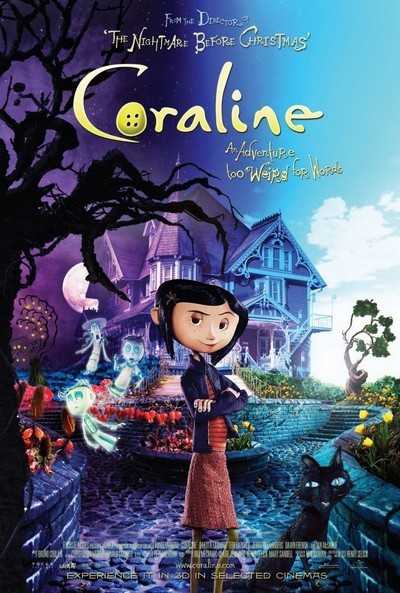
Coraline

Criminally Underrated 
(a new series in which I highlight and discuss films, TV, music, games or books worthy of your attention that don't get enough time in the limelight)

1. Coraline


As a note, Criminally Underrated is designed to highlight works I think need more attention and love. As such, I will not be giving away any large spoilers, as part of the fun is discovering them yourself, and will discuss the film's plot in a general sense. If I do want to discuss spoilers, these will be clearly marked.

Coraline is wandering around the woods surrounding her new home, the pleasantly retro Pink Palace Apartments (having recently moved from Michigan to Oregon - which, as Gravity Falls has taught me, is a state of supernatural mystery). She discovers a mysterious well, which may well lead to another world. Suddenly, out of the woods over a small hill, a skeleton rider screeches into Coraline's view as if out of Mad Max. However, the figure removes his mask and reveals himself to be her socially awkward neighbour, 'Wybie'. Along with its wonderfully creepy opening (in which a spindly figure creates a doll in Coraline's image having literally turned another doll inside-and-out), Coraline's first ten minutes perfectly captures the themes that the film will explore. An adventure into the unknown and duality of character. 

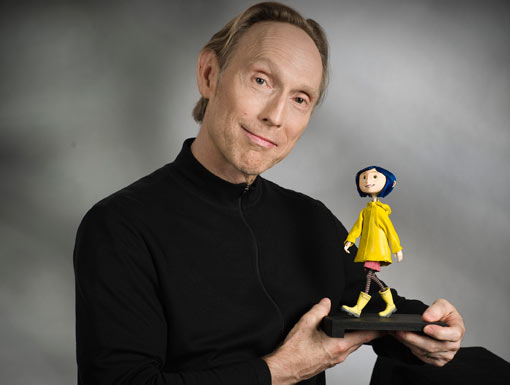
Coraline was released in 2009 and benefitted from an excellent creative team backing it. First of all, the film is a loose adaptation of the Neil Gaiman novel of the same name. Gaiman being the master of reviving fairy tails and ancient legends into modern day trappings. Second, the film was directed and essentially brought to the screen by Henry Selick. Animation fans proudly use this knowledge in pub quizzes; Tim Burton actually did not direct The Nightmare Before Christmas. Having basically overseen all the pre-production prep (the script, the art style, the storyboards etc.), he handed directing over to someone whose skill was stop-motion animation (Burton felt he was not up to the task at the time) - Henry Selick. The classic gothic fairy tale that was Nightmare made Selick a perfect choice to helm Coraline. Finally, production was handed to nascent animation studio, Laika, who have subsequently created animation triumphs in Paranorman and Kubo And The Two Strings. Undoubtedly the modern master of stop-motion animation, Laika continue to push the boundaries of what is possible in the art form. Throwing all this creative energy produced Coraline, a masterpiece of pacing, art design and animation. Better yet, it has a wonderful and often creepy story to follow it.


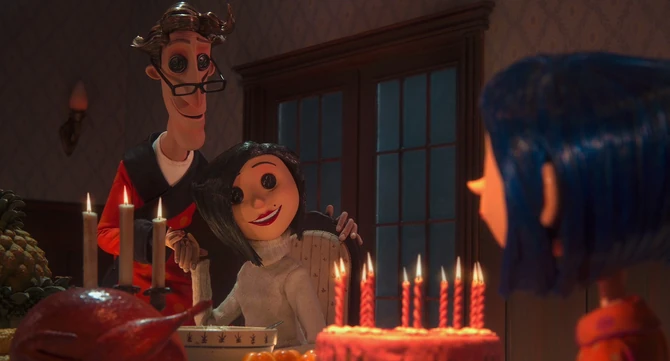
Coraline Jones is pre-pubescent child who has moved to a new home far from her friends into the middle of leafy Oregon. Her parents are over-worked writers, desperately rushing to complete Dad's gardening catalogue. Add to this, Mum has injured her neck and is prone to irritability due to the pain she is in and the stress she is under. Even stranger, Coraline receives a doll made in her likeness, complete with unnerving black buttons for eyes. Coraline is an adventurous and curious sort and soon begins to discover the secrets hidden within the walls of the apartments (and as a way to escape her distracted and stressed parents - who often take it out on Coraline). She soon discovers a door in the wall, which at first seems to lead nowhere but later reveals itself to be the entrance to another world. An alternative reality of her home, complete with perfect idealised versions of her parents (dubbed Other Mum and Other Dad). With no stress or worries, they lavish all their attention and love onto Coraline. There is a sense of underlying menace here though, as Other Mum and Other Dad have black buttons for eyes (similar to the doll)  but Coraline soon becomes infatuated with this world. However, she begins to uncover the true nature of this world and the frightful reality of the task she has to complete when her real parents go missing..

One of Coraline's greatest strengths is its pacing. The films moves at a slower pace, especially in comparison to other children's films, however this gives the viewer time to orientate to the world and the mystery surrounding it. We are given time to be introduced to all the residents of the apartments, who will subsequently help Coraline on her journey (these being former starlets Ms. Spink and Ms. Forcible who dwell in the basement apartment and the eccentric Russian acrobat Mr. Bobinsky - voiced by Ian McShane, who gave one of my favourite performances of all time as Al Swarengen in HBO's classic Western TV series, Deadwood). This also allows time to establish Coraline's character and her relationship with her parents, in particular her mum. She is independent, charming and funny yet head-strong and prone to impatience and irritability. Basically, a full fleshed out character befitting of someone her age making her an excellent lead for the film. Dakota Fanning voices her in a great performance which brings out all these different elements at the right time. The film can have its scary moments (nothing too intense but maybe enough to rattle some children) however if the central character is strong, than this is something children can latch onto to get them through. This is all helped by the excellent musical score and sound design. Coraline is actually a very quiet film, with a limited sound design. However, this allows moments and scenes to have real impact. The soundtrack also reflects this and helps to maintain a charming atmosphere with a creepy undercurrent (fortunately, Danny Elfman was not brought on board...).


The real world has a grey, autumnal art style, giving a sense that the apartments have seen better days, almost as if all the warmth has been sucked out of the world (which I imagine is how Coraline is feeling). Contrast this to the Other World, which is warmer and more welcoming. Bright, rich reds and powerful lighting. Coraline encounters strange new supernatural beings, exaggerated building designs, talking cats and much more. The subtle art choices here highlight the power of good art design in film and help to bring the film's theme of duality to the fore-front. All this is only possible in animation. Stop-motion animation is a true craft, requiring time and patience but can create worlds unlike any other - and it has never looked as gorgeous as it does in Coraline, giving a loving and hand-crafted feel to the film. Selick is truly a master of gothic-fairy-tale art style and knows how to correctly apply designs to create meaning and emotions. 

Coraline meets Other World versions of all the characters she has come to know in the real world (complete with black buttons for eyes), only here they are free from their regular lives and past experiences. However, things are not as they seem and these perfect versions that Coraline is at first entranced by reveal to be something much darker and sinister. Real people are flawed and there is no such thing as a 'perfect' person. a good example of this as expressed in the art design of Mr Bobinski. A former acrobat who still tries to train has long skinny legs and arms but also has a large beer belly. A sign of what he used to be and where he is now. We are all trying to work through life and its the connections we make with others that help to create meaning and get us through. Coraline learns this lesson over the course of the film coming to terms with her imperfect parents, learning to love them and understand them for who they are. 


I feel Coraline is often forgotten about in the list of modern animated classics and its hard to pinpoint why. It is overflowing with ideas, has a great central character and a lovely pace that allows all the different elements chance to breath. It could be the film's scarier elements that turn more conservative parents off or it could be in the way the film is designed. Its understated and dream-like pace sucks you into its world and is in no rush to reveal its hand. With all the bombast of Illumination studios (with little substance) and the big emotions of Pixar, Coraline's understated style may explain why it is often neglected. Its happy being its own thing and the individuals who discover the film become just as enraptured and wary for the adventure ahead, just as Coraline must feel entering the Other World for the first time..

Saturday, 10 September 2016

One More Time With Feeling


Short verdict: A raw and haunting document on grief, Nick Cave turns his sorrow into a harrowing and beautiful look at trauma as explored in interviews and poetic readings, combined with visually arresting recordings of performances from his new new album, Skeleton Tree

There was a clear electric buzz as a large queue formed outside of Leeds’ historic cinema, the Hyde Park Picture House. Following a sold-out performance of the new Nick Cave film One More Time With Feeling on 08/09 (a one-night only screening across the globe and a day ahead of the release of the new album, Skeleton Tree), the Hyde Park Picture House kindly put on, as they dubbed it, an encore performance. Me, my friend and several others in the queue were delighted at the high turn out, imagining only 5 Nick Cave fanatics together at the screening. This was also my inaugural visit to this historic venue (the cinema was founded in 1914 and has continually shown a wide range of films, now specialising in foreign, indie and historic releases) and as I settled into the ‘cosiest cinema in Leeds’, my hopes were high that the film would match the build-up.

Nick Cave (master of gothic songwriting and performance and band leader of the long running band The Bad Seeds) lost his son Arthur, aged 15, to tragic accident in 2015, around the time we began writing and recording his sixteenth album, which would become Skeleton Tree. The film, which began life as an audio-visual document of the writing and recording process, turned into a documentary exploring the grief that two parents are working through having lost their child. The details behind Arthur’s death are not explicitly explored but his loss is felt in every frame of this beautiful film.

Nick Cave at times is bemused that he is even attempting a project such as this following such a terrible trauma. His second in command, Warren Ellis, expresses at the beginning of the film mis-givings about opening up to discussing the experiences that have happened in the past year to his friend and his family. How can a film truly express the feeling a grieving parent must be experiencing? Nick himself says that any time he tries to articulate the words he feels he is just speaking bullshit and is actually do a discredit to his son. However, what the documentary team capture (led by director Andrew Dominik who made the modern classic The Assassination of Jesse James) is pure raw emotion that is expressed in very candid interviews, musical performances of the new songs and avant-garde imagery overplayed with readings of Cave’s poetry. This is not an easy film to watch at all but it ultimately becomes a rewarding experience, examining trauma, the nature of life and the creative process. The film simply asks us to listen and try to understand the grieving process and how fed into creating the new album.

Cave expresses his loss through his music. He makes it clear that his normal creative process could no longer apply instead opting for his emotions to flow free through ad-libbing and improvisation with Warren Ellis. Even if some of the songs were written both Arthur’s death, the way they are performed and produced give a great sense of melancholy. Cave himself says that even if it is not explicit, just by the event that transpired the lyrics will naturally take on a second meaning. It is a fascinating glimpse in the creative process. Through the heavy subject matter, Cave’s love for his wife, Suzy, and son (Arthur was one of a set of twins) and his friendship with band mate Warren Ellis shine through, who brings a real warmth and humour to the film (surprisingly, there a couple of understated laughs in the film). There are wonderful moments in the film, such as a trip to the studio from his son or Ellis belittling his classical violin, that provide moments of levity.


The performances of the new songs are impeccable and the way they are directed (all shot in stunning black-and-white, like the rest of the film) make use of impressive of lighting and subtle camera movement. There are a couple times where it becomes a little bit too overblown but for the most part the style complements the music perfectly. This is intercut with poetic passages, where Cave is describing his various feelings, ranging from deep sadness to bitter anger. Again, the imagery used perfectly matches the time and rhythm of Cave’s prose. The final element of the film are the candid and raw interviews with Cave and Suzy. Cave is quite open in his inability to discuss his emotions, as described earlier, but as an audience we begin, in a small way, to understand the ordeal he has had to, and continues to, endure. He equates trauma to pulling an elastic band attached to your arm. You can pull it further and further and away but eventually it will snap back into place – it has become his new emotional epicentre. Cave, whilst clearly emotionally distraught and deeply tired, is as comfortable as he can be exploring these dark emotional issues. He ultimately concludes that there is a fenced-off part of his brain and how he and his wife have tried to move on with this fenced off place existing. It is difficult to pinpoint what Cave wanted to achieve in the film but that is likely the point – he is trying to work out his place in the universe in the face of an immense personal loss. This beautiful and intimate film is not easy viewing but it bravely tackles issues that many grieving parents must experience and helps those who have not lost a child to understand in even a small way the confusion and emotionally draining experience it is and the ultimate drive to continue to live and begin the grieving process.

Long Verdict: Emotionally raw, Cave employs three distinct styles to explore his feeling of immense grief in the face of losing a loved one. His searing pain becomes a very personal document that candidly discuss all the feelings him and wife continue to experience. While not easy watching but One More Time With Feeling is a rewarding film that sticks with the viewer long after the credits have rolled. Powerful musical performances, cutting interviews and a great style make for an unforgettable documentary.

Rating: 9/10

Friday, 9 September 2016

Room


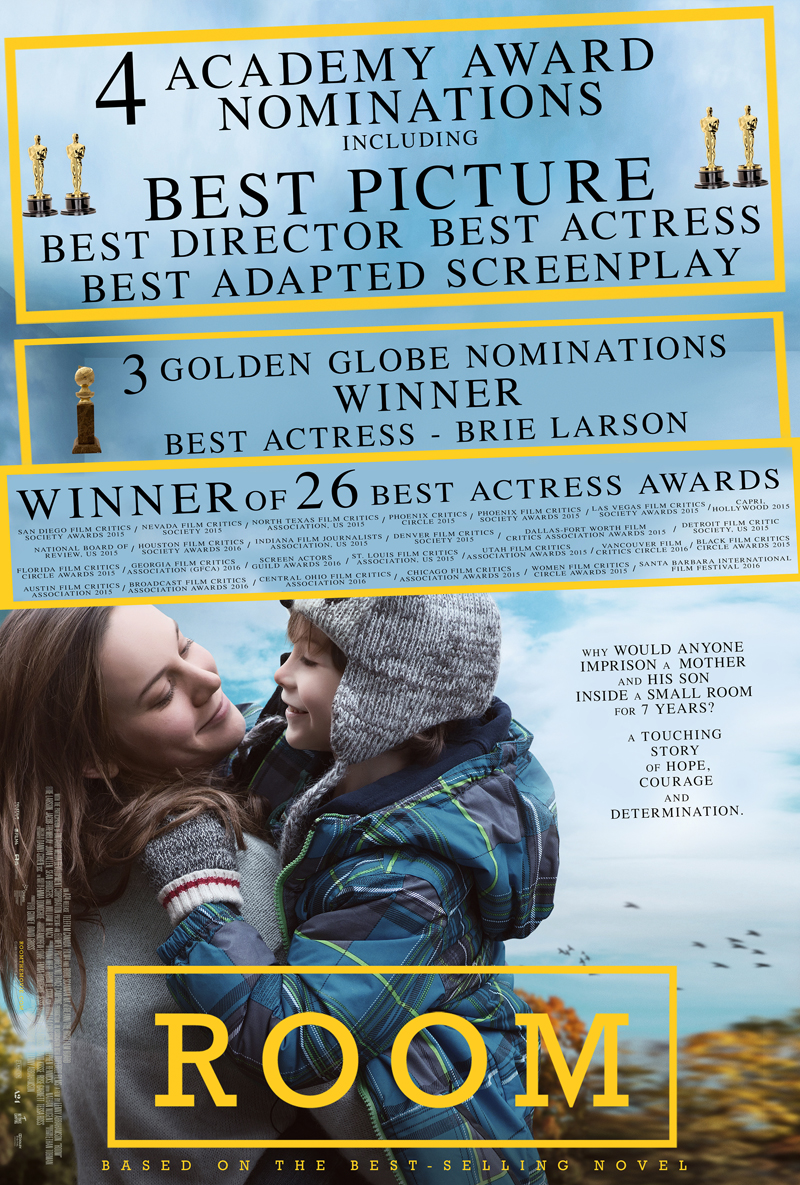
Short verdict: Intimate and enthralling, Room is a powerhouse of acting and subtle filmmaking. Headed by a stunning turn by Brie Larson, the film also offers one of the best child performances of all time 

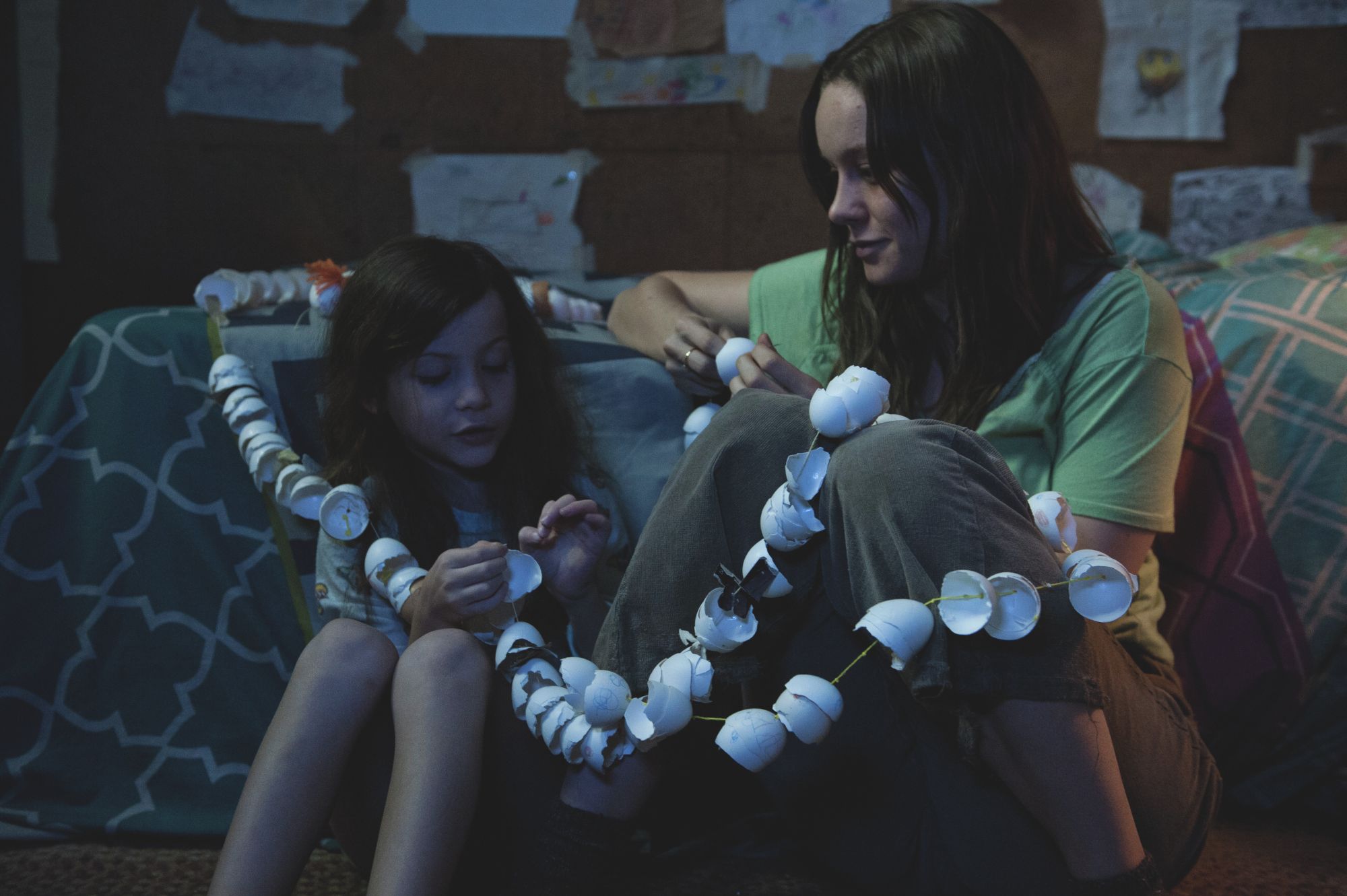
What would it be like raising a child trapped in a single, permanently locked, room? This is the concept of Room, a film based on the novel by Irish-Canadian author Emma Donoghue. Loosely inspired by a real life incident (the infamous Fritzl case), Room takes a grim premise and manages to turn it into a look at hope in literally the smallest of places. Brie Larson plays Joy, a young woman kidnapped by an older man, who is routinely raped and gave birth to a child inside a single, locked room. She now spends her days striving to escape boredom and raising her child Jack (creating him a dream-like world where TV serves as an island of different realities – theirs just being one), whilst looking for a chance to escape.

Brie Larson gives a powerhouse performance as Joy, grounding her in a sense of reality – she is a flawed human being like us all and has to make incredibly difficult choices which no-one should have to face. We are reminded of her incredible strength to go through such a trauma and her young age (she was essentially kidnapped as a teenager). The young actor who plays Jack deserves equal props. With Jack at the centre of the film, a bad child performance could easily derail the whole thing. This is a difficult character to play even for an adult, so the fact that he pulls it off and is incredibly effective and emotional is miracle in and of itself. I would dare say this is one of the best child performances I have ever seen in a film – again the film’s commitment to a sense of reality means Jack is both charming and sweet yet also prone to extreme mood swings. We understand and see most things through his perspective and are along for the insane ride that he's on. 


The film commits to its concept 100%. The first half we are exclusively trapped in this one room and director uses every trick imaginable to make this a cinematic experience. We never get establishing shots of ‘room’, just extreme close-ups or mid-shots. This way we understand the geography of the set from the characters’ perspective and understand that this is their whole world. The only establishing shot we get is at the very end of the film, a tracking shot showing the whole room (which has subsequently been seized by the police). Both the audience and Jack and Joy are shocked at the size of the room and serves as a key indicator of their character development. It's a subtle and powerful moment that lingers on after the credits have rolled. The whole film is punctuated by great scenes such as this. While the first half is an intimate and intense look at the two characters’ relationship and plot to escape (which in and of itself would be enough for a good film) the second half commits to the aftermath of such a trauma and both characters’ adjustment to life outside. While no film could truly communicate the years (if not life time) of psychological trauma an event such as this would enact, I do appreciate the length of the time committed to exploring this as thoroughly as possible. Jack has to deal facing the fact that his concept of reality is a lie and has to learn to adjust to the world – in some moments he even pines for the simple life ‘room’ offered.  Joy is faced with picking up the pieces of her life after she was kidnapped and attempting to adjust back to her old life (which, ultimately, is not possible) and this makes for the most dramatic moments of the film.

Room’s best attribute is that a concept which sounds grim and turgid on paper becomes engrossing and enriching. There are grim elements to it but the film rather chooses to concentrate on the intense relationship between and. The fact that it manages to have small moments of levity whilst not undermining its subject matter. Sentimentality never creeps in. Jack’s escape from ‘Room’ is wonderfully executed and is one part exhilarating and in the other part terrifying. Its Room’s excellent balance of tone that keeps the audience emotionally enraptured in its story.

Long verdict: Room is an excellent film, expertly telling its intimate story with subtle filmmaking and excellent acting. A film that will long stick with you after the credits have rolled, Room excels at committing itself to exploring its central. And it never gets bogged down in its grim concepts and has genuine moments of levity (whilst not undermining its very serious subject matter)

Rating: 9/10