Saturday, 10 September 2016

One More Time With Feeling


Short verdict: A raw and haunting document on grief, Nick Cave turns his sorrow into a harrowing and beautiful look at trauma as explored in interviews and poetic readings, combined with visually arresting recordings of performances from his new new album, Skeleton Tree

There was a clear electric buzz as a large queue formed outside of Leeds’ historic cinema, the Hyde Park Picture House. Following a sold-out performance of the new Nick Cave film One More Time With Feeling on 08/09 (a one-night only screening across the globe and a day ahead of the release of the new album, Skeleton Tree), the Hyde Park Picture House kindly put on, as they dubbed it, an encore performance. Me, my friend and several others in the queue were delighted at the high turn out, imagining only 5 Nick Cave fanatics together at the screening. This was also my inaugural visit to this historic venue (the cinema was founded in 1914 and has continually shown a wide range of films, now specialising in foreign, indie and historic releases) and as I settled into the ‘cosiest cinema in Leeds’, my hopes were high that the film would match the build-up.

Nick Cave (master of gothic songwriting and performance and band leader of the long running band The Bad Seeds) lost his son Arthur, aged 15, to tragic accident in 2015, around the time we began writing and recording his sixteenth album, which would become Skeleton Tree. The film, which began life as an audio-visual document of the writing and recording process, turned into a documentary exploring the grief that two parents are working through having lost their child. The details behind Arthur’s death are not explicitly explored but his loss is felt in every frame of this beautiful film.

Nick Cave at times is bemused that he is even attempting a project such as this following such a terrible trauma. His second in command, Warren Ellis, expresses at the beginning of the film mis-givings about opening up to discussing the experiences that have happened in the past year to his friend and his family. How can a film truly express the feeling a grieving parent must be experiencing? Nick himself says that any time he tries to articulate the words he feels he is just speaking bullshit and is actually do a discredit to his son. However, what the documentary team capture (led by director Andrew Dominik who made the modern classic The Assassination of Jesse James) is pure raw emotion that is expressed in very candid interviews, musical performances of the new songs and avant-garde imagery overplayed with readings of Cave’s poetry. This is not an easy film to watch at all but it ultimately becomes a rewarding experience, examining trauma, the nature of life and the creative process. The film simply asks us to listen and try to understand the grieving process and how fed into creating the new album.

Cave expresses his loss through his music. He makes it clear that his normal creative process could no longer apply instead opting for his emotions to flow free through ad-libbing and improvisation with Warren Ellis. Even if some of the songs were written both Arthur’s death, the way they are performed and produced give a great sense of melancholy. Cave himself says that even if it is not explicit, just by the event that transpired the lyrics will naturally take on a second meaning. It is a fascinating glimpse in the creative process. Through the heavy subject matter, Cave’s love for his wife, Suzy, and son (Arthur was one of a set of twins) and his friendship with band mate Warren Ellis shine through, who brings a real warmth and humour to the film (surprisingly, there a couple of understated laughs in the film). There are wonderful moments in the film, such as a trip to the studio from his son or Ellis belittling his classical violin, that provide moments of levity.


The performances of the new songs are impeccable and the way they are directed (all shot in stunning black-and-white, like the rest of the film) make use of impressive of lighting and subtle camera movement. There are a couple times where it becomes a little bit too overblown but for the most part the style complements the music perfectly. This is intercut with poetic passages, where Cave is describing his various feelings, ranging from deep sadness to bitter anger. Again, the imagery used perfectly matches the time and rhythm of Cave’s prose. The final element of the film are the candid and raw interviews with Cave and Suzy. Cave is quite open in his inability to discuss his emotions, as described earlier, but as an audience we begin, in a small way, to understand the ordeal he has had to, and continues to, endure. He equates trauma to pulling an elastic band attached to your arm. You can pull it further and further and away but eventually it will snap back into place – it has become his new emotional epicentre. Cave, whilst clearly emotionally distraught and deeply tired, is as comfortable as he can be exploring these dark emotional issues. He ultimately concludes that there is a fenced-off part of his brain and how he and his wife have tried to move on with this fenced off place existing. It is difficult to pinpoint what Cave wanted to achieve in the film but that is likely the point – he is trying to work out his place in the universe in the face of an immense personal loss. This beautiful and intimate film is not easy viewing but it bravely tackles issues that many grieving parents must experience and helps those who have not lost a child to understand in even a small way the confusion and emotionally draining experience it is and the ultimate drive to continue to live and begin the grieving process.

Long Verdict: Emotionally raw, Cave employs three distinct styles to explore his feeling of immense grief in the face of losing a loved one. His searing pain becomes a very personal document that candidly discuss all the feelings him and wife continue to experience. While not easy watching but One More Time With Feeling is a rewarding film that sticks with the viewer long after the credits have rolled. Powerful musical performances, cutting interviews and a great style make for an unforgettable documentary.

Rating: 9/10

Friday, 9 September 2016

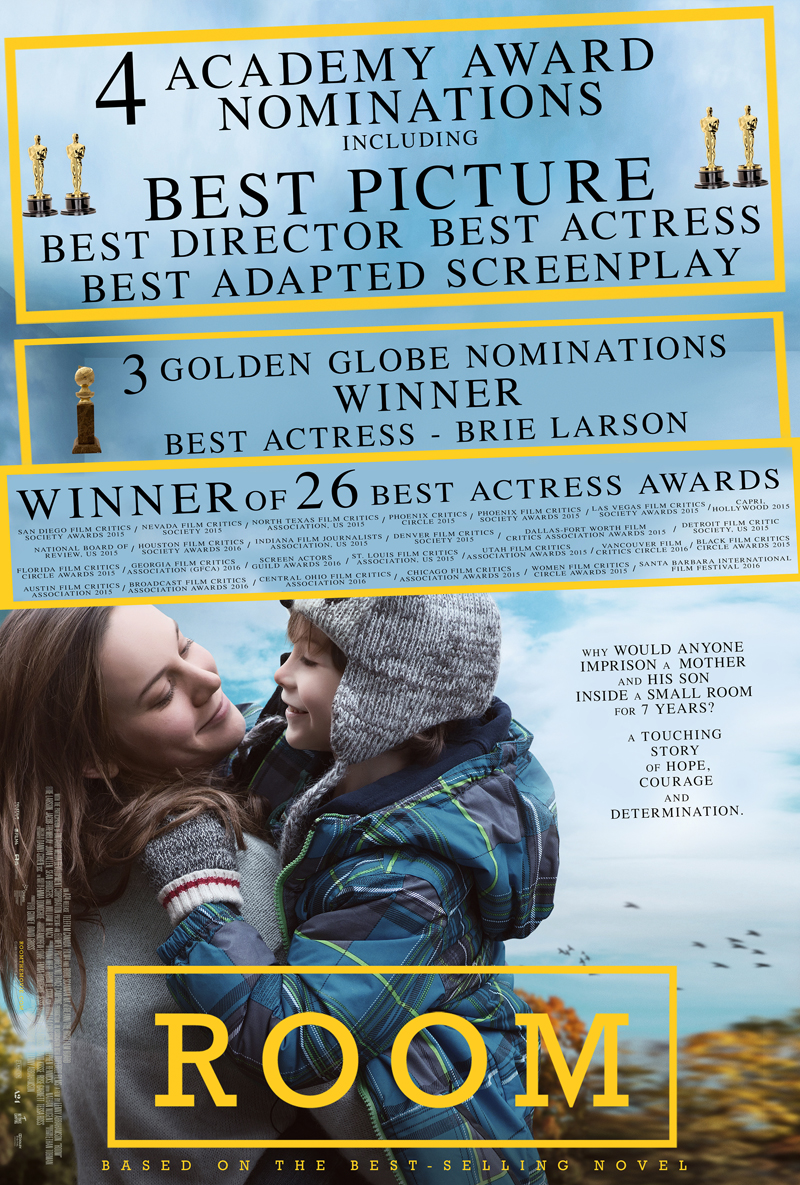
Room


Short verdict: Intimate and enthralling, Room is a powerhouse of acting and subtle filmmaking. Headed by a stunning turn by Brie Larson, the film also offers one of the best child performances of all time 

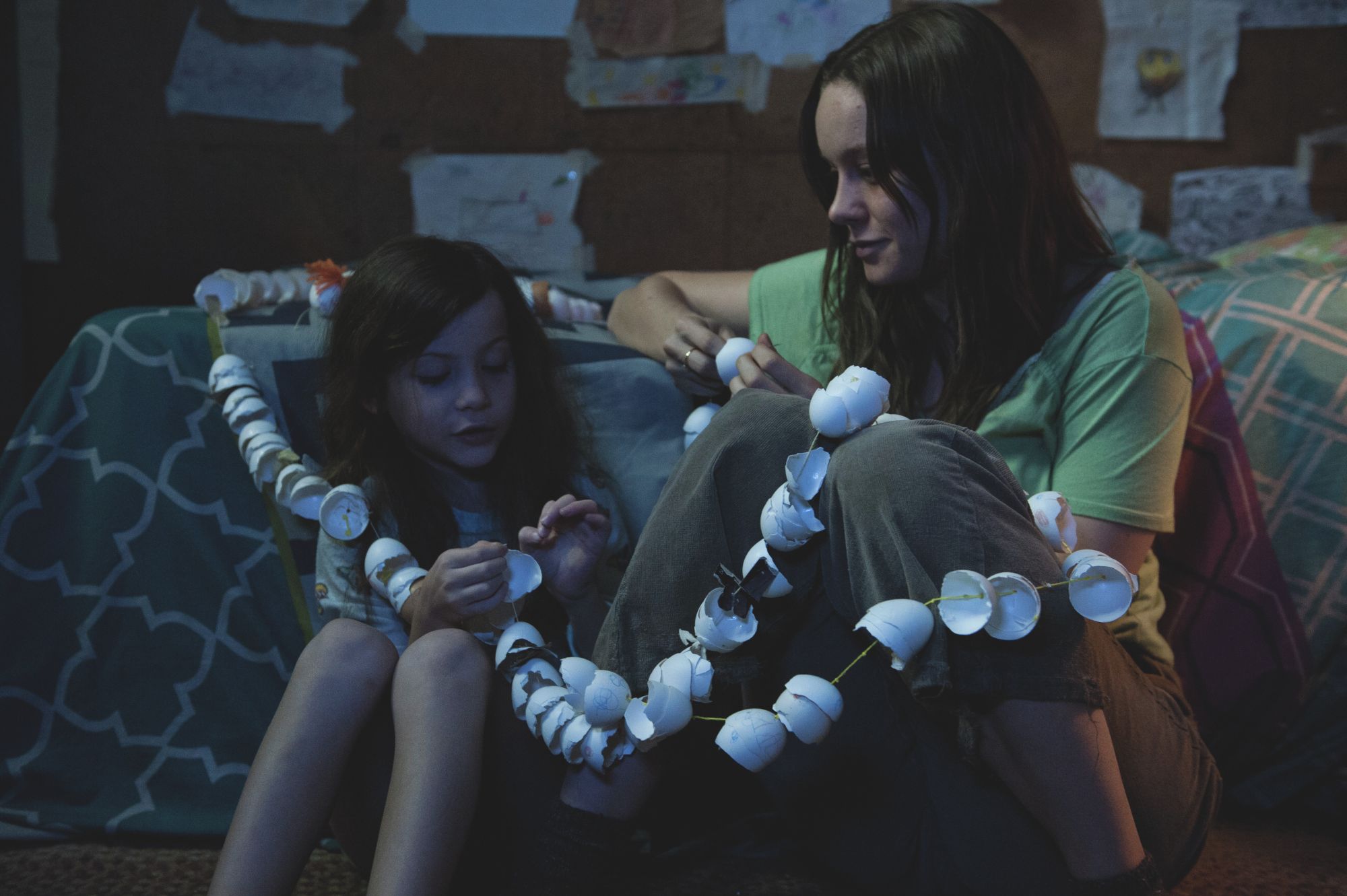
What would it be like raising a child trapped in a single, permanently locked, room? This is the concept of Room, a film based on the novel by Irish-Canadian author Emma Donoghue. Loosely inspired by a real life incident (the infamous Fritzl case), Room takes a grim premise and manages to turn it into a look at hope in literally the smallest of places. Brie Larson plays Joy, a young woman kidnapped by an older man, who is routinely raped and gave birth to a child inside a single, locked room. She now spends her days striving to escape boredom and raising her child Jack (creating him a dream-like world where TV serves as an island of different realities – theirs just being one), whilst looking for a chance to escape.

Brie Larson gives a powerhouse performance as Joy, grounding her in a sense of reality – she is a flawed human being like us all and has to make incredibly difficult choices which no-one should have to face. We are reminded of her incredible strength to go through such a trauma and her young age (she was essentially kidnapped as a teenager). The young actor who plays Jack deserves equal props. With Jack at the centre of the film, a bad child performance could easily derail the whole thing. This is a difficult character to play even for an adult, so the fact that he pulls it off and is incredibly effective and emotional is miracle in and of itself. I would dare say this is one of the best child performances I have ever seen in a film – again the film’s commitment to a sense of reality means Jack is both charming and sweet yet also prone to extreme mood swings. We understand and see most things through his perspective and are along for the insane ride that he's on. 


The film commits to its concept 100%. The first half we are exclusively trapped in this one room and director uses every trick imaginable to make this a cinematic experience. We never get establishing shots of ‘room’, just extreme close-ups or mid-shots. This way we understand the geography of the set from the characters’ perspective and understand that this is their whole world. The only establishing shot we get is at the very end of the film, a tracking shot showing the whole room (which has subsequently been seized by the police). Both the audience and Jack and Joy are shocked at the size of the room and serves as a key indicator of their character development. It's a subtle and powerful moment that lingers on after the credits have rolled. The whole film is punctuated by great scenes such as this. While the first half is an intimate and intense look at the two characters’ relationship and plot to escape (which in and of itself would be enough for a good film) the second half commits to the aftermath of such a trauma and both characters’ adjustment to life outside. While no film could truly communicate the years (if not life time) of psychological trauma an event such as this would enact, I do appreciate the length of the time committed to exploring this as thoroughly as possible. Jack has to deal facing the fact that his concept of reality is a lie and has to learn to adjust to the world – in some moments he even pines for the simple life ‘room’ offered.  Joy is faced with picking up the pieces of her life after she was kidnapped and attempting to adjust back to her old life (which, ultimately, is not possible) and this makes for the most dramatic moments of the film.

Room’s best attribute is that a concept which sounds grim and turgid on paper becomes engrossing and enriching. There are grim elements to it but the film rather chooses to concentrate on the intense relationship between and. The fact that it manages to have small moments of levity whilst not undermining its subject matter. Sentimentality never creeps in. Jack’s escape from ‘Room’ is wonderfully executed and is one part exhilarating and in the other part terrifying. Its Room’s excellent balance of tone that keeps the audience emotionally enraptured in its story.

Long verdict: Room is an excellent film, expertly telling its intimate story with subtle filmmaking and excellent acting. A film that will long stick with you after the credits have rolled, Room excels at committing itself to exploring its central. And it never gets bogged down in its grim concepts and has genuine moments of levity (whilst not undermining its very serious subject matter)

Rating: 9/10

Kubo and The Two Strings


Short Verdict: While it may take some narrative short-cuts, at its heart Kubo is an achingly beautiful film about loss, rendered in breath-taking stop-motion animation

Minor spoilers

When presented with a stop-motion animation film, critics often fall back onto bemoaning the rise of CGI-animated films and the subsequent homogenising of the art form. Often more old-school forms of animation fall by the wayside becoming the exception and not the norm. While I do sing the praises and potential of CGI animation (one only needs to look at the golden years of Pixar or Disney’s current second Renaissance as evidence of this) there is something refreshing about alternative forms of animation. The gorgeous hand drawn black-and-white animation of Persepolis.  Studio Ghibli’s beautifully rendered 2D animated vistas. Aardman’s uniquely British blend of good-natured and quietly witty earthy animation. The beautiful swathes of Irish animation studio Saloon. The works of American studio Laika, who debuted with the wonderful adaptation of Neil Gaiman’s Coraline and followed up with Paranorman, have continually pushed the limits of stop motion animation to tell unique stories well outside of the mainstream. Kubo and The Two Strings is yet another great entry into this canon and is by far one of the most visually impressive animated films I have ever seen.

Kubo follows the titular the character, a young boy (Art Parkinson), on a journey of self-discovery set in a fairy-tale inspired Japan of the past. Kubo spends his days telling stories to local townsfolk with the help of his magical abilities and his trusty guitar (regaling his stories using origami figures brought to life by his magic) and taking care of his mentally unstable mother, a kind, nurturing and very protective soul Despite advice from his mother, Kubo accidentally unleashes a vengeful spirit from the past and is forced to go on the run. Along the way he encounters a mysterious creature called Monkey (Charlize Theron) and a cursed samurai, Beetle (Matthew McConaughey), who must team up in order to solve the mystery surrounding Kubo’s family legacy (revolving around the scattered pieces of armour Kubo’s father left behind before his death) and defeat the vengeful spirits who are threatening the live of Kubo and his loved ones.. 


Stop-motion animation has a eerie effect. Quite how pieces of plastic can elicit emotions out of me is just as magical as Kubo’s guitar. The plot itself follows an almost dreamlike/fairy tale logical and the animation suits this. Whether it's a subtle conversation between Kubo and his friends or the incredible opening in which Kubo delights an audience with his origami figures or small details such as the wind brushing against Monkey’s fur, Laika are  truly masters of the form. This is bolstered by an incredible art-design that strongly evokes East Asian (in particular Japanese) art styles. The magical sets and landscape almost evoke a pop-up story book. Everything appears to be lovingly hand-crafted to create a cohesive fantasy world. The creature designs in particular are incredible, the highlight being a gigantic skeleton warrior and an eerie multi-eyed demon hidden at the bottom of a lake. The use of lighting is also incredibly effective. The opening cliff-side exchange between Kubo and his mother is rendered through a setting sun. The sudden drop from day to night signals the arrival of the terrifying ‘aunt’ characters. The very subtle CGI enhancements do not detract from the hand-crafted feel to the film and only serve to punctuate or emphasis aspects of a scene. Technically, Kubo is flawless.

Kubo boasts a vast array of characters, all with great and unique designs and strong personalities. Kubo, whilst not the most ground-breaking child-protagonist, is instantly likeable, marked by his long emo fringe covering his eye-patch, a wound inflicted when his villainous grandfather tried to claim both his eyes  His good-natured approach to the quest makes him an appealing hero.  The highlight of the film is Monkey, an incredibly fun character, born from magic imbued by on an old token by Kubo’s mother, who is also hiding a great secret. The design is very subtle and is not gendered at all. Theron’s performance as the character is the highlight amongst the voice actors. Presenting a world-weariness and a deep compassion, Monkey is a more than suitable companion for Kubo’s voyage of self-discovery. Beetle, on the other hand, mostly serves as comedic relief and at first struggles to fit into the film in a satisfying way. However, by the time the gang are crossing the long lake, the character comes into his own, becoming almost like a surrogate father to Kubo. As mentioned previously, the ‘aunts’ who are relentlessly pursuing Kubo, are truly terrifying and are almost like ring-wraiths in their undying desire to accomplish their master’s goals. I don't want to get into accusations of white-washing in the film (Asian designed characters voiced by white American actors), so all I’ll say is that the actors give great and lively performances and suit the roles well.


The film has an incredibly powerful first act that emphasises visual story-telling and a steady pace. The second act does take an odd turn and the film’s central goal does become a bit lost in and amongst the incredible set-pieces and comedic relief. It throws a little bit too much in the way of its narrative arc (a fetch quest, comedic lines, world building, tender moments, crazy creatures etc.) which threatens to undo some of the hard work in the first act. The film fortunately finds itself again in the final act, following a major reveal about Kubo’s family, and begins to work towards a somber ending that respects its young audience. The dead parent trope is a cliché of children’s entertainment at this point and has  become a lazy shorthand for why an audience should care about this character. However Kubo takes a more philosophical look at death, that is effecting and is a fairly important lesson for its audience to learn. How we deal with death is just as important with how we deal with life. The film’s very brave ending ends on a quiet note with Kubo having learned these important lessons on his adventure.

Long Verdict: Kubo is one of the visually arresting stop-motion animated films of all time that excels in its slower pace, strong world building and powerful themes of loss. While its themes are lost a little in its second act, the film pulls itself together for an emotional and surprisingly mature ending. One more draft of the script would make this a modern classic but as it stands it’s a brave, unique and classically told tale.

Rating: 8/10

Saturday, 20 August 2016

Suicide Squad Review


Short Verdict: An interesting concept that is bogged down by a terrible edit, egregious use of popular music and a lack of a singular vision

Disclaimer: please note that I am not affiliated with Rotten Tomatoes, nor have I been brought off by Marvel Studios.

Spoilers throughout

Oh boy, this DCEU thing. Beginning with a film that was never designed to open the doors to a shared cinematic universe (see 2013’s controversial Man of Steel - the film has some interesting ideas but is a complete mess) and the depressing, ill-conceived dud (and that’s polite) that was Batman V Superman, I think it's fair to say that warning signs are ringing in the offices of Warner Bros. Billions have been invested in these films, aiming for the potential of a shared universe akin to Marvel, and there is no turning back. Thus a lighter tone for the Justice League film (and a quietly disappeared Part Two), a stripped back roster of films, a Kevin Feige-type overseer in Geoff Johns (who is aiming to create a cohesive creative direction for the DCEU), a reduced role for “visionary filmmaker” Zack Synder and a seeming rescue attempt on the already “in-the-can” Suicide Squad, the David Ayer directed villain team-up film. Reports have been rumbling of a troubled production and arguments over the tone of the film. The studio, presumably scared by the negative reaction to the grim and dour Batman v Superman (and its subsequent underperformance at the box-office) opted for extensive re-shoots to help lighten the tone of Ayer’s original more dour cut. The lighter cut won out with test audiences and is subsequently the one rolled out into cinemas. The subsequent reaction has been mixed to say the least. Are the post-production problems apparent in the film (akin to 2015’s Fantastic Four flop) or can Suicide Squad turn the fortunes of the DCEU now? More importantly – did I hate it as much as Batman v Superman?

Well let's start with the plot. Amanda Waller, CIA operative, puts her own task force together made up of the worst of the worst in criminals, including Deadshot (Will Smith), Harley Quinn (Margot Robbie) and several other D-list DC characters. Waller concludes in the light of Superman’s arrival (and the potential that future powerful beings won't be as nice as Superman) that the only way to fight evil is with evil. The team will serve as the front line to prevent other powerful beings from bringing on future conflicts. This the newly formed team of disposable convicts are sent on a suicide mission (get it?) to save a prime target in a city which has been taken over by a mysterious evil entity. They are kept under watch by army man Rick Flag (Joel Kinnaman) whilst also being threatened by an exploding chip in their brain if they decide to run off. The team decide to band together to get through this mission alive and, hopefully, get to the other end with their freedom. The plot is the bare minimum needed, my hope being that it would just be a frame work to hang fun character work, funny scenes and a breezy pace – instead we get a confused mess of a film, trying to be its own unique thing, whilst working as part of a wider cinematic universe, trying to compete with other similar films and to make up for the damage that Batman v Superman caused (BvS). The studio were desperate for a lighter film than BvS but ultimately chopped a more dour original cut of the film to form a Frankenstein’s monster of tones and plot lines. The concept of a Suicide Squad its self is flawed. Why would you form a team of regular criminals with no real powers (most just wield weapons) to become the task force to safeguard America and prevent World War III predicated by the likes of super-powerful beings such as Superman and General Zod? In that regard, why send them into a city controlled by a mystical and magical being when they have no means of combating it? Why send these villains when you could use the army instead if you want to send in non-magical beings to infiltrate the city? Oh, they do send the army with them? Then why use villains at all, who will probably try and escape and will probably not follow orders? Why not use…I don't know, Wonder Woman maybe, to try and defeat the evil magical mystical being?

Also, where did Harley get that cellphone?

The major issue with the film are its tone and editing. This is a schizophrenic film so desperate to be the darker inversion of Guardians of the Galaxy that it forgets what made that film so charming in the first place. Character threads are left dangling, as we are expected to like the characters and form emotional attachments with not even the bare minimum of character development provided. One member, Diablo (Jay Hernandez), proudly proclaims at the end of the film that the Suicide Squad are his family, however the film has provided no impetus for the audiences to think so. You have earn those kind of scenes – akin to the scene in Guardians where the characters admit they are losers and thus need to stick together. The editing is the major crime of the film. We are given scenes that often repeat information or have no bearing on the plot. The film opens and we are introduced to most of the major Suicide Squad members before another scene begins with Amanda Waller going dossier-by-dossier introducing each character. Before we know it we are being zipped from scene to scene, from flashback to modern day setting in the prison, creating an incoherent first hour. By the time the scenes begin to calm down and we are watching the team work their way through the city and partake in extended action scenes the damage has been done. We have one nice scene where the team enjoy a final drink together before facing death but is ultimately meaningless because the film has so poorly established why we should care about these characters. It ultimately becomes fairly dull in the middle as we are watching action scenes with no emotional attachment, no real style and nothing propelling the plot forward.

In terms of the characters they range from being serviceable to servilely underdeveloped (despite a broad range of characters, most fall into ethnic stereotyping). Deadshot is the stand out of the film, mostly powered by the very likeable Will Smith, but even he is a fairly basic character – he has a daughter he wants to protect and get back to. Been there, done that cliché but … It’s Will Smith. The only other character (except Harley, who I will get to) given any kind of development is Diablo. A tortured soul with the power to summon fire, he suppresses his ability due to an unfortunate incident involving his anger issues and his family…you can see where this goes. The rest of the cast range from a talking crocodile, a boomerang wielding drunken Australian (who has an odd quirk for pink unicorns...), a silent katana wielding Japanese warrior and an archeologist possessed by the spirit of an ancient South American spirit (who eventually becomes the villain).They are going for the ”loveable losers” without filling out the loveable quota or providing adequate exposition. Quirky doesn't mean quality. Now a film about villains who do morally questionable things in the face of “evil” and in the name of the greater good would be an interesting premise for this film. You would need characters who truly personify the “worst of the worst” type.  However, the worst of the worst boils down to struggling father, a misunderstood widower, a woman with a history of mental illness, a drunk and a talking crocodile – which ultimately makes them too likeable (on paper anyway)! Now they do exhibit some morally questionable habits (Captain Boomerang springing to mind, who decides to abandon the team after enjoying a final drink … only to return in the very next scene) but they ultimately do the right thing by banding together to defeat a mystical evil being. The film’s blandness holds back either a warm entertaining film or a darker, more ethical think piece; again I question how much of this was in the original edit.

The only other standout is Viola Davis as Amanda Waller, imbuing her with a real on-screen presence and a hidden sadistic layer. This somewhat makes up for Enchantress, the being who has taken over the city. Taking possession of archeologist June Moon, Enchantress goes rogue against Amanda Waller, who thinks she can control her by possessing her heart (...presented in a hastily edited backstory which involves caves, possession, ancient rituals etc…it is essentially her link to this world and can't exist without it) and using her as part of the team. Reuniting with the heart would grant her freedom but destroying the heart would kill Enchantress…which Waller doesn't think to do until the very end of the film…Again the idea of an ancient evil spirit possessing the body of a fundamentally good person is interesting (Exorcist much?). This is built on further as Waller essentially makes Enchantress a slave to her will but this thread ultimately becomes lost in all the other hastily edited scenes happening in the film. This leaves a fairly bland villain ready the CGI heavy final confrontation.

On a side note Batman makes a cameo in the film, hunting down Joker and Harley Quinn and arresting Deadshot. I dub this version of the character Murderman (due to his high body count in BvS, completely contradicting the character’s strict set of ethics) and he is just as out of character here. Murderman arrests Deadshot in a dark alley in front of his young daughter, likely mentally scarring her for life – similar to another disturbing event event that happened to a young child mentally scarring him for life. Have some levity Murderman! I won't lie – I did get a little kick out of seeing Murderman again (as I do enjoy Ben Affleck as Murderman, despite my many issues with this portrayal of the character) but it is a fairly fleeting aspect of the film. At least they didn't heavily advertise him, unlike another fleeting aspect of the film (which we’ll get)!

The film also presents an incredibly problematic version of Harley Quinn. Margot Robbie does the best she can but ultimately lacks comedic timing to makes this version of Harley anywhere near the complex and funny character from the animated show. We are presented Harley’s backstory in the film which rides an uncomfortable line between the original cartoon and the recent New 52 reboot. In the cartoon, Harley is a psychiatrist at Arkham Asylum and is in charge of looking after the Joker. She eventually goes mad studying him but also ends up falling in love with him. She ultimately decides to reject her normal life, dons a harlequin costume and breaks the Joker free – the two ride off into the sunset to cause mayhem and chaos. The important thing to note is that it is her choice to become Harley. In the film we get half of this (the psychiatrist part) but the other half is replaced by the Joker performing electro shock therapy on her and forcing her to jump into a pool of acid (similar to the Joker’s birth in the seminal comic The Killing Joke) to prove that she will both live and die for him. Note here that Harley’s choice to becoming this character has been stripped away. Add this the controversial abusive relationship aspect of the character (handled more maturely in the cartoon) and we are left with an uncomfortable portrayal of Harley, robbed of the nuance that made her great in the first place. There are scenes of the Joker and Harley together but they don't really do anything to inform about their relationship aside from their crazy (Joker pretty much offers Harley as a sex object to one of his fellow gangsters).

The biggest victim of the edit is The Joker, played this time by Jared Leto, who has no real involvement in the plot and would have been better served as a post-credit tease. The image of the Joker in this film has been very controversial, looking more like Marilyn Manson than the Joker, but I decided to hold judgement until the film came out (people thought Heath Ledger was a bizarre choice but look how well that turned out). There is something fascinating about this version of the Joker and why it doesn't work (and I imagine this is due a victim of the edit) but needless to say this is no Mark Hamill or Ceaser Romero or Jack Nicholson or Heath Ledger. He just becomes lost in a sea of confusing and poorly edited scenes and there isn't enough in the film to make any kind of impact. That said there is a certain fascination with the Joker as presented here and I don't think Jared Leto is an entire lost cause. Given space to breath, Leto could embody a unique version of the Joker but as it stands it becomes an awkward performance. Really the Joker should have been the Big Bad of the film – the team could have faced a villain more on their level and would have helped to deal with the troubling abuse aspect of the Joker and Harley’s relationship. Those expecting him to be heavily in the involved due to his appearance in the marketing will be disappointed.

Suicide Squad will also serve as a perfect example of how not to use music in a film, which plays like a jukebox in the background for most of the film. Nashville, by Robert Altman, is a perfect example of music informing character emotions. Master filmmakers sometimes use music to contrast what is happening in the scene to create uneasy and, if done right, unforgettable moments. While not a master filmmaker, Quentin Tarantino’s use of “Stuck In The Middle With You” creates an uneasy, violent and hilarious scene in Reservoir Dogs. Martin Scorsese is great example of this, in particular during the final 20 mins of Goodfellas where the random music cuts are in keeping with disintegrating physic of the character and the edit subsequently reflects this (smooth longer takes in Act One become frantic and frenetic in Act Three). Guardians made use of a retro soundtrack, which nicely contrasted the tone of the film to create comedic effect or to inform character emotions – plus it makes sense from a story perspective as the only music Peter Quill has is in the cassette tape he left Earth with. Suicide Squad uses music not to inform, emote or suggest but rather inform you of the broadest strokes possible as the edit fails to convey this through the story-telling. It also tries to give a “quirky” edge to the film. “You Don't Own Me” is played whilst we are introduced to Harley Quinn. “Sympathy for the Devil” is used for Amanda Waller (get it? Because she's the villain!). “Seven Nation Army” – because they’re an army and there's seven of them! The first 20 minutes plays like an iPod on shuffle and becomes fairly annoying after a while – I would rather have clear exposition instead. Music is also used to contrast events happening in the film but to no real effect – “Spirit in the Sky” is used because they are flying in a helicopter….and I guess it's in contrast to the dark tone? Decisions like this are fascinating and I feel are more akin to putting plasters over a wound. Or cello tape desperately trying to hold a kitchen table together. And the table is coloured in bright rainbow colours and unicorns – because … quirk?

Did any of the aspect work for me? Well I liked the schlockier elements. A sword possessed by the soul of a woman’s dead partner is played for laughs and is one of the few comedy scenes that actually works. Even though there is no character development given to him, I liked the talking crocodile (and got a couple of chuckles out of me). The bar scene is one the few moments of levity in the film and could have been a fun moment from another film. I appreciate the wide variety of characters and designs, even if it is just surface level detail and stereotypes, and the potential could have been very a fun cast. However, the film is a victim of studio mishandling (6 or 7 cuts were tested), sloppy editing and confused morals. All these fun elements become lost in a bland edit that sucks the life out of what might have been an interesting and original premise. The film ultimately leaves an unsatisfactory taste that does not enrage like BvS but doesn't hit enough correct notes to satisfy as an individual film. I appreciate that DC are trying something different than Marvel, I just bemoan the lack of a clear and original vision to anchor the film.

Long Verdict: While not the disaster that was Batman v Superman, Suicide Squad suffers from an infuriating edit that fails to convey the basics of character building and story-telling beats which ultimately gets lost in a sea of confusing scenes and underwhelming moments. There are good elements to appreciate here, it's just a shame many of the decisions are fundamentally mis-judged. Here's hoping for Wonder Woman...

Rating: 3/10

Sunday, 7 August 2016

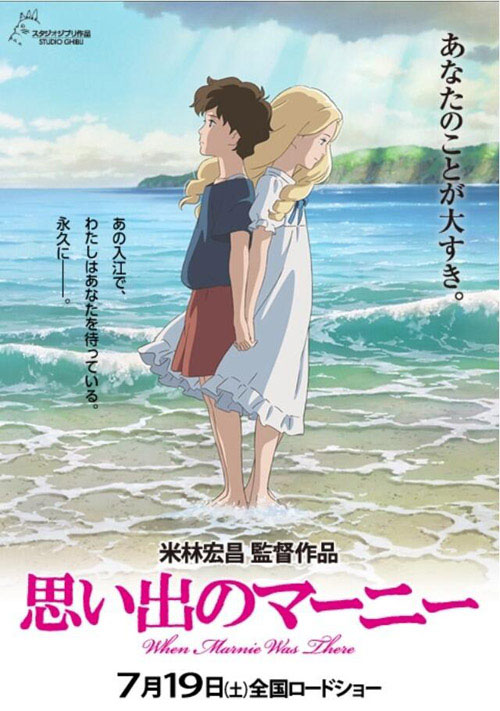
When Marnie Was There


 http://www.rotoscopers.com/wp-content/uploads/2014/07/when-marnie-was-there-poster.jpg
Short verdict: When Marnie Was There is a visually arresting film that deals with its issues in a mature way even if it does squander some of its potential in its final 20 minutes

Spoilers throughout

Studio Ghibli is one of the greatest studios to exist in film history. No other studio has blended art and commerce more than successfully together to create unique and unforgettable works that have touched generations of people. Thanks to Disney, the films are now widely available in the West outside of their native Japan and finding new generations to enrapture and inspire. Spirited Away. Howl’s Moving Castle. Grave of the Fireflies. My Neighbour Totoro. Princess Mononoke. Hallmarks of animation. So upon the announcement that Hayao Miyazaki would retire after The Wind Rises, the release of Isao Takahata’s presumed swan song The Tale of the Princess Kaguya and the subsequent retirement of long time Ghibli producer Toshio Suzaki many questioned the studio’s future. It turned to the younger generation to be torch bearers. While Arrietty and From Up On Poppy Hill are good films, they still have the hand of Miyazaki who either helped to storyboard or contribute to the script. Could Ghibli break away from its long time master? Even hiring his son Goro Miyazaki as a director seemed to link the studio back to its past. Ghibli itself could not answer this and its film division it currently closed while the current owners work out where to go next. This leaves When Marnie Was There in an odd position. It is the work of a young filmmaker, has no links to Miyazaki (that I know of) and retrospectively serves as (for now) the swan song to the studio. Can the film work under this great weight of expectation?

When Marnie Was There is the second film from Ghibli stalwart Hiroyasa Yonebayashi (his first film, Arrietty, is a very inventive take on The Borrowers and worth watching) and is based on a book of the same name by Joan G. Robinson. The novel is set in Norfolk, England and the film transposes this to a remote seaside town in Japan’s northern island Hokkaido. Both settings offer remote locations so the re-transposition feel appropriate. Anna is a depressed child suffering from anxiety issues which leads to asthma attacks. Her foster mum suggests she takes some time away to stay with some of her relatives in the country. Maybe the air will do her some good? Anna at first struggles to fit in but soon discovers a seemingly abandoned mansion holding many secrets. Here she befriends the mysterious Marnie, a blonde-haired almost ethereal girl, and the pair soon being to share an intense relationship as they get to known each other. Anna soon discovers that there is a great mystery surrounding the girl…

Marnie works as part as a re-transposition of the novel as it retains that early 20th century (almost, but not quite Victorian sensibility) children’s story aesthetic (e.g. The Secret Garden) – a mystery known only to the children, secrets returning from the past to haunt the present, absent parents - it's almost gothic in a way. However couple this with a Japanese setting and you get a very unique film which harks back to the days of this kind of story telling in children’s literature. Yonebayashi creates a clear geography to this small town and we soon to get to know its residents along with Anna. A visual highlight is the festival in the village, complete with traditional yukatas, and the shifting imagery of the mansion at the centre of the story. As always with Ghibli, the animation is stunning and recalls a return to a more realistic style a la Only Yesterday (a 1991 classic only recently released in part the US – Europe has been enjoining this treat for a while now). Ghibli has this amazing ability to bring a sense of weight to its animation, whilst also feeling justified in the fact that it is animation. It is understated in Marnie and maintains a quiet meditative presence. This is particular highlighted in the opening when Anna suffers from an asthma attack and the dance the pair share later in the film.

Marnie essentially becomes Anna’s cypher to work through her mental unrest, whether it's social anxiety (Anna at Marnie’s parents’ party) or dealing with truths about the nature of her foster care. Marnie is a kind figure for Anna to discuss these issues. However Marnie herself is hiding something – a history of neglect and child abuse. The two help each other to bury these ghosts from the past. Anna herself is a great character. Ghibli is one of the few out rightly feminist studios, giving their female characters greater agency than any other studio, and Marnie is no different with its predominantly female cast. Anna feels like a real person, dealing with real issues. We all know people like Anna or may have even dealt with these issues ourselves and this gives a great sense of weight to the character. I would argue that this is one of Ghibli’s most successful main characters, as her reactions and relationships are constantly shifting depending on the situation (something writers struggle with even with male characters). She admits she has problems and often lashes out and doesn't know how to control her emotions. The rest of the cast function well but there mostly to serve Anna’s story. Though I do like Anna’s foster mother, echoing sentiments that must be running through parents taking care of foster children. Again it feels real and helps to ground the film. As we discover that Marnie is a figment of Anna’s imagination, it feels appropriate – Anna needs Marnie to work through this difficult part of her life. These moments are some of the film’s strongest visually and allows the filmmakers to explore different, yet subtle, artistic styles. The film moves a steady pace and allows you to become enraptured in Anna’s world. The story-telling also works a treat, as you have dual storylines, one concerning Anna and the root of her depression and the other about the truth behind Marnie, which leads into one the unsatisfying part of the film, in my opinion. Is she just a figment of Anna's imagination or is there something more?

I have one aspect, alluded to above, that disappointed me and it is a fairly big part. To discuss this I will be raising spoilers. If you do not want the film spoiled skip this paragraph. The growing relationship between Anna and Marnie would seem to imply a queer reading of the film. Anna blushes when Marnie complements her art, the two share a moonlit boat voyage on a lake and partake in an awkward dance at a party. All the signposts of a blooming romance. Plus the two share secrets together (I was reminded of a similar scene in Buffy’s fourth season, where Willow and Tara accept their feelings towards each other and the secret they currently share) and promise to support and love each other. As an excellent article on the subject points out (https://babydykediaries.wordpress.com/2015/07/17/queer-childhood-in-when-marnie-was-there-omoide-no-marnie/), Anna can only meet Marnie at certain times far from the adult world at an abandoned mansion separated by a lake – essentially outside of society. Marnie teaches Anna how to row a boat and serves as a guide – Anna comes out on the other side to be with Marnie, implying transformation (serious props to the writer of the article – before the end I was picking up on its LGBTQ themes and wanted to see if others had picked up on it). It is hard to read their relationship as anything but queer. The camera work also implies Laura Mulvey’s much discussed “male stare”, as we get shots from Anna’s P.O.V. looking at Marnie, starting from her shoes and working her way up. Reading about queer experiences implies that for many Marnie is similar to the way others have come out. So the twist that Marnie is actually Anna’s grandmother who raised her after her parents died before going into foster care after her subsequent death comes as a surprise and disappointment to me – is this a case of queer baiting? The film signposts these queer images only to reestablish a hetero-normative stance in the final 20 minutes. We are now meant to get from the film is a love between family over time, which doesn't sit right with me and comes across as a hastily written conclusion (a bit like the rushed ending of Psycho). Anna is essentially seeing vision of the grandma in the past, which at first the films suggests is just a figment of her imagination is actually akin to meeting her across time (though it is done a much more cerebral and natural way then how I described it). It doesn't undermine the narrative arc of the film, as this is about Anna working through personal issues - but then again why have such strong queer imagery? This seems so baffling to me that it did leave a bit of a sour taste in my mouth, as I loved 85% of the film. Different audiences are bound to read this in different ways and this is how I felt whilst watching the film. The film essentially concludes that Anna needed Marnie to move onto the next stage of her life. Anyway see the film and make up your own mind!

Despite this disappointing twist there is still plenty to recommend about the film, even if it does trip up in its last 20 minutes. After all, how many other animated films can you name where a character really works through an affliction such as anxiety? The pace moves steadily and is in no rush to reach its conclusions. Ultimately, Marnie succeeds as a swan song to Studio Ghibli, as it shows there really is no set formula that these films can follow (a la Disney). Each one is a unique experience, just as Anna’s summer was to her. I just find it a shame that the studio for now looks it have closed its doors on its wonderful world of imagination…

Long verdict: While there is a somewhat confused message at the heart of the film, When Marnie Was There is an achingly beautiful film about the healing power of friendship. Anna is one of Studio Ghibili’s most believable heroines dealing with all too real personal issues. As a swan song, Marnie doesn't hit the heights of the studio’s giants but as acts as a signpost for all the great things Ghibli can do.

Rating: 8/10

Finding Dory


Short Verdict: Finding Dory doesn’t quite hit the same emotional heights as the mighty original but still  manages to be its own thing with a well-paced plot, beautiful animation and some very fun new characters


Between 1995 and 2010, Pixar blended both art and commerce to create modern staples of children’s entertainment. Often funny, heart-felt, beautifully animated and surprisingly thought-provoking, Pixar gained the best of both worlds with critically and audience backing. However, the studio’s quality took a downward turn with mis-judged films such as Brave (a great idea marred by a troubled production), Cars 2 (a sequel to the only “Golden Era” dud – but also one of their most successful in terms of selling merchandise) and the unnecessary Monsters University. Whilst Inside Out seemingly regained critical ground, Pixar followed it up with the long delayed The Good Dinosaur, a baffling film seemingly at odds with itself. The studio then began to rely on sequels to its classic films to keep things ticking over. Whilst Toy Story’s sequels feel earned, and are part of a wider thematic arc, one can't help but feel a direct correlation between the studio’s downturn in fortunes and the announcements of sequels to its films. Cars 3, Finding Nemo 2, The Incredibles 2, TOY STORY 4 (?!?!). I’m not saying that sequels are a bad thing, it's just a shame to see a lack of films in their upcoming roster that are based on original ideas. Now that Disney has turned its fortunes around with modern classics such as Tangled, Big Hero 6, Wreck It Ralph, Zootopia and the mighty Frozen, where does this leave Pixar, once viewed as the alternative to the House of Mouse? Well, I’m not fortune-teller. All I know is that today I saw Finding Dory, the sequel to Pixar’s classic hit, Finding Nemo. Did it sink or swim? The original is a stone cold classic and is seen as a turning point for the studio (both critically and financially) – how can you begin to fill these boots?

Pixar always say they only green light a sequel unless they have a story worth telling. Toy Story for example. Both sequels feel like natural extension of the original film and forward the story and characters in new and interesting ways. Cars 2 and 3? We all know the reason ($$$).  So is Finding Dory the former or the latter? Well… the film picks up one year after the events of the original as the titular blue remembers scraps of information about her long forgotten parents and is desperate to reunite with them. The scraps of memories take Dory, Marlin and Nemo to the Marine Life Institute in California, a Sea World knock off specialising in rehabilitating sick sea life with the goal of releasing back into the ocean one day. Dory becomes separated from her clown fish friends and has to work with her pesky short term memory loss to try and find her parents somewhere in this complex. She befriends some new marine life, the best of all being an octopus (or septopus) named Hank, voiced by Ed O’Neill, who help her in her quest to find her parents. The title can be a bit mis-leading. Finding Nemo was literal. Finding Dory is in a similar sense but is more about the titular character finding herself. And it works. Surprisingly well. Finding Dory succeeds due to its well-paced story, funny new characters and excellent animation.

Upon the announcement of a sequel to Finding Nemo, I rolled my eyes. The original is such a self contained story, what else is there to do? But on re-watching the film ahead of Finding Dory the one logical thread to pick up on is Dory and her backstory. Why was she swimming alone? How can she have these amazing skills but not remember what happened five seconds ago? Part of the mystery is what makes the original so funny – you don’t expect Dory to start speaking whale, let alone think it's actually going to help them! Finding Dory fills in the blanks and you could say it undermines the comedy of the original but it is neat to see this character go on a journey of self discovery. Ellen deGeneres gives a powerhouse performance, running the gambit between lovably clueless to emotional wrought. It’s a hard character to get right for any voice actor but deGeneres gives it 100% and is easily the best aspect of the film. Often films focusing on the “lovable sidekick” fall apart for exactly that reason (see Pirates of the Carribbean 4) but Finding Dory manages to keep things focused on Dory even if that does come at the expense of the some of the other elements. While it is nice to see Marlin and Nemo featured in the film throughout (I assumed they would be relegated to opening/closing cameos) and are given some funny lines, they are mostly extraneous to the plot (in particular Nemo, as Marlin is at least given an arc, even if it is similar to the one from the original).

Outside of Dory, the best part of the film is the new characters, the aquatic life trapped in the Marine Life Institute. Hank, the septopus, is a miserable character who just wants to escape to Cleveland so he can live his life away from contact with others (I won’t spoil the reasons behind this as it leads to a very funny and subsequent heartfelt moment) but is forever changed by the experience he shares with Dory. Initially only in it for her tag (which guarantees him a ticket out of the centre), Hank reveals himself to be a sweet natured guy with some insecurity issues. What brings the character to life is the animation. Fluid, slimy and graceful all in one. Hank proves that Pixar are still master animators and this gives a big palette for story and comedy potential. The other characters include a whale named Destiny, who suffers from short-sightedness (unrecognisably voiced by Kaitlin Olsen of Always Sunny fame) and Bailey, a beluga whale who has lost the ability to echolocate. Both have their moments and add good comedic punctuation to the film. I appreciate that these three characters suffer from some kind of affliction (insecurity about physical contact, short-sightedness and periodic migraines) help add to the films inclusive message. The only underwhelming new characters are the seals (one of which is voiced by the mighty Idris Elba) who feel a bit one and too similar to the crabs at the end of the original and don't add much to the narrative.

The film really shines with its set pieces. Dory and Hank are trapped in a ‘feeling’ pool where youngsters can pick up basic marine life such as starfish and other harmless creatures and shells. Innocent enough. From the fish point of view this is like the D-Day landings as recreated in the opening of Saving Private Ryan, with arms exploding into the tank ripping the creatures from their homes. It’s a perfectly pitched scene and is masterfully executed. There are several others, including one where Marlin befriends a not quite all together gull, but the most bizarre, silly and fun set-piece comes in the final 15 minutes. I won’t spoil it here but it's complete madness that Pixar miraculously pulls off to create a tense and exciting finale to the film. It's one of Pixar’s most out there conclusions by miles! And I have mentioned the animation? The subtle improvements since Finding Nemo create a much stronger palette to work with whilst also improving facial expressions and comedic timing. This is world class animation and one needs only compare it to animation from Blue Sky Studios or Illumination to see that Disney and Pixar are in a whole different ball game.

So what holds Finding Dory back? It has all the right beats to make it as emotionally satisfying and funny as the original. I guess ultimately Nemo is just a better-paced and pitched film. Every scene in Nemo is necessary and forwards the plot or characters in one way or another. The character arc of Marlin is so clear and rich it stands to multiple re-watchings. Dory ultimately can’t shake itself from the shadow of the original and some characters feel fairly sided-lined (Nemo is essentially just the good-natured foil to Marlen now). At times it does try to follow too similar beats to Nemo and doesn't quite come together as a whole, though the emotional core is there. It’s case of a very good film against a great film.

In a summer of dark and dour superhero films and disappointing sequels and reboots, there is something refreshing about Dory being an extended character and voyage of self discovery, even if it's not as satisfying as the original’s character arcs. Really the timing of Finding Dory is perfect. Children who grew up with Finding Nemo are now adults and likely harbour a great nostalgia towards the film (hell, I’m one of them) and may even have children of their own (not me). Since nostalgia is such a huge part of the way modern Hollywood works and markets its films, a sequel to one of the most beloved children’s films of all time released to capitalise on the generation who grew up with it whilst appealing to a whole new generation is a sure fire hit. More safe than bank rolling an original idea. Finding Dory’s opening weekend gross? Biggest Opening Weekend for an Animated Film Of All Time in North America. I don't want to sound too cynical though. Finding Dory is a good adventure that hits the right emotional notes and serves as a reminder that Pixar are still capable of doing great things, even if they are not quite there yet. While not derivative Dory does walk in the shadow of its superior original but tries hard to be its in thing. It's not ground-breaking in a way that Pixar used to be but Dory is a classically told story that understands why the original worked (trust me, a surprising number of sequels, including the horrendous direct-to-video Disney sequels, don't understand their original films). This is the best possible sequel the studio could have done to Finding Nemo, even if I would prefer more original films.

After this, Toy Story 4, Cars 3 and The Incredibles 2, Pixar have said there are no further plans for future sequels. But please Pixar, don't fall back on your word  Don't make Wall-E 2.

Long verdict: Finding Dory is a sweet, emotional and funny return to the ocean exploring the origins of one of the original’s most popular characters. Hitting the rights notes and offering some incredibly fun set pieces, the film doesn't quite hit the highs of the original but in a summer of bland and dark blockbusters, Dory is a reminder that sometimes all you need is a good, well told little story. Couple this with beautiful animation and a powerhouse Ellen deGeneres performance this is a fun romp anyone can enjoy

Rating: 8/10

Wednesday, 4 September 2013

A personal look at the influence of Hayao Miyazaki

At 2013’s Venice Film Festival, pioneering filmmaker Hayao Miyazaki, premiering his latest film The Wind Rises, announced that he would be retiring. Miyazaki announced this a couple of times in the past, however there seems to be a certain sense of finale this time round. It is with a sense of sadness and honour that the film world received this news. Most are now eagerly awaiting his feature film swan song, The Wind Rises, and are producing retrospective looks at the great filmmaker’s past. While I do intend to produce a look back at Miyazaki’s works at a later date, this article seeks to look at my encounters with the great filmmaker’s work and how they influenced my life in (retrospect) profound ways. My respect for Miyazaki's films manage to illustrate my development as a film fan, along with my own personal experience. This can be particularly supported by the film, Princess Mononoke, which happens to be my all-time favourite. 
I first encountered anime on Cartoon Network back in the late nineties/early noughties. My parents had recently upgraded our TV from terrestrial (only five channels!) to Sky, which contained a whopping 300 channels plus! My little mind was blown by what was available. A week later, an odd little anime series started called Dragon Ball Z, which literally unlike anything I had seen before – comedy and science-fiction and epic fist-to-fist action all mixed together to form an unfolding story of increasingly silliness. I was, of course, into Pokemon (well, okay that was my first true experience of anime), but Dragon Ball Z was something else. Soon, I would track down any of kind of TV or film that resembled the Dragon Ball Z style, which I would learn was of Japanese origin and called ‘anime’, such as Osamu Tezuka’s Metropolis, Shaman King, Gundam Wing and Tenshi Muyo. This would eventually lead me to the discovery of the classic TV and film of the medium such as Akira, Ghost in the Shell, Full Metal Alchemist and Neon Genesis Evangelion. These TV shows and films proved to have a spectaculars influence on me, breaking the mould on what a story and characters could do (in particular the mind-bending Evangelion). For a child raised on Disney and Spielberg/Star Wars films, anime represented a break from the norm and introduced me to a new way of thinking.

Somewhere down the line I watched Princess Mononoke.
At secondary school, I was part of a short lived anime/manga club that united us strange students together by our mutual love of the medium. The teacher who ran the club lent me Princess Mononoke. While the violent content at the start of the film fitted into my (limited) view of anime at the time, the film left me somewhat perplexed. This was before viewing Evangelion and Ghost in the Shell, meaning that Mononoke was easily the most cerebral and thematically heavy film I had seen up to that point. The whole thing went over my head, in particular the subtle story-telling and culturally specific references. I returned the DVD to the teacher, shrugged and moved on. A decade later, I would call Princess Mononoke my all-time favourite film. A couple of years later, I stumbled across Spirited Away in my local Blockbuster. Wanting to watch more anime, I rented it and was overwhelmed by the weirdness of the film. But somehow it weaved a wonderful kind of magic. Not seeing any connection between Mononoke, Spirited Away remained a wonderful anomaly. As my love of anime continued, the forums (a new concept at the time!) were discussing an animation studio called Ghibli and a director Hayao Miyazaki. Both Princess Mononoke and Spirited Away came up as part of this director’s wider works. Following the release of Howl’s Moving Castle (the anime magazines began to run retrospectives on Miyazaki in time for the film), Optimum slowly began to re-release the director’s (and studio’s) back-catalogue, which me and my brother would collect. My Neighbour Totoro, Nausicaa of the Valley of the Wind, Porco Rosso, Laputa: Castle in the Sky, Grave of the Fireflies, Whisper of the Heart, Kiki’s Delivery Service etc. all became new kinds of experience in film for me, that emphasised subtle story-telling, more liberal thematic concerns, slower takes and beautiful animation. In addition, these films crossed a wide range of genres, showing to me that anime was more than just shonen and mecha exclusively. Most importantly, their love for strange narratives, odd characters and magical worlds took me to another place entirely, defined by a distinctly more Japanese view of the world In all this time, but somehow the themes remained universal. I re-encountered Princess Mononoke, and thoroughly enjoyed it. However, something was still holding me back from pure-love like the rest of the internet. I was 14-15 by this point and the immediacy of Spirited Away and Laputa appealed to me more. However, I can say that these films were my first encounter with the concept of film as art.
Soon, I had devoured the complete Studio Ghibli filmography and had introduced me to a new way of filmmaking. Miyazaki’s films had introduced me to new ways of enjoying films outside of the enjoyment factor of the story – whether they are recurrent themes, stylistic traits and the actual filmmaking technique. You could say it was my first encounter with that old film studies theory, autueurism. Additionally, Miyazaki’s films introduced me to the idea of world cinema and art-house, outside of Hollywood. I was soon encountering the works of Akira Kurosawa, Stanley Kubrick, David Fincher and Sergio Leone. This growing love of the wider reaches of cinema would lead me to studying film at university as half of my university degree. Most importantly, Miyazaki’s films raised important issues such as equal rights for women, ecological and environmental concerns and the importance of individuality. Joe Hisaishi's music scores were also fascinating to me. This really was the rest time (outside of Star Wars and Indiana Jones) that I was aware of the power music could have juxtaposed with moving images. I would track down the soundtracks and really became my entry into the wider world of music. Hisaishi's music inspired me to learn keyboard, but, after years of failure, I converted to guitar, which I still play to this day. Miyazaki’s films would have a profound impact on how I viewed the world in my formative years and continue to do so today. These films also managed to pull me through some difficult times in my teenage years, in particular the hardships of high school. By placing an emphasis on individuality, I strove to stick to my own personal values and integrity.
As high-school became college, which became university, I slowly lost interest in anime and moved onto new things. While I had moved on to try out new things, the works of Ghibli remained a strong part of me, becoming ingrained into my subconscious. Their approach to cinema had a great impact on me and helped to develop my love of the medium in general. As I explored stranger, more obscure avenues of film, the Ghibli films would remain on my shelf, gathering dust, waiting for me whenever I wanted to venture back to their wonderful world. I would always watch the new one out on release (Ponyo was a particular delight) At university, I was exploring new ways of thinking and approaching history and film. The experience was both intellectually stimulating and liberating from my small life in the middle of Yorkshire. This life and intellectual development changed the way I viewed films. One summer between second and third year of university, I pulled Princess Mononoke from the shelf and put it in my DVD player. I wasn’t in a good state of mind in that period and needed something to cheer me up. 2 hours later I was left stunned. After a decade, I had finally got Princess Mononoke. The amazing animation, the ambiguous nature of the story and characters, the strong themes, and the overriding message of ‘live’ really spoke directly to me and hit me on an almost subconscious level. The reasons for the slower story and calm moments, that were once mysterious to me, had become clear. I could elaborate, but I want to save it for my full analysis of the film. I began to revisit his other films and the experience proved just as eye-opening. Studio Ghibli had re-entered my life, just now with a new found sense of appreciation. It soon became clear that Miyazaki's works had had a profound impact on my life that I wasn't even aware of. Truly great art grows better with age and the works of Miyazaki fully represent this. Suddenly, this filmmaker’s art had become clearer to me. This also led to an awakening of Miyazaki’s influence on myself, which led me to writing this very article.
People ask me all the time what my favourite film is. After much searching, I can say that it is Princess Mononoke, for it represents my complete journey as a film fan and how my tastes have developed over the last decade. I’m sure in the next decade it will remain so. While the retirement of Miyazaki can be seen as something of a loss, his body of work will continue to influence young cineastes and film fans. For his films represent an excellent entry point to treating film as an art form and can emphasis producing intelligent films that can appeal to all ages. His filmography will remain a crucial part of the cinema landscape, for both the young and the old. For me personally, Miyazaki's films helped me to develop into the person I am today. Thank you Miyazaki-san, for your amazing body of work