Saturday, 21 January 2017

La La Land


La La Land proudly wears its influences on its sleeves. We open to a retro version of the Summit logo, in shaky black and white and 4:3 aspect ratio, before cutting to the bright blue technicolor sky, the 4:3 obscuring a word, which is revealed to be CinemaScope, complete in retro style font, as the film unfurls into full 16:9 widescreen glory. And just as we feel we have entered a film from another era we pan down the most 21st century thing imaginable. A traffic jam. A traffic jam followed a dance number shot in one take mindClearly, director Damien Chazelle wants to use key iconography to remind us of Hollywood past but also to tell a modern take on the movie musical format. The blood, sweat and tears of his previous effort (2014’s excellent and intense Whiplash) are replaced by sun-drenched settings, highly choreographed musical and dance numbers, fantasy sequences and a classic tale of romance, with a twist. It's clear to see why it has been such a hit with audiences and critics. It is obvious that time, love and effort has gone into making La La Land – the film is a passion project for Chazelle, who has been trying to get it made for years. 

Mia (Emma Stone) is an aspiring actress, having tried to break into Hollywood for years, juggling auditions, a dull barista job and maintaining a social life with her friends. Sebastian (Ryan Gosling) is a dedicated and serious lover of jazz. He dreams of opening up his own bar, a sanctuary for the dying genre but is stuck working dead end jobs that dilute his integrity. Through a chance meeting, the pair get off to a rocky start but soon begin to fall in love. The couple navigate life's ups and downs as they start working towards their dreams, which threatens to rip them apart... The story has been told a thousand times before but it is the intensely likeable performances of the leads and the impeccable technique that makes La La Land into a very special film. 


Chazelle’s ability to compose a scene is a sight to behold. To begin with, we have an incredible impressive one take musical number on a highway, which perfectly sets the tone for the film. Chazelle’s masterful direction is no more apparent than in the fantasy sequences. The best musicals use songs to forward the story and express the characters’ emotions. La La Land does one better by using fantasy sequences, in addition to the songs and clever use of diegetic/non-diegetic sound, to elevate the proceedings to visually and musically tell the story. The best sequence for this is towards the end of the film, where Sebastian begins to play their song on piano in a club years down the line, inciting at first memories from long ago before launching into an almost avant-garde sequence, showing what might have been for the couple if they could go back and do it differently. It's a risky move that works 100% in communicating the characters’ emotions just through images and music. However, when we do need to get more grounded, the film is not afraid to stripe back the musical excesses and concentrate on the two leads. Some of the films most powerful moments comes from the characters singing a delicate duet together or having a heated argument. When the things go rocky in the relationship, the film actually strips back completely on the musical numbers and dance sequences into a much more realistic style (the songs don't return until a key turning point in the story). 


Outside of the direction, the second reason La La Land works so well is due to its two leads, Emma Stone and Ryan Gosling. These are the most prominent characters and are the audiences' prime attention – the side characters don't get much of a say (similar to Whiplash’s close examination of Miles Teller and J.K. Simmons’ relationship with each other). There is not a single ounce of cynicism in these performances and that might be one of the film’s greatest strengths. There is just this irresistible energy and positivity to both their performances, so it's easy to get sucked into their relationship and the dilemmas they must face. Emma Stone in particular stands out here – her wide eyed optimism makes it particularly hard to watch when she gets rejection after rejection from her coveted auditions. Playing an aspiring actor playing a character in an audition is a hard thing to do, yet Stone pulls it off flawlessly. Gosling as well is warm and funny, having only seen him in the ultra serious Nicolas Winding Refn films, taking a fairly obsessive character into an understandable and, at times, fairly tragic character. 
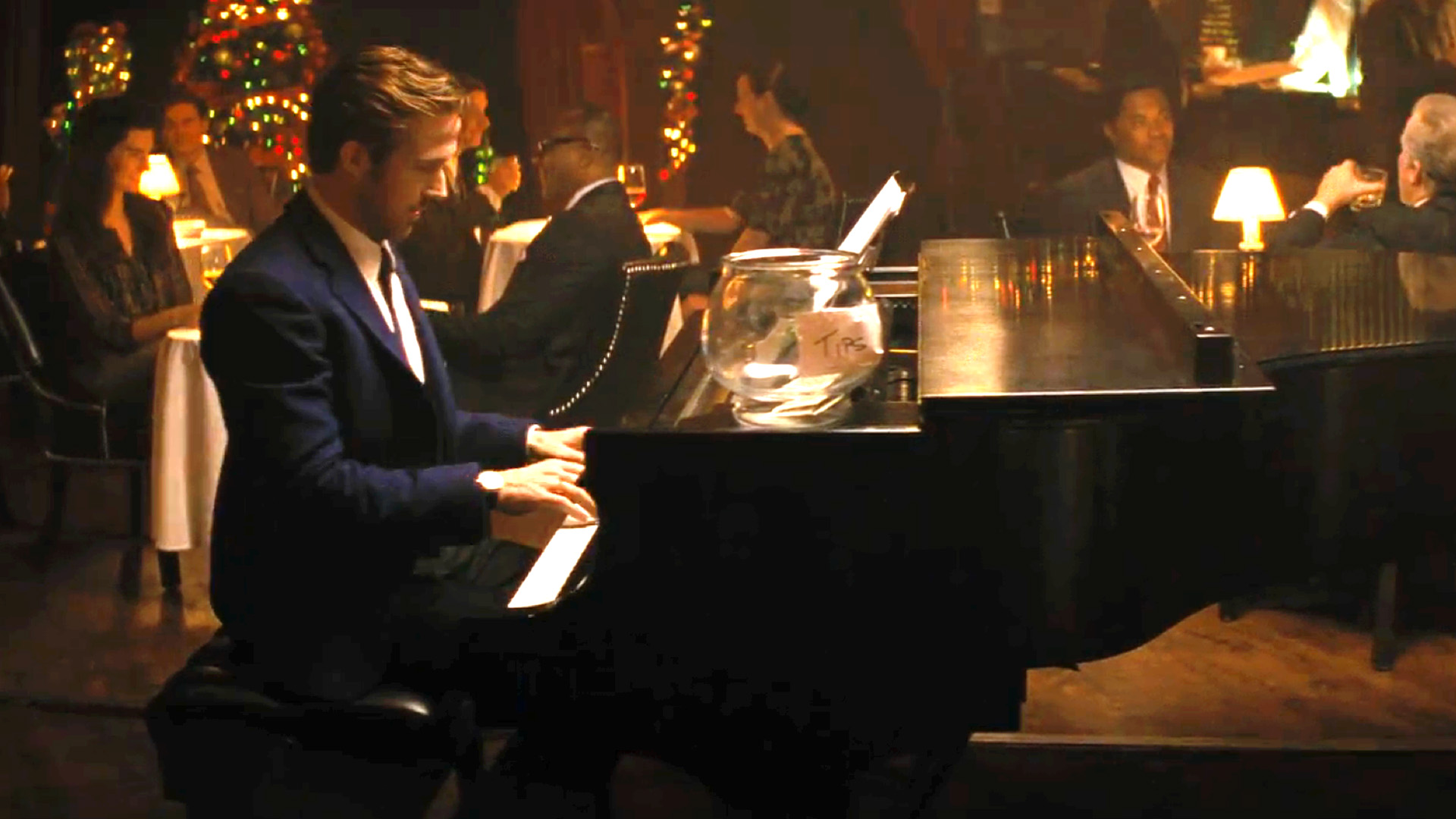

So the other other large element of La La Land is, of course, the music. First of all, the dance choreography is second to none. I think there's a nice fusion between classic Hollywood and modern Broadway set up and execution to the musical numbers and it just comes together flawlessly. The biggest influence on the soundtrack is jazz of course and it's hard not to get caught up in Sebastian’s love for the genre – a great scene has him attempting to convert Mia to the art form, passionately describing how each instrument is at war with each other for dominance in the piece, creating something new and exciting every night (which makes it doubly tragic when he has to join a big band for financial reasons). I think Chazelle is using jazz to subtlety comment on the state of the movie musical genre - we can respect the innovators and love the classics all we want but ultimately we need to be looking forward to find new, respectful and exciting ways of keeping this genre alive. So that said the songs are greatly infused with a jazz sensibility. While I don't think the songs are immediately memorable, I'm sure on repeated listens to the soundtrack they will begin to stick, as again the actors are giving it their all, singing sincerely. City of Stars is the stand out here, a quiet ballad that connects the two leads.  

La La Land is truly a musical for the modern era. With its foot in the past, it also looks forward, using clever new techniques and a slightly modern sensibility to tell a classic story. Chazelle has come out as being something of a master craftsman, using creative lighting, wonderful sets, crafty cinematography and a subtle art design stuck between modern and classic Hollywood trappings. This helps to give La La Land universal appeal. Like jazz, the musical genre is not dead and films like La La Land remind us that there is still life in this classic format.  

Rating: 9/10 

Saturday, 7 January 2017

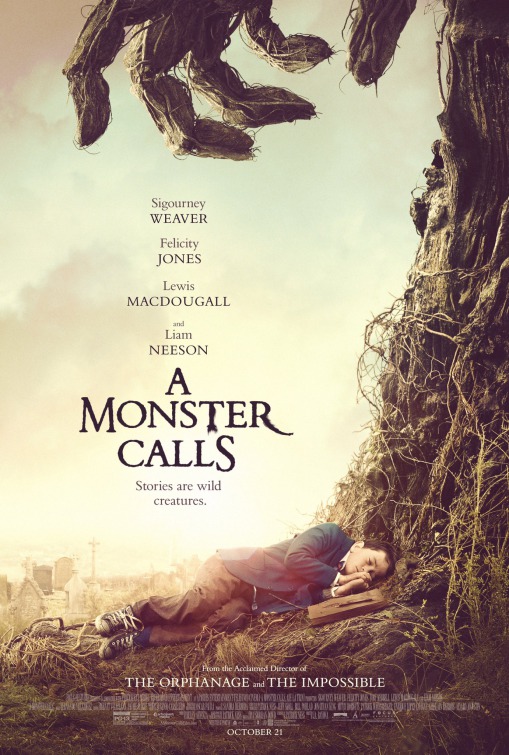
A Monster Calls


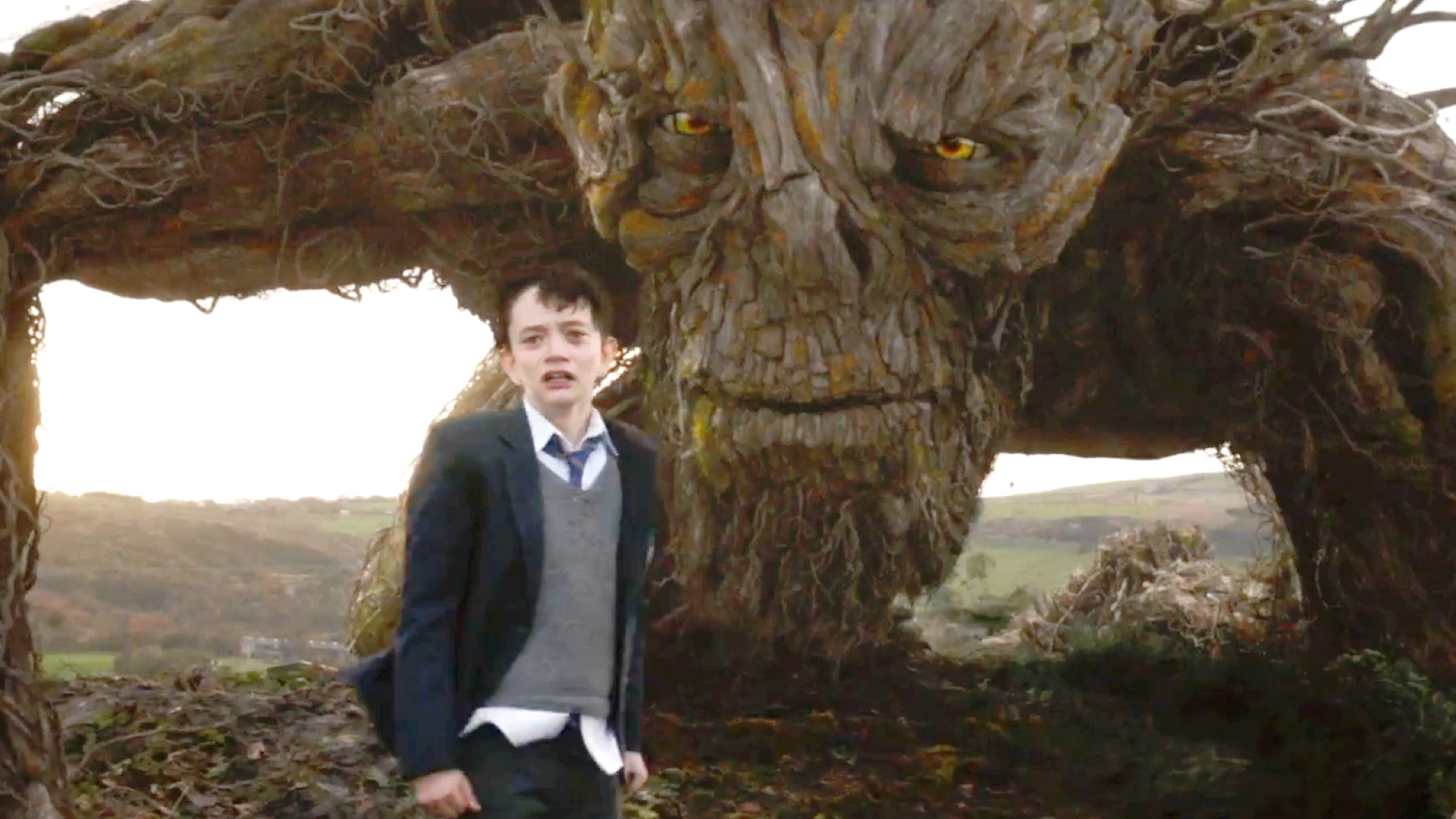
A Monster Calls is a profoundly sad film. Based on a novel by Patrick Ness (which in itself was based on an idea by the late Siobhan Dowd), the film follows an emotionally troubled lad named Conor O’Malley. He is bullied at school, has trouble connecting with people, has an estranged father who now lives in LA and his mother is suffering from a terminal illness. With the prospect of his world closing around him, one night Conor inadvertently meets a “monster”, who takes the form of a giant humanoid yew tree. The Monster returns on random nights at 12:07 and wants to tell Conor three stories, the purpose of which Conor must solve on his own…


While it's hard to know who A Monster Calls is aimed for and, while it's far from a perfect film, it does eventually hit those emotional beats – and hits them hard. Lewis MacDougall gives an excellent performance as Conor. He is a deeply sad and angry child, navigating through great emotions and MacDougall manages to balance them all to make a powerful performance. It is fairly unique to have a child character like this on the big screen and I applaud the actor and filmmakers for pushing this element. Liam Neeson plays the titular monster, who breathes great life and gravitas to the character. The Monster essentially serves as a visual portrait for the range of emotions that Conor is experiencing, along with the fully illustrated the individual stories, which we’ll get to. The Monster is render in stunning 3D animation and is a very believable CGI creation. You get the sense of his age and wisdom just through the design. The rest of the performances are also just as fine – Felicity Jones trades in a great performance as the mother (light years away from her wooden and emotionless performance as Jyn Erso in Rogue One). Signorney Weaver tries to adopt an English accent and for the most part she does fine; she’s very convincing as the strict but ultimately loving grandmother, coping with slowly losing a daughter but also trying to connect with her somewhat estranged grandson. Conor’s father is also an interesting character, separated from Conor's mother and living abroad. It would be very easy to paint him as a negative figure but actually they did do spend time establishing the connection between father and son – he’s loving but he also has his own separate life to lead.

However, the heart of the film is the emotional turmoil of Conor. When the film concentrates on this aspect it soars. The Monster tells Conor three stories which serves to illustrate the rollercoaster ride of emotions he is experiencing. One is a complex tale, set in a fairy tale kingdom, illustrating the illusion of ‘good’ acts and ‘bad’ acts. Another is about a conflict between an apothecary and a parson during the Industrial Revolution, showing the difficulty of maintaining integrity in a difficult situation (which also has ramifications in the real world, which I won’t spoil here as it’s probably the best scene in the film). And finally, a tale of anger and vengeance. The stories are rendered in gorgeous abstract animation and help to elevate the film’s themes and messages. However, when it strips these back and directly tackles Conor’s feelings the film takes the time to show this in a stark and realistic manner in the particular in the film's final act (albeit with a giant talking tree). When a quiet moment is required, it is presented as such and is a sign of the quality of the direction. 


The film does suffer from some script problems. The opening 15 minutes are a bit clunky and  the dialogue does suffer outside of Conor and The Monster’s interactions. The bully dialogue we’ve heard a hundred times before and reads almost like a state-mandated drama school script. I also feel the mother’s dialogue is a bit too saintly. It does hint at the real ramifications of the situation she's in with heated arguments behind closed doors but with Conor the dialogue is a little bit too … well movie script I guess. The film is really at its best in the real world scenes when it is stripped back – one of the most powerful scenes has no dialogue whatsoever or like with the interactions with the father, where they struggle to express their emotions. This is much more like real life and the film rides the line between realistic and movie dialogue. Now you could argue that the mother is putting this on for Conor but I don’t know…I just think it would have made for a powerful contrast. Pan's Labyrinth is great example of how to balance stark realism and fantasy elements in one and A Monster Calls should probably have taken more from this book. 

However, that being said, when A Monster Calls gets rolling, it really gets rolling. Some bad dialogue aside, it is a hugely emotional film that seems to encourage stories as healing. We attach ourselves to fictional stories as we can see ourselves in them. They become part of the healing process following significant trauma or a negative event and help us make sense of where we are emotionally at. This is the power of fiction. When A Monster Calls gets it right, it really gets it right and becomes a rewarding experience. I respect the intentions of the film, even if some of the execution isn't perfect. And it can safely join the category of films that leave me an emotional wreck at the end of the film.

Rating: 7/10


Saturday, 31 December 2016

Rogue One: A Star Wars Story


SPOILERS THROUGHOUT

Disney brought the Star Wars property for an ungodly sum from series creator George Lucas in 2012 with the promise of a new trilogy of films closer in tone to the beloved original trilogy and not the much-despised Prequel series. Rumours also swelled of spin-off films, perhaps in an attempt to replicate the success of Disney's Marvel Cinematic Universe, to fill the gap between the main episodes of the series. Star Wars Episode VII: The Force Awakens was, without a doubt, one of the biggest pop culture events of the last 10 years. The film has issues but the overall effort and affection for the series shines through, which made an accessible film for new-comers, whilst giving fans what lacked in the prequel trilogy. One year down the line, Rogue One, the first of the spin-off films, has arrived. Can it match the heart and emotion of The Force Awakens and the original films or does it strike out on its own to make a new kind of Star Wars film? The answer, as always, is complicated.  

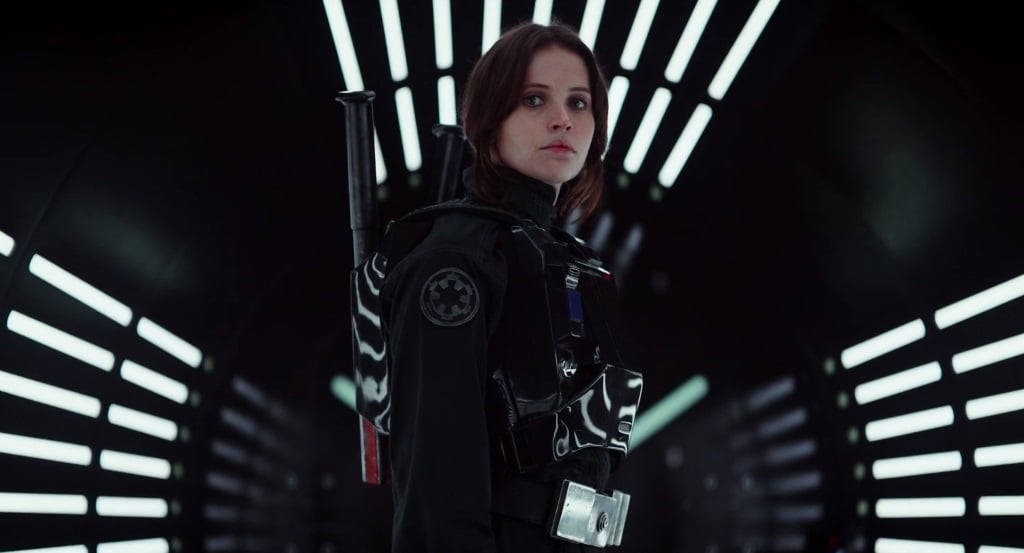
Rogue One is set days before Episode IV. Luke is trapped on Tatooine, unaware of his impending future destiny. Han Solo is causing trouble somewhere. Princess Leia is bravely leading the Rebellion against the evil Empire. Jar-Jar is in a ditch somewhere. And the Rebels have learnt of the Empire's plans to create a new battle-station, with the power to destroy planets, named the Death Star. The Rebels have received contact from the disillusioned creator of the Death Star, who reveals that the Empire are holding plans that reveal its only weakness. Having been whisked from her father at a young age, criminal Jyn Erso is brought in by the Rebels to make track down the Death Star's creator - their connection? They are father and daughter. Jyn and a band of not-so merry rebels must team up to track down her father and reveal the location of the plans, giving our heroes the only hope of destroying the super-weapon. 


Rogue One has been famously dogged by rewrites and reshoots. According to the rumours, Disney wanted a film closer in tone to The Force Awakens (which stands as the third highest grossing films of all time) - i.e. lighter, fun, charming - which seemed to clash with the original intention of these side films; to offer a different light on the Star Wars universe. The issue here is that clearly these two different tones and visions clash with each other in the finished product. While Rogue One has plenty to offer long-term fans of the series, as a film it suffers from a confused tone and under-written characters, which won't make many new converts to the franchise.

The best elements of Rogue One are the re-creations of the retro 70s vision of the space life. The art design of the film is spot on, from the re-creations of the costumes, the lighting, the sets and even the hairstyles (I've not seen this many must aches in a sci-fi film for a long time) which gives it a familiar yet different tone. The film is at its best when it combines these familiar elements to create something new (akin to The Force Awakens) - the final 40 minutes offer a documentary-style ground combat linked with an exciting heist of the Death Star plans, which is unlike anything Star Wars has ever produced. It might be one of the series' best staged action scenes (the only thing it lacks is emotional weight but I'll get to that). Seeing AT-ATs again, returning from The Empire Strikes Back, ripping through the jungle planet and causing mayhem is a sight to behold on a pure fan level. The exciting final ten minutes which link it directly back to the opening of Episode IV is fun and unexpected (and features one of cinema's greatest Big Bads making an unforgettable entrance). In general, the action scenes are well handled, as we are introduced to a plethora of new planets and locations. 


Technically, everything is shot perfectly and has an excellent art design but what holds Rogue One back is the script. Jyn is not given sufficient personality outside of the life-defining events that occurs in her childhood. There are hints of a troubled past, with Jyn going off the rails but they aren't given time to be fully explored. On paper, the side-characters sound like fascinating new additions to the Star Wars universe. A disillusioned gorilla fighter who rejects the ideals of the Rebels but still wants to combat the Empire. An Empire general struggling with the bureaucracy of building a super-weapon. A normal Rebel solider who blindly follows the orders of his superiors. An Empire defector (who is too similar to Finn from Episode VII, just lacking John Boyega's natural charm). These add a new dimension to the universe, in particular revealing new elements to the previously good-as-gold Rebellion. But add to this an appearance from Darth Vader, a surprisingly prominent role the creepy CGI recreation of Peter Cushing, more Rebel internal conflicts, a sassy, pissed-off robot (K-2SO, played by Alan Tudyk, is probably the character highlight of the film), a large scale space battle and you can probably see that the film is overloaded with elements. 


I honestly wish another attempt could have been made at the script or the edit to prop up Jyn and the members of Rogue One, flesh them out and produce a tighter story with an emphasis on the more gorilla-documentary style that the final 40 minutes revels in. Whether this was in the original edit or not, we'll likely never know but the victims of the unfocused narrative are Forrest Whitaker's Saw Gerrera (who I'm told will be expanded upon in Rebels - but cross-media narratives are for another day...) and the side-characters of the Rogue One team. Donnie Yen in particular has the makings of a fascinating character, a blind warrior who believes in the Force but the script focus doesn't give him chance to shine. While no where near as hollow as Suicide Squad, I was reminded of the scene in which the pyro-villian claimed the team were his "family" with no narrative thrust or character development to suggest this. Spoilers but as the characters are picked off one-by-one in in the final 40 minutes of Rogue One it is hard to feel emotional (with the exception of K-2SO). A potentially powerfully moment, which I do commend Disney for committing to; it is well executed and beautifully shot but is under-cut by the under-written characters.


The problem is, that certainly for the cinematic stories, Star Wars is fairly limiting in what you can do. Audiences like the Skywalkers, Darth Vader, the family drama etc, the space battles, Jedi, the Force etc. and I don't think a big studio like Disney would try to work outside of this stable of familiar staples. In television, games and novels you can expand as much as you want - these are designed for the hardcore fan base who legitimately want to see new sides of the universe. Video games such as Knights of the Old Republic or TV's The Clone Wars and Star Wars: Rebels offer exciting new characters and fresh stories to tell for the fanbase, that don't try to appeal to a mainstream audience. One of the biggest losses to Star Wars being brought by Disney was the retconning of 20 years worth of Expanded Universe stories. In the cinema, I just don't think we are going to see this kind of diversity (for example, the rumoured spin-off films are: a young Han Solo film, a Boba Fett film, an Obi-Wan film). Rogue One falls into this uncomfortable zone of fan-service, audience pandering and over-saturation. 


Rogue One can comfortably sit as the fifth best Star Wars film but it feels like a missed opportunity. The only way this film plays successfully is to fans of the series. Think of the film as a stand-alone sci-fi film. The elements that prop it up only succeed due to the elements that links it to the previous films. Unlike in The Force Awakens, where the new elements were given time to develop, Rogue One suffers from overload. I would prop it up due to its art-design and well-executed final 40 minutes but its just a bit of a messy slog to get there. A great, tight war film is in there but the aspects don't come together to form a satisfying whole - it's a weird day when a Star Wars film is just ok (and it pains me to give it the score I did). 

Rating: 6/10 

Side-Note: RIP Carrie Fisher and Debbie Reynolds. Carrie Fisher was such a prominent figure in my childhood as Princess Leia - a female character who was as active as the males. A real individual who overcame drug addiction and mental health issues to become a strong and witty voice. And Debbie Reynolds, one of the last of the Hollywood royalty, a golden star from a different era of the movies. Two really tragic losses. 

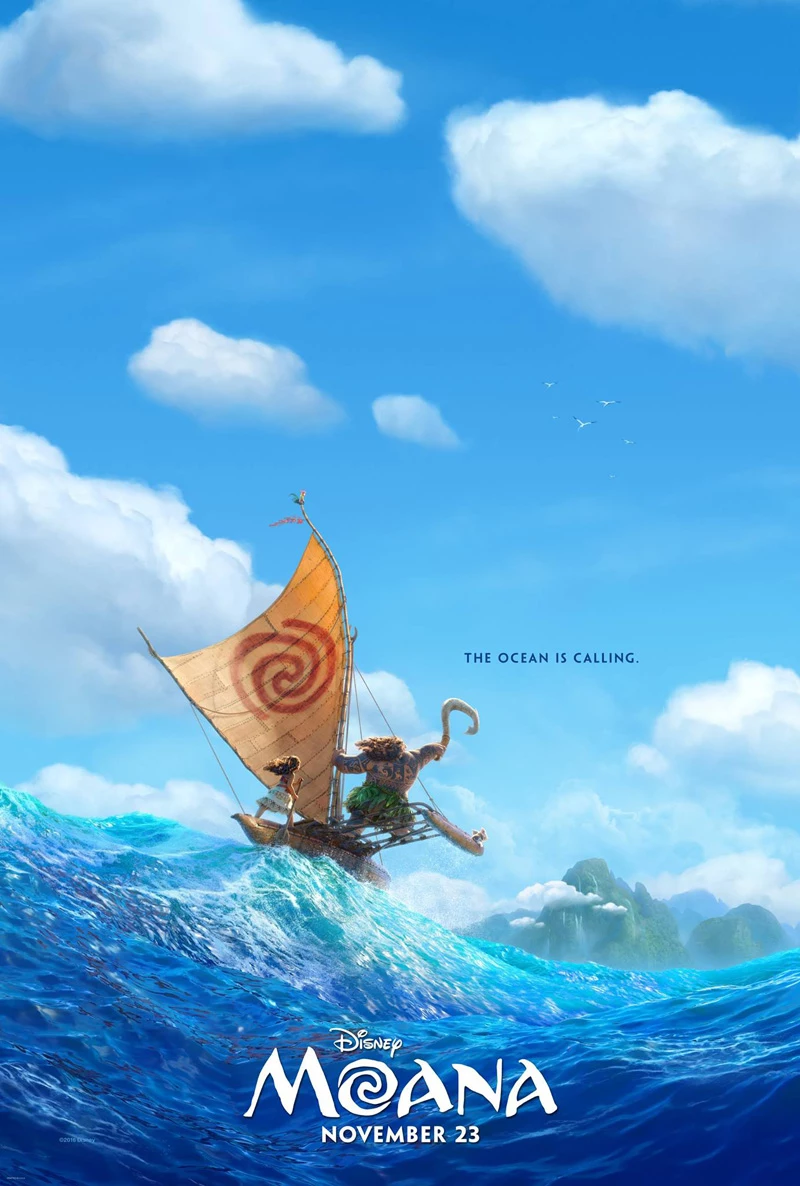
Moana


Moana has a tough act to follow. Disney has embarked on a Second Renaissance (in reference to a period of time in the late 1980s/early 90s in which studio found its footing again, producing hit after hit) to become culturally relevant again. By combining what made its classics great in the first place with a 21st century sensibility (borderline feminist), Disney has produced a plethora of modern (and varied) classics; Tangled, Wreck-It Ralph, Big Hero 6, Zootopia and the pop culture behemoth, Frozen. I mention Frozen as Moana is Disney’s follow up in the ‘Princess’ sub-series. Bringing back Ron Clements and John Musker seems like a wise move. This pair directed a number of classic Disney films including the film credited with starting the original Disney Renaissance, The Little Mermaid, though ignoring the box office receipts, I would argue it can be traced back further. Is bringing back the tried-and-tested duo a smart idea?

Moana follows the titular character on a coming of age story. Drawn between the duty of being chief of her Polynesian tribe and the lure of adventure on the ocean, Moana is stuck between two worlds. A creeping darkness begins to infect her beloved island as she learns that an ancient demi-god named Maui stole a precious artefact from an ocean goddess that was seeming lost to the sea. The artefact washes up on Moana’s island which compels her to track down the disgraced Demi-god and return both him (with expected difficulty) and the artefact, a stone heart, to the goddess as per her tribe’s ancient prophecy to save her island and the wider ocean.


So far, so Disney. Does Moana do enough to separate itself from the standard Disney formula? Kind of. The character of Moana herself is great. Strong, quirky and determined with a chubbier body type, which makes her stand out from the standard Disney protagonist, she is brought to life through incredible animation and a great vocal performance by Auli’i Cravalho. Disney has been on a winning formula with its modern ‘princesses’ and Moana can safely join this varied pantheon. The Demi-god Maui is also fun, played by Dwayne Johnson, starting out as an arrogant and emotionally unstable shape-shifter (though only with the help of his magical fish hook) before learning important life lessons. He plays out almost like Disney’s Hercules (another Clements/Musker ‘creation’) only with a clearer personality and stronger motive. We spend a good chunk of time with these two characters, mostly isolated to their boat, where we learn of their wants and needs. Better yet, their relationship does not bloom into romance. There is clear affection between them but for a Disney film not to have their female and male leads get together at the end is a pretty bold move for a studio that pounded heteronormative lifestyles into the brains of children for generations. Their relationship really helps to make the film. I respect the move of Disney to set the vast majority on a boat isolated in the middle of the sea. This allows for funny, tender and exciting moments. Moana has plenty of great and colourful set-pieces to put our characters through the wringer, such as magical coconut pirates and a gigantic crab, who is armed with a musical number. 

Aesthetically, Moana is impeccable. Disney continues to push the bar on what is achievable in 3D animation and this is probably one of the best looking animated film I have seen in this art style. The graceful characters movements, the amazing water effects and the lush vibrant colours literally leap off the screen. There are lovely little touches, such as Maui’s magical moving tattoo’s, brought to life in 2D animation and the excellent gormless expression on Alan Tudyk’s mentally impaired rooster (Tudyk’s easiest Disney pay cheque yet). In an age where we complain about digital blur, it’s nice to see that Disney do genuinely care about using the technology to its advantage. Add to this a great sound design and soundtrack, you are presented with a quality product. I wish the same time and effort could have been extended to the songs. I feel this is an area Disney should be working to improve on in order to maintain their Second Renaissance. Often, they have one or two killer song (see also Tangled and The Princess and The Frog) and the rest are fairly forgettable. The exception is Frozen of course. Moana unfortunately does suffer from a lack of that really killer song. The centrepiece, How Far I’ll Go, is beautiful and powerful and is by far the film’s best but it lacks that extra umph to make a lasting impression. While it probably is unfair to compare, it lacks that narrative-changing turn that Let It Go had (screw the haters, it's a great song). It's great at expressing Moana’s emotions but it didn’t leave me humming after leaving the theatre. 


I think what Moana lacks is a really great third act. Often with Clements/Musker films, the set-up is better than the pay off (see The Little Mermaid, Hercules, The Princess and The Frog and Treasure Planet). The best of the modern classics turned their plots around on themselves. Frozen became a parable about sisterhood. Big Hero 6 becomes a document on dealing with grief. Zootopia becomes a fable about racism. Moana does do some interesting things with a feminist turn on prophecy, an often despised element of writing, particularly in film (that said, it is perfectly explored on TV’s Buffy The Vampire Slayer). Through some misunderstandings (spoilers), it is Moana who delivers the stone back to the ocean goddess and not Maui, breaking centuries old tradition of passing this story down. Moana is ultimately about females helping each other following the damage caused by a male. Make of that what you will and I don't think Disney put this at the forefront of the film. See with films I mentioned earlier, they quite bravely mix these quite mature themes and ideas into the forefront of the plot. Baymax is Hiro’s coping mechanism for losing his brother. Elsa and Anna learn the power of true love through breaking the kingdom’s frozen curse. Judy and Nick inadvertently learn about the destructive power of prejudice through solving a mystery. I would argue Moana doesn't directly tackle the issues but rather hints at, which leaves something of an emotional hole. Rather, it is much more to do with Moana’s arc of breaking tradition – which is great, don't get me wrong but it just leaves a pretty thinly spread story that could have done with a couple more rewrites to emphasise certain elements and produce a stronger third act twist. 

However, what Disney is doing with Moana is commendable. Despite my issues with the script, the characters, animation and art design are second to non. While it doesn't take its concept to the nth degree like some of the previous modern Disney films, it does give an excellent new protagonist for audiences of children to relate to. I would give one point less if these elements weren't as strong as they are.  I almost wish there was a better film for Moana and Maui to star in. Moana isn't quite gold standard Disney but it is still absolutely worth seeing, if only to continue to support the studio’s recent golden streak. Gone are the days of passive Cinderella and Aurora. Long live Moana. 


Rating: 8/10


Friday, 16 December 2016

Fantastic Beasts And Where To Find Them


SPOILERS THROUGHOUT

In a year where Warner Bros. limped out of the gate with their mega-franchise (DC comics), the studio has turned to their other mega-franchise to win them a sure-fire hit. While the Harry Potter films have their fair share of flaws (which this writer won't get into here..) they hold a very special place in people's hearts, in particular for 20-something-year-olds - Generation 1 fans who literally grew up with the characters on page or on screen. J.K. Rowling has returned to this world in a new time period and location (1920s New York) with a new cast of characters. Rowling has expanded a slim volume released for Comic Relief into a full-on franchise starter. Does Fantastic Beasts come close to matching the heart of the Harry Potter stories?

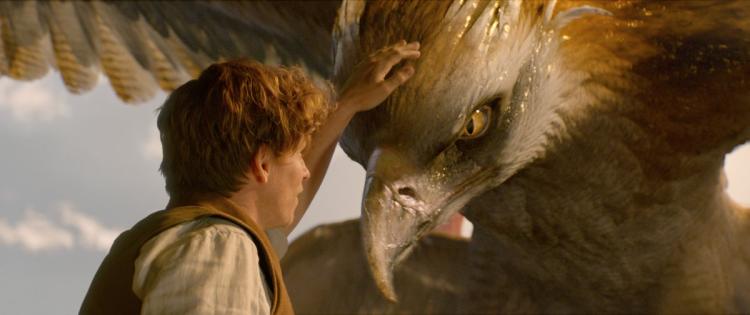
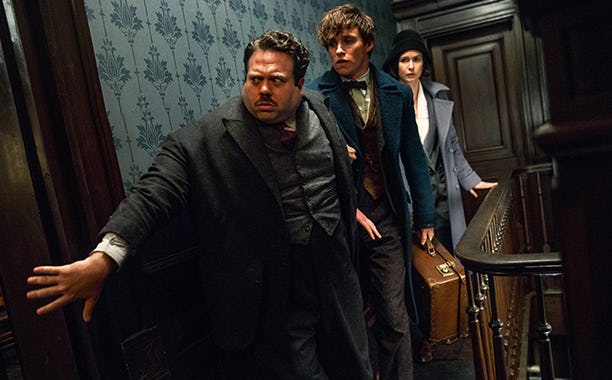
Newt Scamander has reached the end of an excursion around the world, finding and documenting magical beasts. Endangered ones he keeps and looks after in his TARDIS-esque briefcase. Arriving in New York for a brief stopover, with the intention of freeing a hippogriff into the wilds, his briefcase accidentally falls into the hands of Jacob, a No-Maj (American slang for Muggle), who inadvertently releases some of the creatures into the city, which could spell trouble for the magical and non-magical worlds. Jacob gets pulled into the hidden magical world of New York as he and Newt begin the search for and return all the loose creatures. This is against the darker backdrop of an anti-witch movement known as the Second Salems, who are harbouring a dark secret..


The film's biggest issue is that the background and world building are more interesting than the main story - Newt and Jacob teaming up to find and collect the magical creatures is passable enough but it is fairly surface level. Ultimately, what is happening with the Second Salem movement and the rise of dark wizard Grindelwald is more compelling. Since the Pokemon-esque main plot is the prime-attention of the film, the more interesting elements aren't given enough time to breath and as such aren't explored fully. While I don't think a children's film needs to have children for the prime audience to relate to (kids seem to react to Star Wars and Marvel films well enough) the lack of a charismatic lead really does hurt the film. I'm just going to say it - I couldn't stand Eddie Redmayne in the lead. On paper, I love the idea of a socially-awkward nerd saving the day through his brain as opposed to brawn, but there's just this irritating quirkiness to the role (in the same way Matt Smith annoyed me as The Doctor) that Redmayne just seems to inflate. Quirk is fine - but there is nothing more annoying than forced quirk. It is a bizarre performance. Newt just isn't a compelling character and the writer is either withholding information on him for later films to doesn't quite know how to handle him. Newt doesn't really have an arc, so to speak and I think this hurts the film. To be honest, I wish the film was told from Jacob's perspective because he's a much more compelling, and funny, character. His motivations are clear, his reactions to the wizarding world are great and the actor just seems to be having a blast as the hapless dope falling into a story much larger than his own. And it would be a clever inversion of the Harry Potter role - a non-magical character as the lead. Redmayne then might have been more tolerable then as the strange 'sidekick' (a Jack Sparrow role if you will, circa Pirates 1). 

Newt and Jacob are joined by sisters Tina and Queenie Goldstein, the former a down-to-earth no nonsense member of the Magical Congress of the United States of America, or MACUSA, and the latter a free-spirited mind reader. Rowling's works are famously laced with feminist undertones. One only needs to look at Hermione, an icon for geek girls and boys the world over, to understand Rowling's views on how female characters should be represented. Simple. Just write a good character.  The fact that Rowling has put two female leads in a cast of four speaks volumes and I'm glad there is equal representation. However, my biggest gripe is that, like Newt, they are not terribly compelling characters. Which is a massive shame because Rowling gets it, especially after creating a character as wonderful as Hermione (and the other varied and fascinating women of the Harry Potter world). They end up feeling more of a statistic as opposed to living, breathing characters. Tina and Queenie are given sufficient motivation enough, and the actors are clearing trying to infuse them with something, but, like Newt, they never really come to life. Maybe given time, they will develop these characters more (Tina has some hints at a traumatic past but presumably this will be expanded in later films) but as it stands we've seen these arcs before. Ultimately, this new group never feels comfortable together and doesn't cohere the way you want them to. I really don't want to keep making Harry Potter comparisons but since this is part of Rowling's Wizarding World (and has probably been expanded into five films to make this into a full on prequel series) it seems fair - just look at the way the three of them bonded together into a team by the end of Philosopher's Stone. Funnily enough, on a side-note, the film doesn't make too many call backs its parent franchise (I guess the time period makes it impossible) - Dumbeldore is mentioned once and one line got a smile from me; Newt proudly saying "I think you'll find that Hogwarts is the best wizarding school in the world".


So far, I have come down pretty hard on the film but I should say I actually ultimately ended up enjoying it quite a bit. While I think the scenes with the beasts go on too long, the designs are all unique, different and creative. I especially like the jewellery-thief mole. The period details are great and the imagination involved in not only recreating this era of New York but designing a secret magical world underneath is inspired. However, I was desperate to get back to the B-Plots. Just, the background details are more fascinating to me. The idea of magical CIA is fairly inspired. The performances from the side-characters are great. I like that Colin Farrell is finally in a 'Harry Potter' film (meaning the whole main cast of one of my favourite films of all time,  In Bruges, have been in one of these films) and he's great as the mysterious Percival Graves. Ezra Miller's quiet and tortured performance, who ends up revealing something far more sinister, is also very compelling. Dan Fogler is wonderful as Jacob and his reactions to the wizarding world (and people's reactions to him) are hilarious. The Second Salems add a fascinating new dimension to the Harry Potter universe - No-Majs trying to reveal the wizarding to the larger population, whilst being secretly influenced by Grindelwald. The militant way in which this ideology is spread feels very real and relevant to today. Grindelwald's motivation (which is kept  very hidden in the background - it might even have been a throw away line) is also great - he disagrees with the idea that the wizarding world should be kept hidden and wants them to return to an era where wizards and witches lived together with the No-Majs. This has the potential for good but has ultimately become corrupted into a vision where magic rules all. Heck you could even make this into a conflict of interests a la Professer X vs. Magneto's clashing ideologies, just between Dumbeldore and Grindelwald (who were former lovers after all!). This desire to a return to an idealised past that never existed could even draw upon Brexit comparisons (Rowling has been very vocal on this subject matter). What I'm trying to say is that there are plenty of compelling elements to the film that could have expanded upon and made into a much more compelling story. The catch-'em all plot line just doesn't hold the same interest for me as all the other elements that make up the film. 


I will give Fantastic Beasts this though - it goes places I didn't expect it to, both bizarre and dark - to the point where the tone is all over the place. In fact, the film contains one of the strangest scenes I've seen in a blockbuster in a long time, in which Jacob applies a pheromone to attract one of the magical beasts (a giant rhino) to entice it to return to Newt's suitcase. This is proceeded by Redmayne embarrassing himself by trying to court the rhino back into his suitcase by doing a mating dance - audible uncomfortable silence in the theatre (with some chuckling from me). The more one thinks about it, the stranger it gets. Joking aside, I actually do appreciate that the film ends on a dark note - our heroes don't really save the day. There's some fairly cruel corporal punishment handed out that makes the wizarding world of Britain look fairly liberal! But when you go from mating dances to seriously mentally-scarring punishments, your tone is going to suffer. I don't want to keep comparing this to Harry Potter but the humour in those films always felt appropriate - it was well judged and never felt like it clashed with the more dramatic stuff (except for Half-Blood Prince maybe). That said, at least Rowling is trying to make it unique and is trying to do stuff that other blockbusters wouldn't touch, especially with what I call the gentrification of Hollywood (a piece I will write someday!). 

As a stand-alone flick, Fantastic Beasts would be a fun, if very flawed, expansion of the wizarding world that would shed new light on Rowling's wizarding world. However, with four more films in the pipeline (seemingly to star the same cast) I can't shake this feeling of overstreaching and cashing-in on people's nostalgia for Harry Potter. Ultimately, Harry Potter is about three friends growing up and all the ups and downs that come with that. There's a real heart to the stories that make them compelling. Fantastic Beasts offers a nice expansion of the universe but no real emotional core. I never found the magical creatures of Harry Potter that compelling and the expansion where doesn't form a compelling story. Ultimately, it's a breezy, well-made film with some interesting world-expansion elements but just can't shake off its parent franchise and become its own thing. Ironically enough the film that doesn't star children actually feels more childish than the franchise that had a predominantly young cast...

Rating: 6/10

Sunday, 27 November 2016

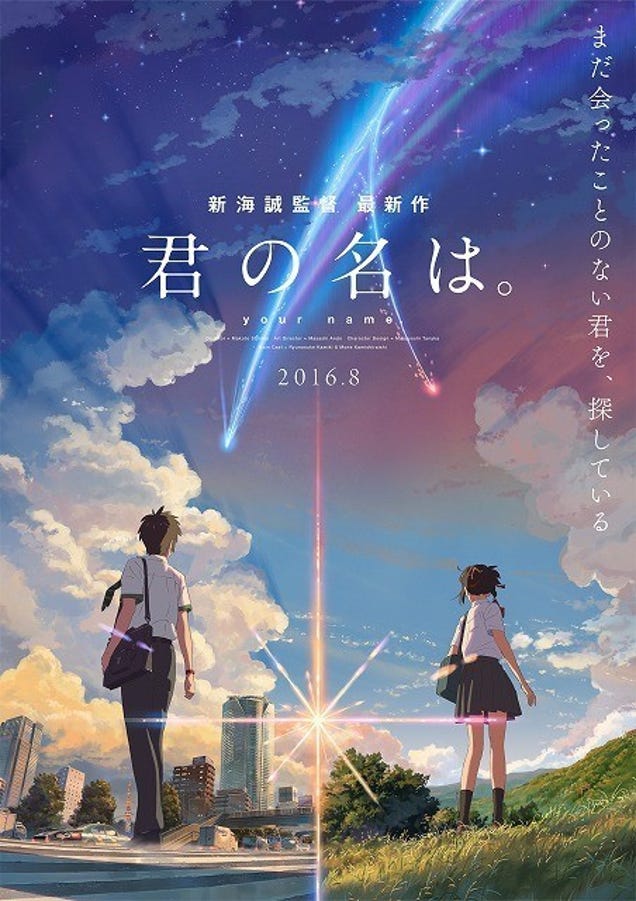
Your Name


Every decade or so, an anime film from Japan crosses over into the West, converting a new wave of fans to one of the country's most famous exports. Generally, what links these films together are familiar genre trappings to a Western audience. Akira and Ghost In The Shell became massive cult hits amongst nascent anime fans, who also had a love of science-fiction cinema, in the 1980s and early 1990s. And is it any wonder that Spirited Away, with its Alice In Wonderland framework, managed to translate so well that it ended up winning the Oscar for Best Animated Film (as voted for by a mostly American academy)? The 2010s has finally, perhaps, found its cross-over film in Your Name

While it bears a very Japanese setting (with key parts of its cultural inheritance playing a part in the narrative), Your Name has the potential for universal appeal, with its hugely exciting and emotional storyline, unexpected twists and turns and gorgeous animation. Its director, Makoto Shinkai has been working in the industry for decades, having directed equally gorgeous films, such as The Place Promised In Our Early Years and 5 Centimeters Per Second, which have been mostly relegated to art-house cinemas and limited DVD releases in the West.  Along with fellow modern master Mamoru Hosoda, he boasts a small but dedicated following in Japan and in the West. With Your Name, Shinkai has created one of the most financially successful films every released in Japan. It has earned just under $180 million without a wide release in North America. For comparisons sake, only the films of Hayao Miyazaki have managed to achieve this monumental goal (for the record, Spirited Away is the only film in history to earn $200 million without having a wide release in North America). Due to its success, many critics have been holding Shinkai up as the new Miyazaki. While claims like this do need to be mediated somewhat, in a purely financial and artistic level it is easy to make this comparison (in particular with Japanese critics searching for the heir to the throne left by the semi-retired Miyazaki). There are numerous reasons why it has been such a massive hit in its native Japan but its the trans-global nature of its story and characters that has the potential to reach a much wider audience. 


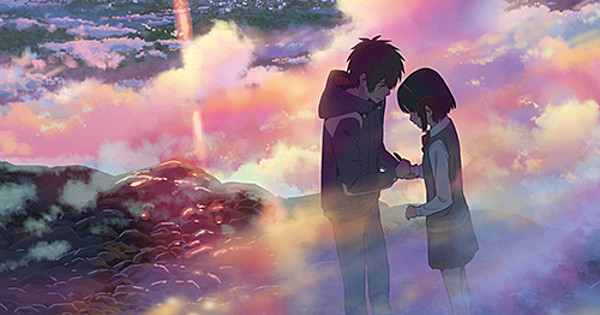
Your Name, on paper, seems to have the trappings of a normal, high-concept rom-com. Mitsuha (Mone Kamishiraishi) lives in rural Itomori, bored with her life living in the middle of the Japanese countryside and helping to keep ancient traditions alive at her family shrine. Short-tempered Taki (Ryunosuke Kamiki) is a student living in suburban Tokyo, who works at an Italian restaurant and harbours a crush on one of his co-workers. Essentially, both are trying to navigate the ups-and-downs of teenage life and to find their find place in the world. Things become strange when Taki wakes up one morning in the body of Mitsuha and vice versa. The duo soon learn that on random days they are swapping bodies. When they re-awaken in their real bodies, they have no recollection of what their counterpart has been up to with their body, leading to some very funny, and sometimes emotional, scenes. The duo being to adapt to the body-swap, leaving a diary in each others phones, scrawling notes on scraps of paper or on their bodies and setting ground-rules on do's-and-do-not's. At first, they are disorientated but fairly soon they begin to influence each others lives (with their friends and family bewildered at these apparent personality changes) for the better and begin to fall in love with each other. However, with a bright comet looming beautifully in the sky, a cataclysmic event occurs at the half way point which throws the whole relationship into jeopardy as the mystery of why they are body-swapping begins to be revealed..


Body-swapping stories are actually one of my most hated tropes (in particular on television) as it is a cheap excuse for the writer to make really obvious jokes (which every other writer has made). Only a handful have pulled it off successfully, with Red Dwarf's and Buffy's springing to mind. While Your Name does make a couple of obvious jokes (being fascinated, or terrified, of .. certain aspects of the opposite gender's frame - which even in this film is expertly handled!) it manages to take the concept to new and uncharted territories. It uses the body-swap framework as a mechanic to launch a story that is really about the unseen connections that bind people together. The film has universal appeal due to its blending of familiar genres, such as rom-com, sci-fi and (spoilers) disaster-epic signposts. It is this, and the likability of its main characters, that holds the whole film together.  

The aesthetic of the film is what makes Your Name stand apart from Miyazaki. While there certainly are similar elements to the grand master of anime, Shinkai is more interested in capturing that feeling of being a teenager and appealing to a contemporary audience. Joe Hisaishi's gorgeous full orchestra scores are replaced by bright and energetic J-Pop by the band Radwimps. Miyazaki's films look towards the past informing the present, Shinkai is more interested in separation and teenage alienation in the modern world. His almost photo-realistic renderings of Tokyo give a great sense of place, in contrast to the earthy tones of Mitsuha's home town. While Mitsuha and Taki are influenced by their very Japanese settings, they feel like any teenager - itching towards adulthood, compulsively interacting through their phones and trying to work out their place in the world. They are the heart of the film and transcend the setting into a universal coming of age story. Shinaki slowly unveils the plot - he is in no rush to reach its gut-punching and emotional third act without first properly establishing the characters and how the body-swapping shenanigans have affected them. This means when the third act comes around we are on the edge of our seats, nervously anticipating the conclusion. Shinkai creates a tender and exciting conclusion that puts the characters to the ultimate test. 


Shinkai uses the concept of kataware doki, where day and night meet to become twilight, to juxtapose the characters, settings, gender, traditions and time; this is where the film's emotional core lies and how these link the characters together. The comet that hangs in the sky is both awe-inspiring to behold and threatening, stuck between two worlds of thought. The film quietly evokes the trauma of the 2011 earthquake / tsunami and the subsequent Fukushima disaster which has lead some Western critics to compare the film to another masterpiece of teen angst, Donnie Darko. This is all rendered in gorgeous 2D animation. A complete digital creation, Your Name boasts hyper detailed frames with stark colours, gorgeous fluid character movement and expressions, immaculate and intricate backgrounds and subtle CGI backgrounds. One sequence in particular becomes very experimental with its combination of pastel artwork and CGI. Instead of having the makings of a dry, existential drama, Your Name is warm, affecting, beautiful, exciting and funny. How Shinkai turned all these concepts and daring animation choices into a massive audience friendly event without losing the integrity of its story, is nothing short of a miracle. 


Your Name is an engrossing film that encapsulates all the wonderful things animation can achieve. It's exciting, funny, hugely emotional, beautifully animated and takes an unexpected turn at the half way point to become life-affirming. Effortlessly blending genres and styles together, Your Name seems destined to become one of those rare anime films - a cross-over hit in the West (and an Oscar winner maybe?). If you can seen it on the big screen, I cannot recommend it enough - if you've only seen anime on the internet or on DVD, this unlike anything you have experienced before. Your Name is not to be missed, though with a very limited release in the UK it seems audiences might have to wait until the DVD.  Like the potential of Mitsuha and Taki finally meeting each other face-to-face for the first time, it's worth the wait. My film of the year. 

Rating 10/10 

Saturday, 12 November 2016

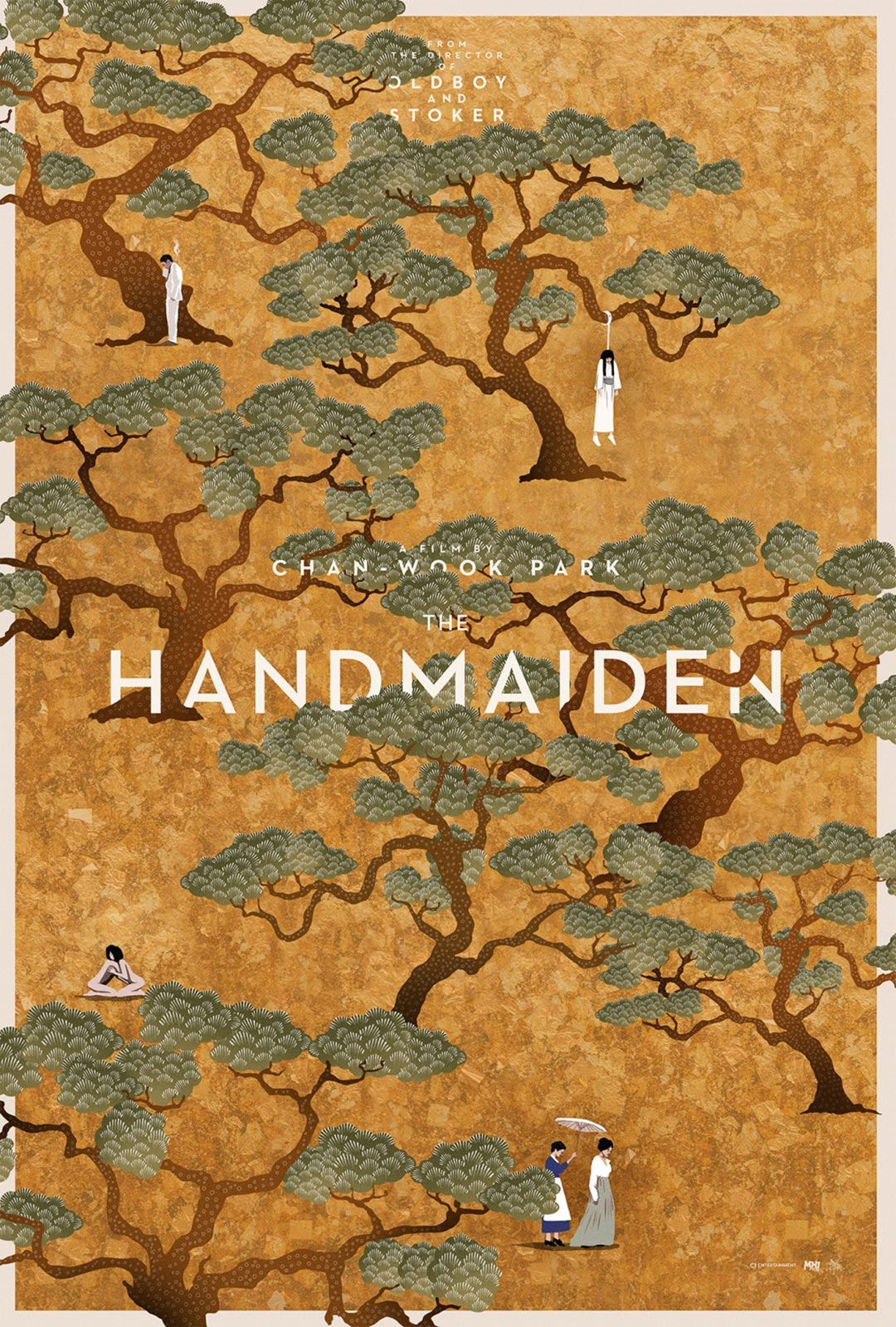
The Handmaiden


The structure of Park Chan-Wook's films are akin to a complex puzzle. They require your attention, they don't go quite the way you expected and are richly rewarding when you figure them out. Park Chan-Wook is one of the greatest living directors in the world. This South Korean filmmaker has created some of the most visceral and unforgettable films of the 21st century. Beginning with JSA (his treatise on North/South Korean relations), he moved onto direct three films which would form The Vengeance Trilogy (probably my favourite film trilogy) that would propel him to world cinema stardom - Sympathy For Mr. Vengeance, Oldboy and Lady Vengeance. I could easily talk all day about these films - their dense plotting, rich themes, immaculate technique, the unhinged performances; they simply need to be seen. Like a puzzle box, Chan-Wook continues to defy expectations, spanning genres in his follow up films, from romantic-comedy to vampire horror and touching upon gothic literature in his Hitchcock-inspired English language film, Stoker. Chan-Wook is back on home soil with his latest challenge, The Handmaiden - a film that could be cited as the ultimate example of the transglobal world we live in, in which Eastern and Western influences are effortlessly fused together. Showing as part of the excellent Leeds International Film Festival in a rare big-screen showing, this is easily one of the most anticipated events of the festival.

Set in 1930s Japanese-occupied Korea (based on the Victorian set novel Fingersmith by Sarah Waters), The Handmaiden follows a con-artist, who hatches a scheme to rob a rich Japanese noble woman - he plans to marry her, declare her insane, send her to an asylum and run off with her vast inheritance. Under the fake name of Count Fujiwara, he hires a fellow con-artist and pickpocket Sook-He to become the handmaiden for the mysterious and troubled noble woman, Lady Hideko. Sook-He's job - to convince Hideko that Count Fujiwara is the one. Sook-He soon learns that in Lady Hideko's vast estate there is a troubling under-belly, controlled by the authoritative Uncle Kouzuki. Things become more complex when Sook-He and Hideko begin to fall in love with each other...

Revealing anymore of the plot from there would actively ruin the film. Chan-Wook is no rush to reveal his hand. The best way to enjoy this film is to go in as blindly as possible, as part of the fun of watching this intricate and masterfully plotted film is enjoying the way it manipulates you and how it reveals its twists. I will be going into further detail from here on in however I would recommend stop reading here, watch the film, then come back. I 100% recommend the film - its an excellent, densely plotted thriller that deals with interesting themes of female sexuality and identity and comes from a master filmmaker at the top of his game. 


The film has a very steady pace and owes a debt not just to Kurosawa's classic Rashomon but also to classic Gothic literature, such as Jane Eyre and Rebecca. In a genius stroke of masterful set design, this theme of Eastern-Western influence is clearly evoked in the Lady Hideko's estate - a bizarre fusion of a Victorian and Japanese house. Chan-Wook is clearly revelling in holding the audience's suspension and manipulating their expectations. Divided into three parts, each section reveals new depths to the serpentine story and the disturbed cast of characters. Chan-Wook is clear in how he wants us to view his characters - expect the unexpected. Sook-he is spirited and young, open to experimentation, while Lady Hideko is more flawed, emotionally scarred and hides a hidden layer of deceit. Our sympathies are constantly shifting throughout the film, however they're anchored by their clear longing for each other.

In a rare turn (especially for conservative Korea), female and queer sexuality is at the forefront of the film and the simmering sexual tension leaps off the screen. The sex is explicit, you could even argue it is undermined due to the male director's gaze, however ultimately it is a bit more complex than that. The film gives a great amount of agency to its female characters and are not inactive standbys as the schemes of the Count come into play. They actively want to improve the situation they are in and want to pull the rug from underneath the carpet of the male characters. In sharp contrast to the longing between Sook-He and Hideko, male sexuality is represented as grotesque and unsatisfying. Benjamin Lee writes that the men of the film are "pathetic, unwanted voyeurs; misusing, abusing and misunderstanding what women really want"1. The Count looks the part in his well-made, tailored suits but is ultimately a pig who enjoys being a pig. The Uncle revels in collecting rare erotica and indulges in readings of them to a male audience. The performances from the four leads are uniformly excellent, though the standout is Kim Min-hee as Hideko - at first appearing to be the "mad-woman-in-the-attic" stereotype, she reveals much greater depths in a carefully observed performance that is as intricate and complex as the film itself.


With its serpentine plotting, complex characters and themes of sexuality, it is the style and technique that anchors it all tougher. Chan-Wook is one of the most celebrated directors of the 21st century for a reason. His understanding of the cinematic language is unparalleled  He has a wonderful way of opening his films by not really opening at all - you are thrust straight into his worlds and The Handmaiden is no exception. The narrative unfolds in a dreamlike manner, gliding from one scene to another. Perception is at the forefront of the film and Chan-Wook revels in familiar scenes shot from different angles to create new meaning. The richness of each frame, the perfection of the set-ups and the musical accompaniment almost makes it all seem effortless. Wide-shots of the countryside estate reveal its grandeur but also how the characters are trapped within it. That a plot this complex holds together at all is a testament to the director's skill. This is also punctuated by bursts of surprise comedy (often black comedy - the biggest laugh comes after an attempted sucide, bizarrely enough) which helps to keep the humanity and eases up the tension and intricate plotting just enough.


Unfolding like a rich novel, The Handmaiden is a masterpiece of storytelling and style. With its complex cast of characters, exploration of sexuality and themes of identity and truth, Chan-Wook has created another masterclass on filmmaking. Indulgent at times, yes, but the director has always walked this tightrope. Its engaging, surprising and enthralling, which the makes the 2 1/2 hour running time fly by..

Rating: 10/10

1 Benjamin Lee, The Handmaiden review https://www.theguardian.com/film/2016/may/14/the-handmaiden-review-park-chan-wooks-lurid-lesbian-potboiler-simmers-with-sexual-tension